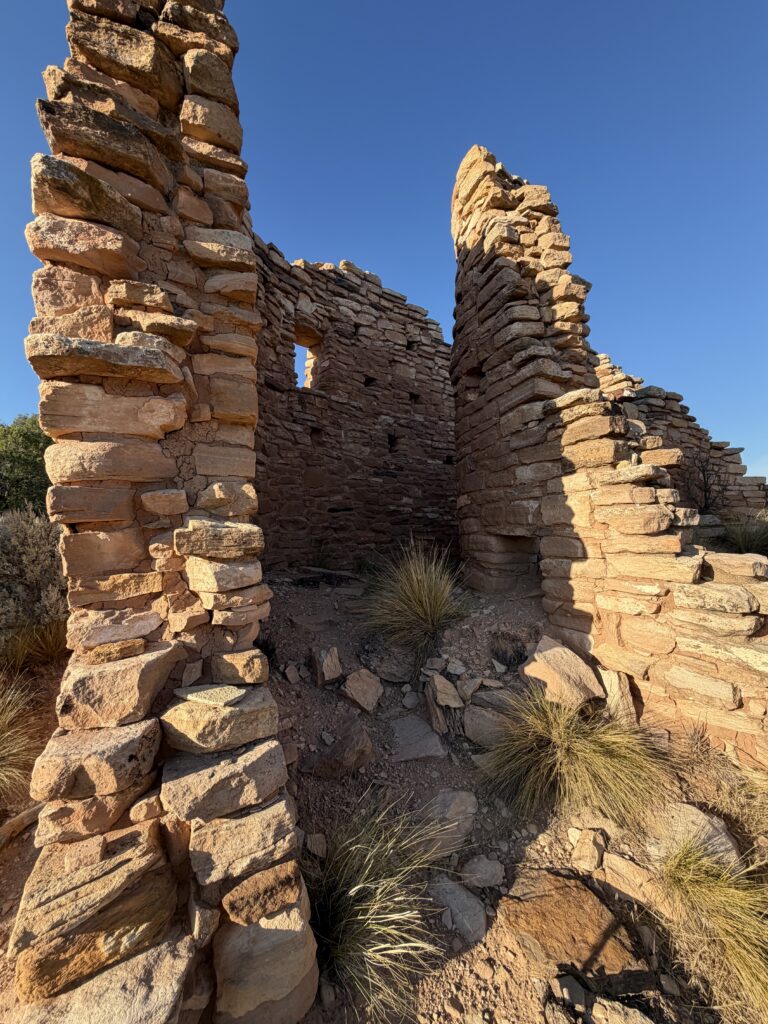
Hovenweep was not on my radar back in my archaeology days, but it is, in fact, not far from the Four Corners area, just north on the Utah/Colorado line. There is a central cluster of ancestral Puebloan ruins in a canyon close to the campground, plus a few outlying sites nearby. It’s also on the border of the Canyons of the Ancients National Monument, which encompasses over 100,000 acres and some 2,000 ruins in all.
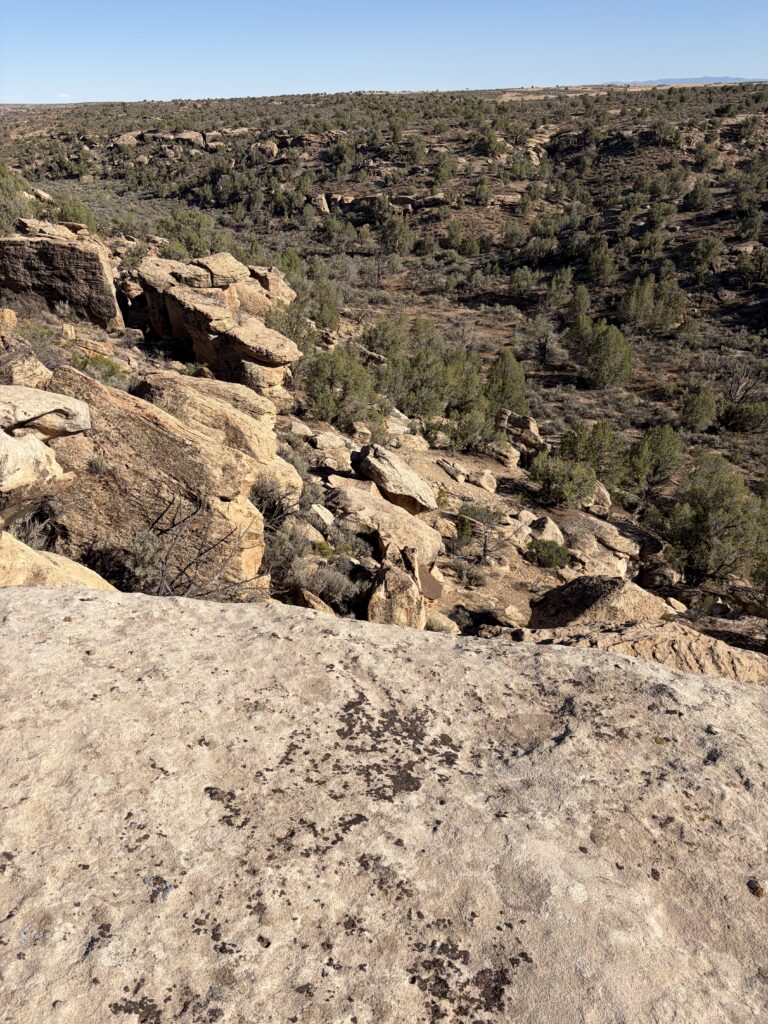
part of the trail into the canyon
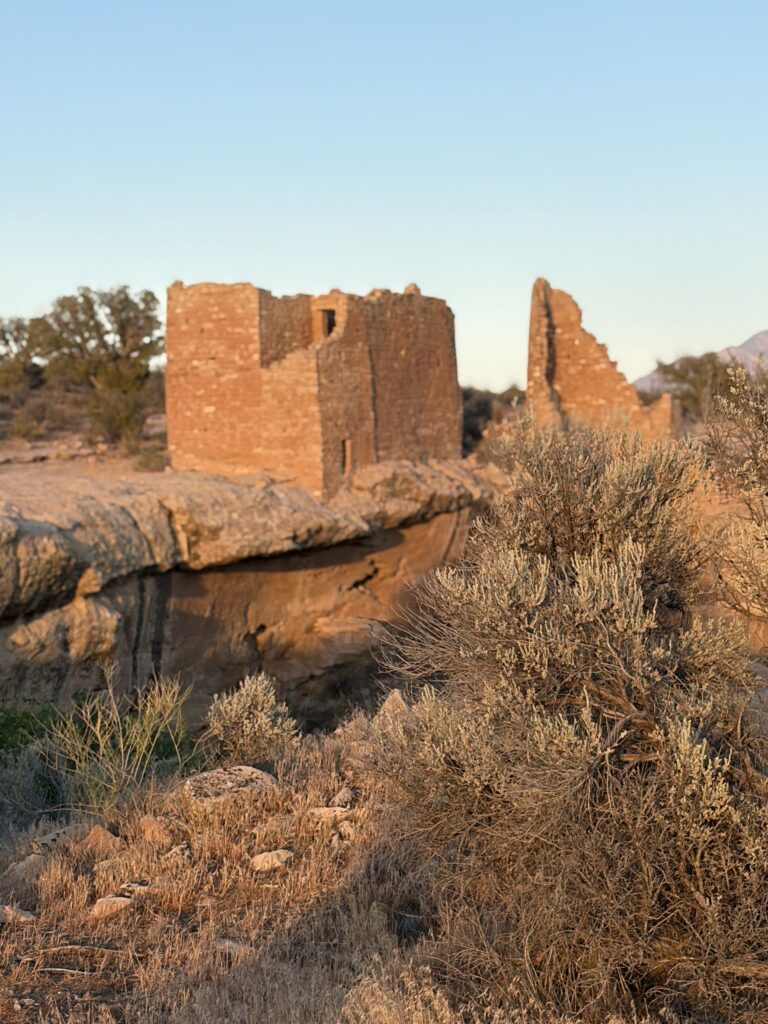
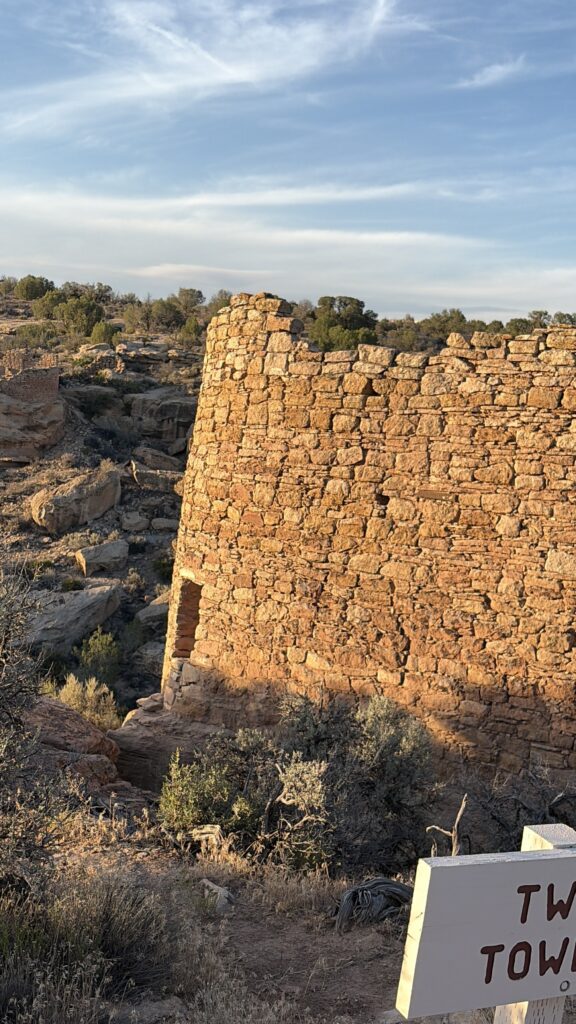
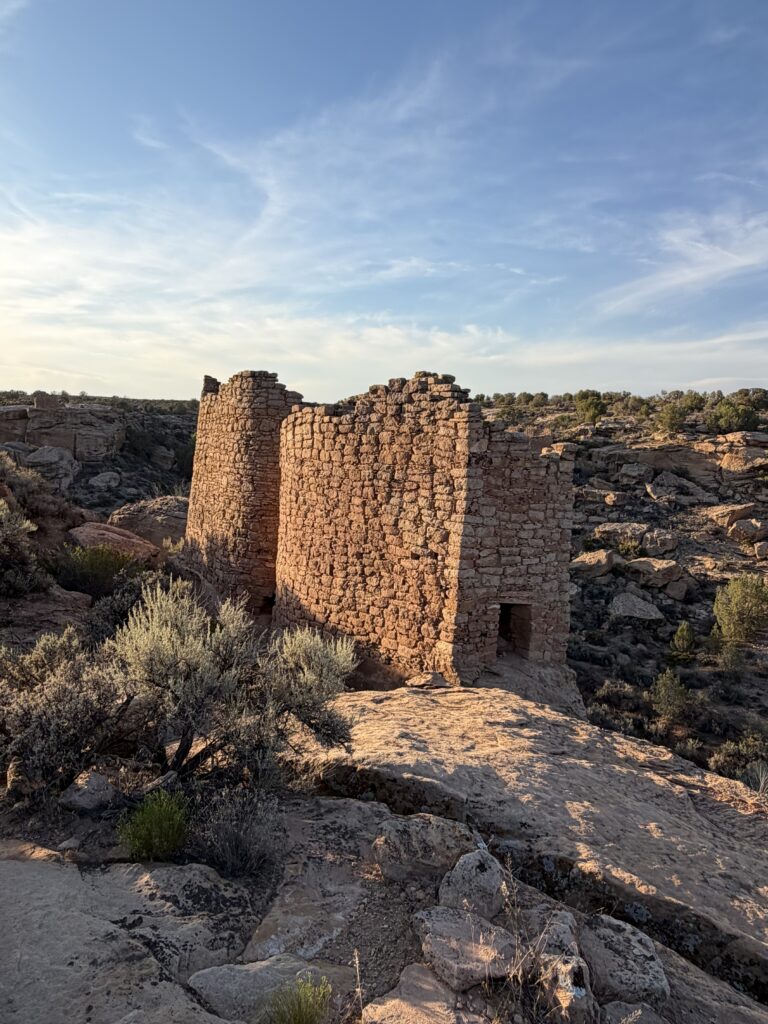
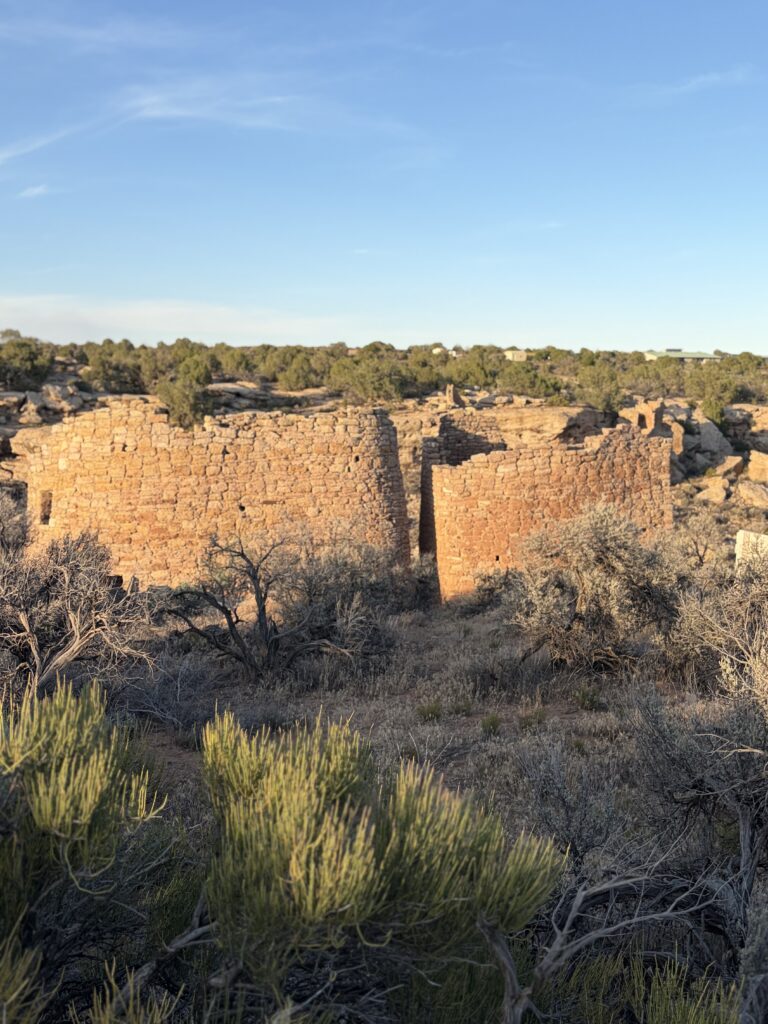
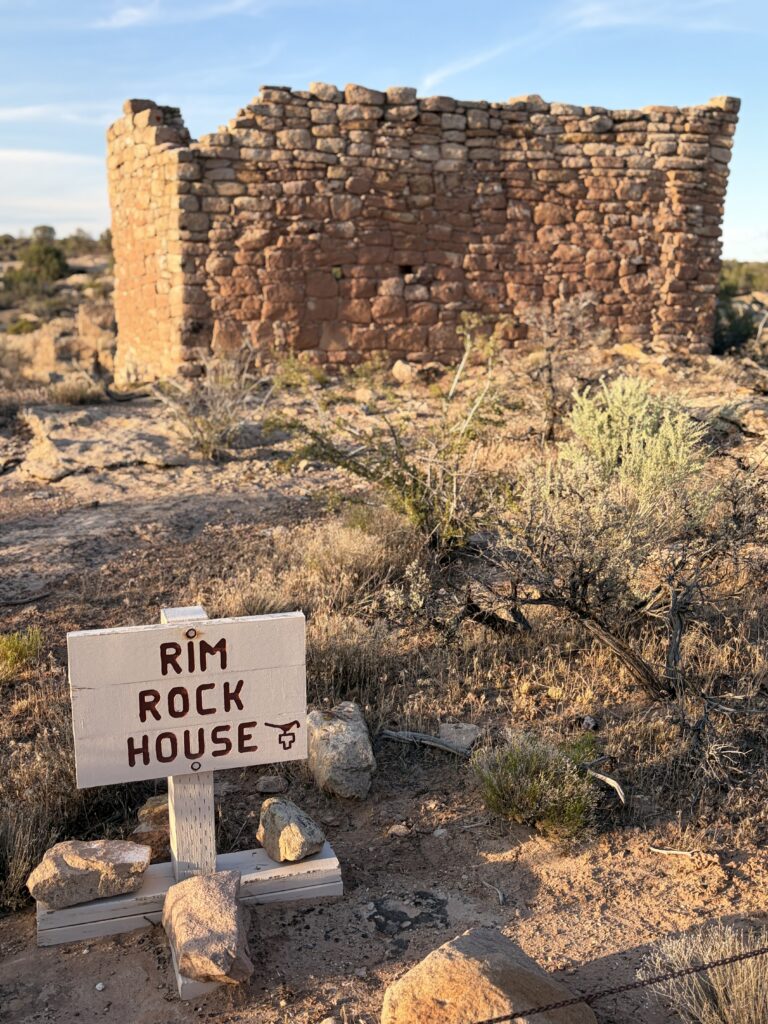
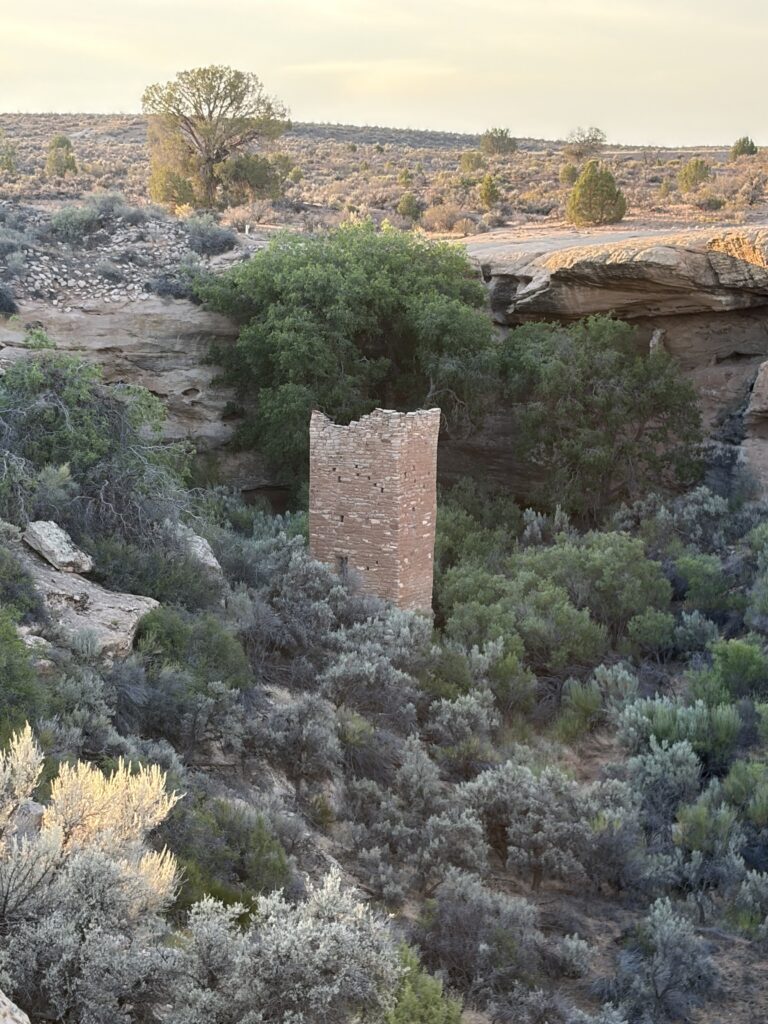
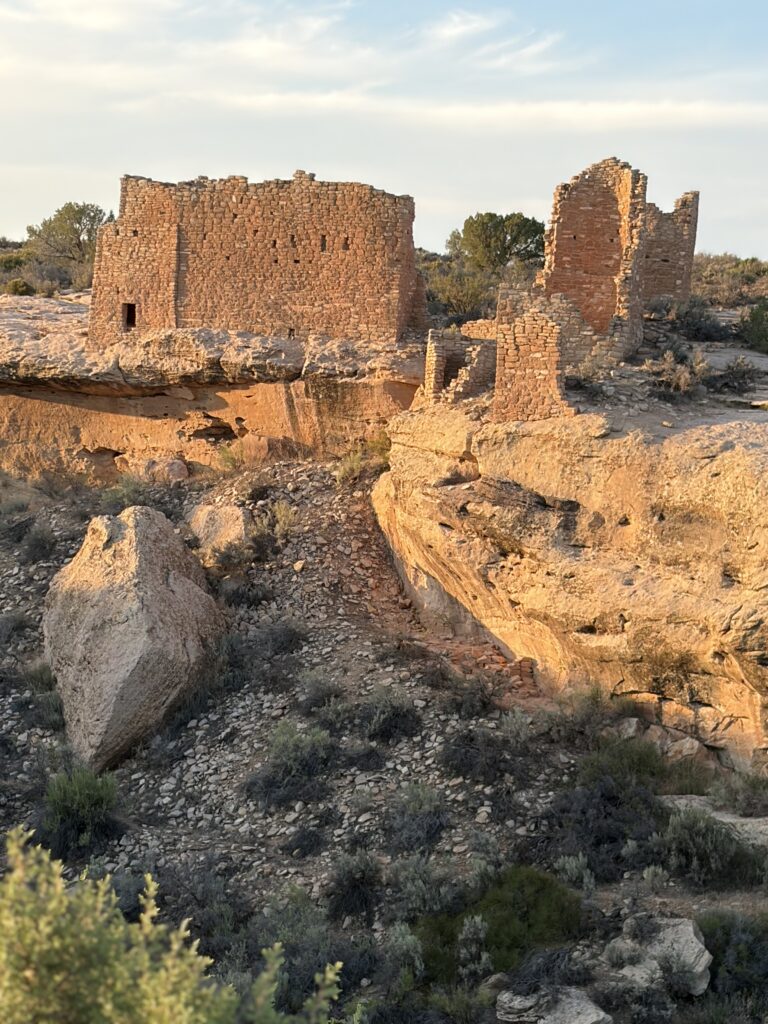
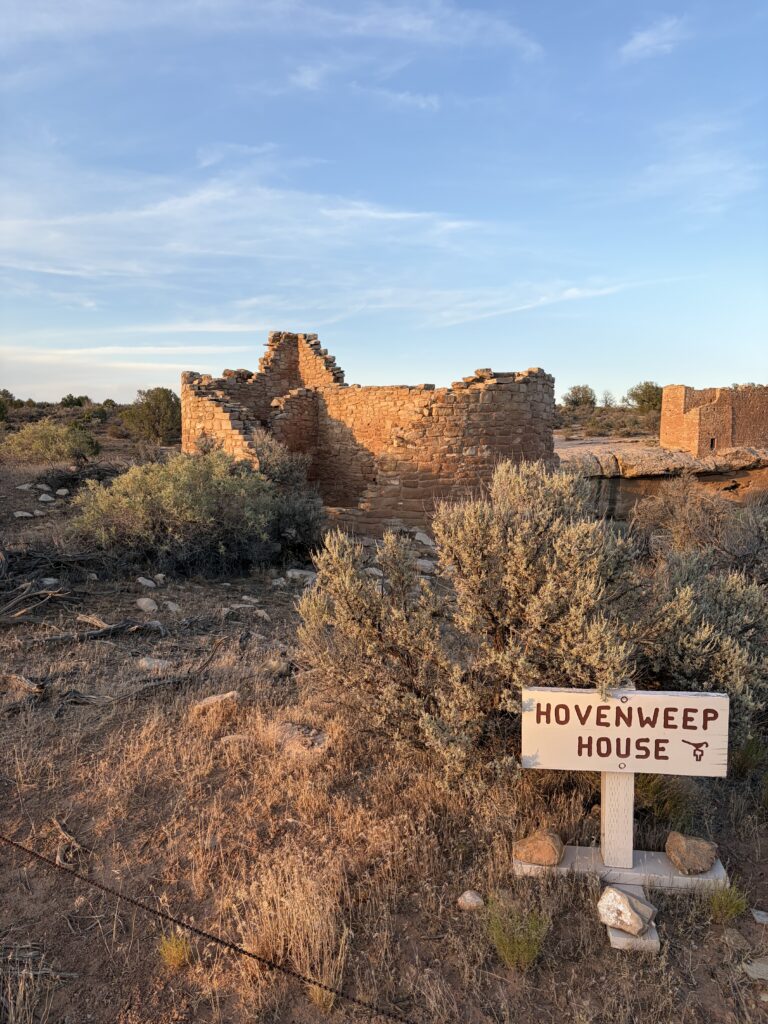
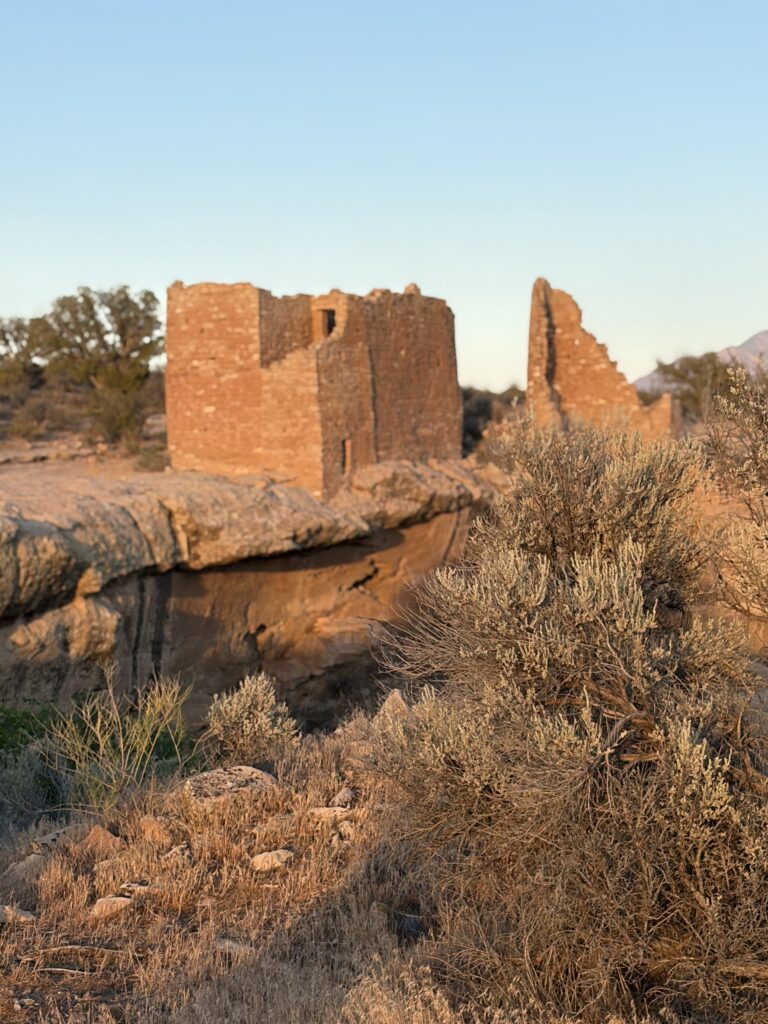
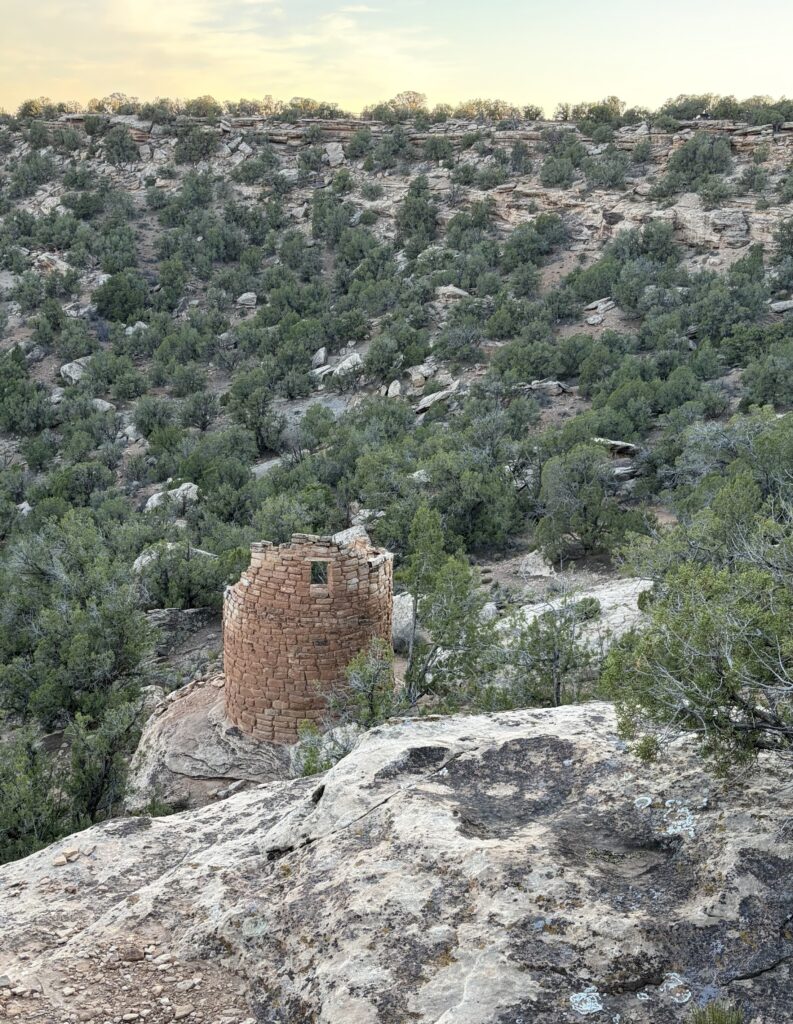
These structures circle the end of a smallish canyon, which had a water seep at its terminus. Some of the dwellings were clearly living spaces, such as the Castle complex and the Twin Towers. Others are mysteries: was the Square Tower, situated in the bottom of the canyon, near the water source, a defensive structure? Rimrock House, despite its name, was almost certainly not a dwelling—it has no room divisions. It does have multiple small openings in the walls. Were they for spotting people entering the canyon? Observation points for tracking the sun? Or just ventilation holes?
The Square Tower Complex was mostly built between 1230 and 1275, about the same time as Mesa Verde, and held as many as 100 to 150 people, during a time when the seep at the head of the canyon provided a steady supply of water for growing corn and other crops, which were supplemented with a variety of game.
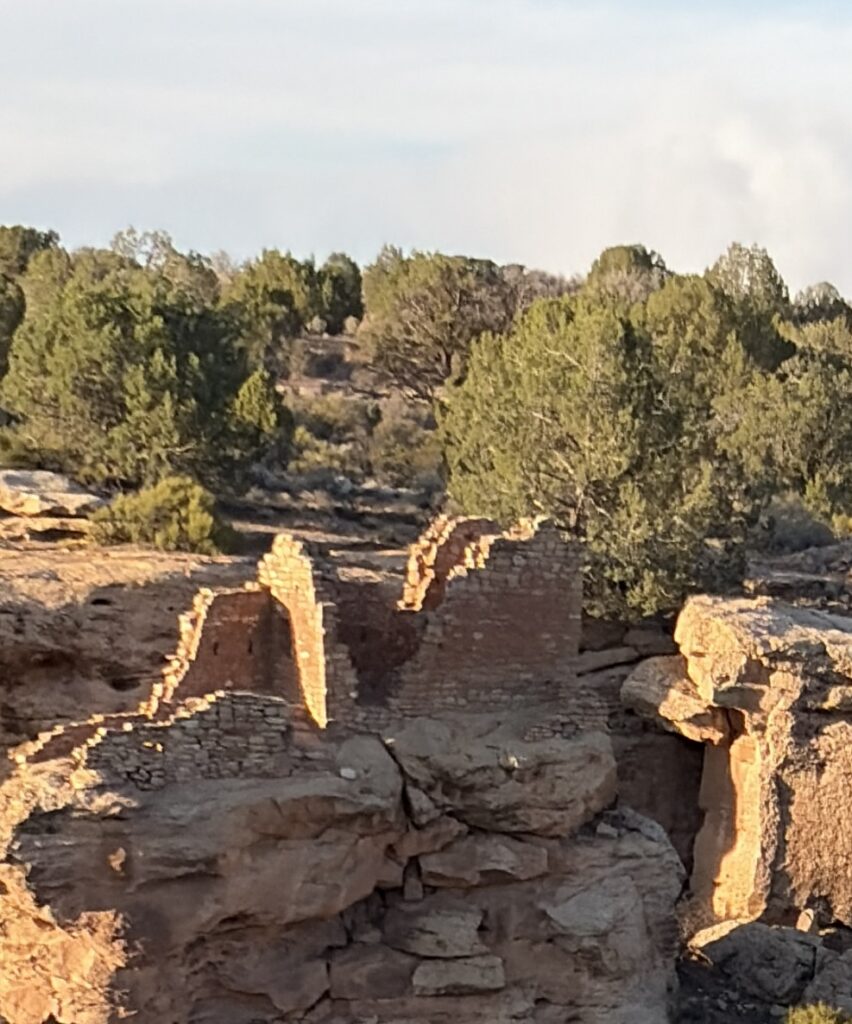
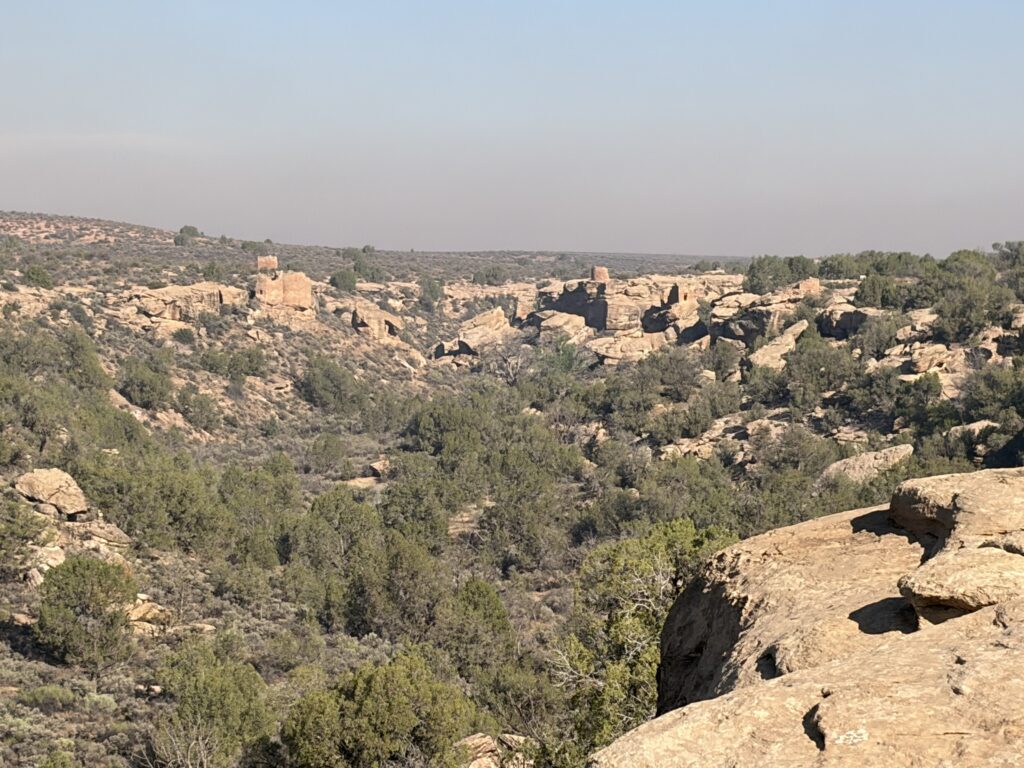
On our last morning, I chanced to find a viewpoint that showed the complex from further down the canyon. The structures glowed in the early morning sun. Can you see them? Twin towers is on the left: tower point and Hovenweep Castle on the right. BTW, the name Hovenweep was given by a white explorer, but mcame from the Ute, meaning “deserted valley.”
There are other delights in the campground, particularly (for me) the Gambels quails that forage near our campsite in the mornings. Like their near relatives the California quail, Gambels have a forward arching, teardrop shaped feather on top of their heads, which bobbles adorably as they scurry around. Moms usually take the lead, babies string along behind, and dad takes the rear guard. There are great-crested flycatchers, black throated sparrows, and even roadrunners! (but no coyotes)
On our second day, we visited some nearby sites: Cutthroat Castle and Painted Hand Pueblo.
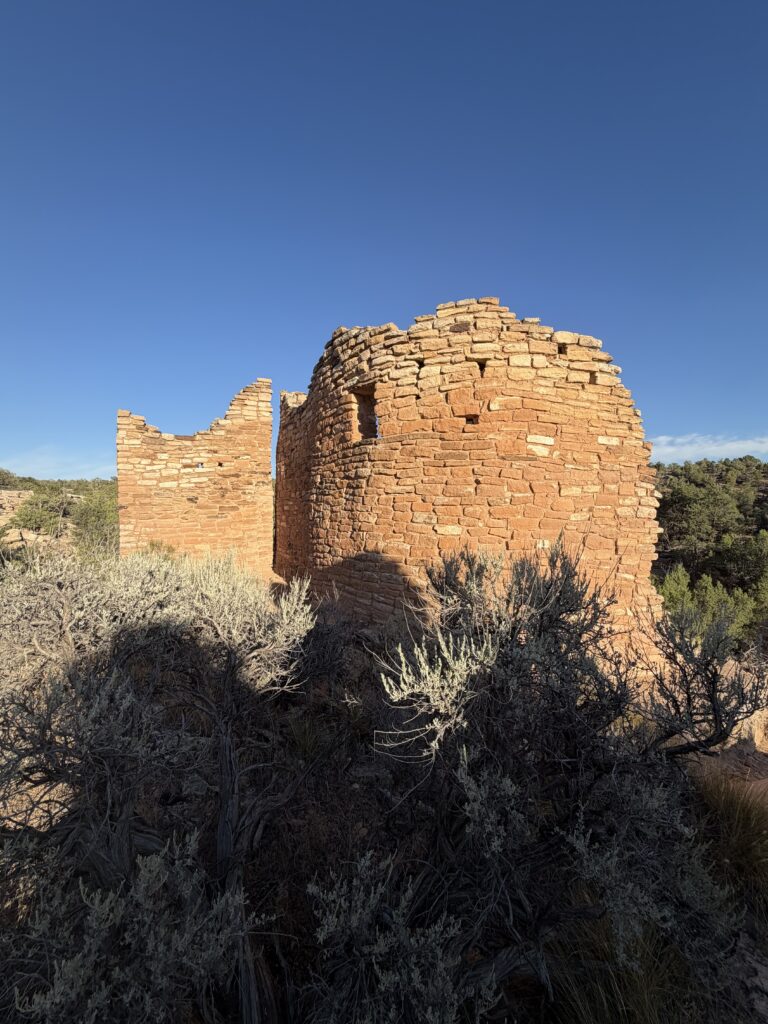
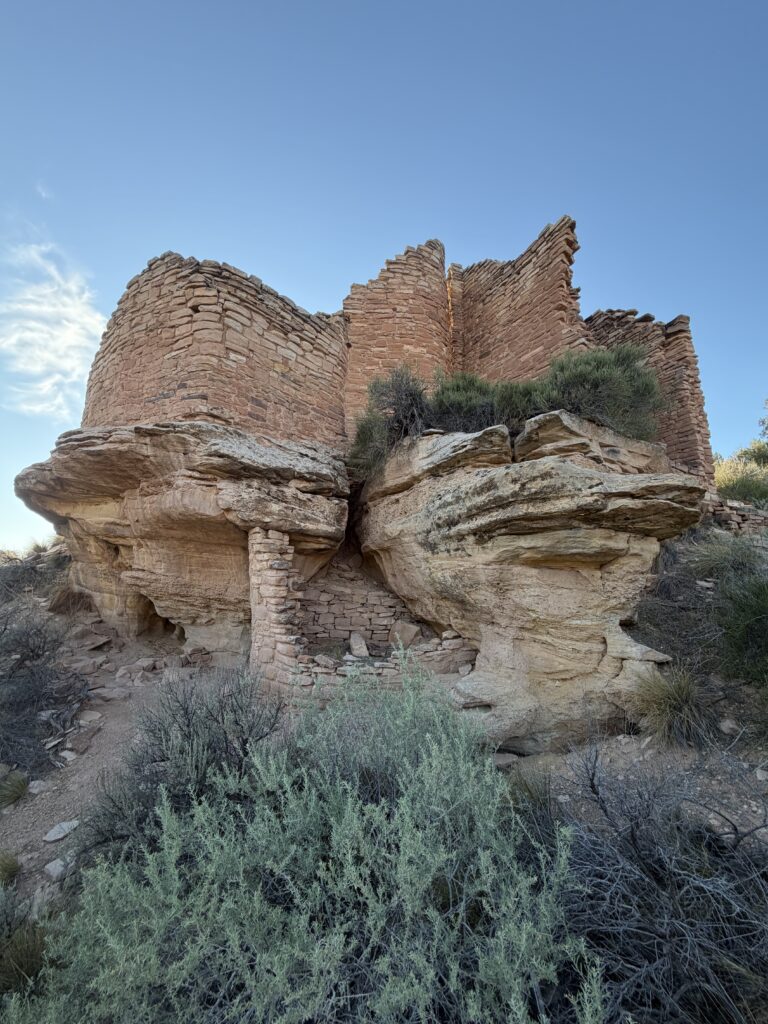
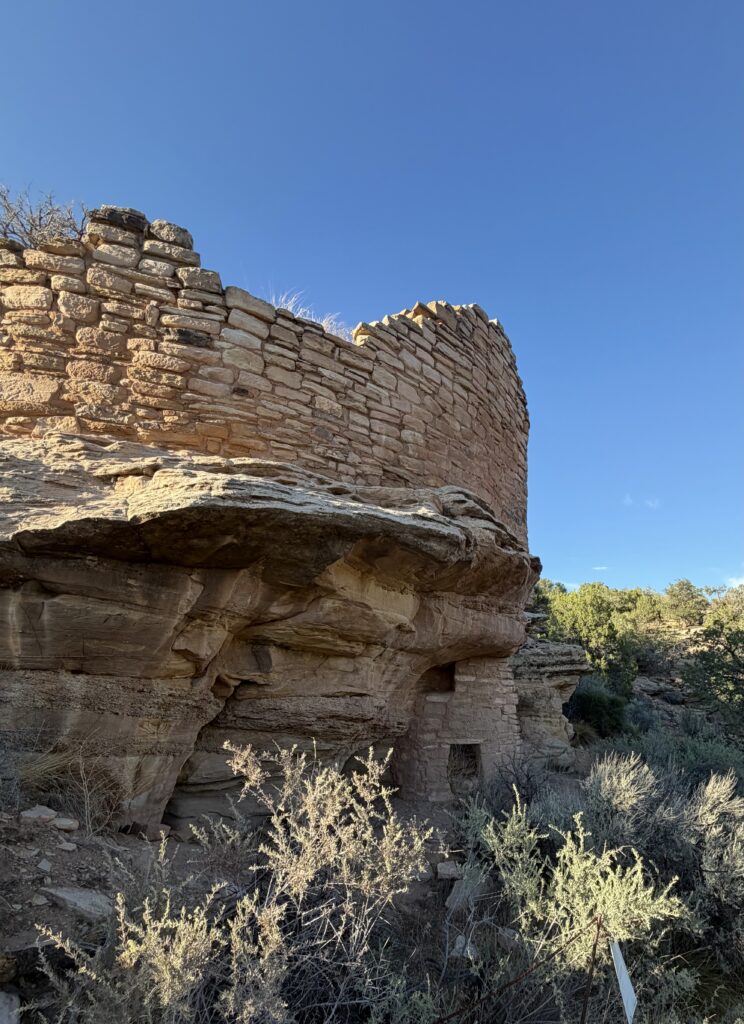
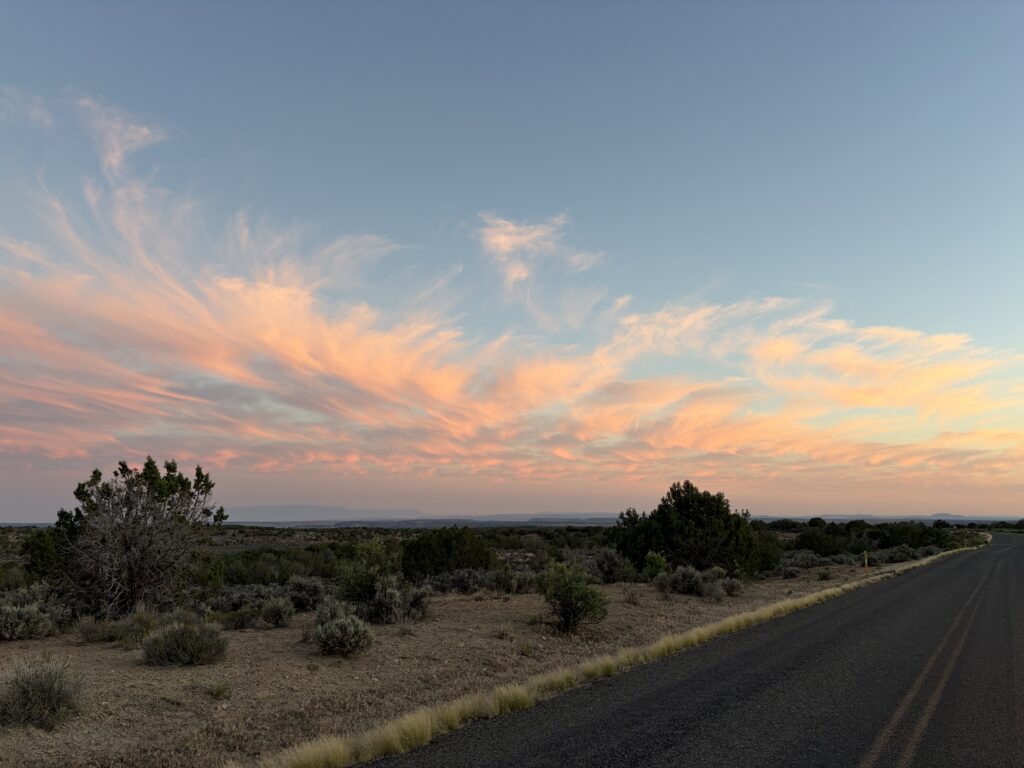
The next day (4th of July) we drove an hour into Cortez (the nearest town with actual grocery stores) for supplies and lunch. On our return trip, wildfires had moved swiftly closer, and were filling the sky to our west with gray smoke (check Russ’s blog, russloomis.com, for those pics; I was driving). I did get one shot of the beautiful sunset clouds:
All day, I’d been thinking about the contrast between the sentiments of the 4th of July and the ancient people who lived here: people whose descendants could only see the creation of the United States of America as destruction of their own country. I’d been a part of an ancestral Puebloan archaeological dig; I’d handled the objects they left behind (and carefully exhumed a grave or two). It left me in a very strange mood for most of the day.
But after our return, we joined another couple our age on the shady side of the bathhouse, sat and talked, and shared the cherries we’d bought. We swapped travel stories, interests, and family info. And I thought this is America, too: making new friends, speaking of our loved people and places, creating communities, even if only for a few days. Maybe, I thought, we just need to acknowledge that for many people, this country is a lot older than 250 years.