At 12 Mile Beach Campground we met a family of four kids with their dad. I asked them if they’d seen the blueberries. They hadn’t, so I organized a blueberry picking expedition and we all set out (Moe included) to pick the wild blueberries that grow abundantly along the southern Superior shore. Nice kids, and they immediately made friends with Moe, especially when I invited them to toss a tennis ball for him.
I hereby declare that the best breakfast of our entire trip is wild blueberry pancakes with real Massachusetts maple syrup (especially if it’s given to you by a friend—thanks, Ted Murray!).
Category Archives: Uncategorized
MUSHROOMS
“I want to do a special post about mushrooms.”
”But you haven’t updated your blog. Write blogs about every place we’ve been up to now, and then you can do one about mushrooms.”
”Ugh. That takes too long. I want to show mushrooms.”
”Fine. Whatever.”
”Fine.”
ONTARIO HAS SO MANY MUSHROOMS!
What sorts of mushrooms, you ask?
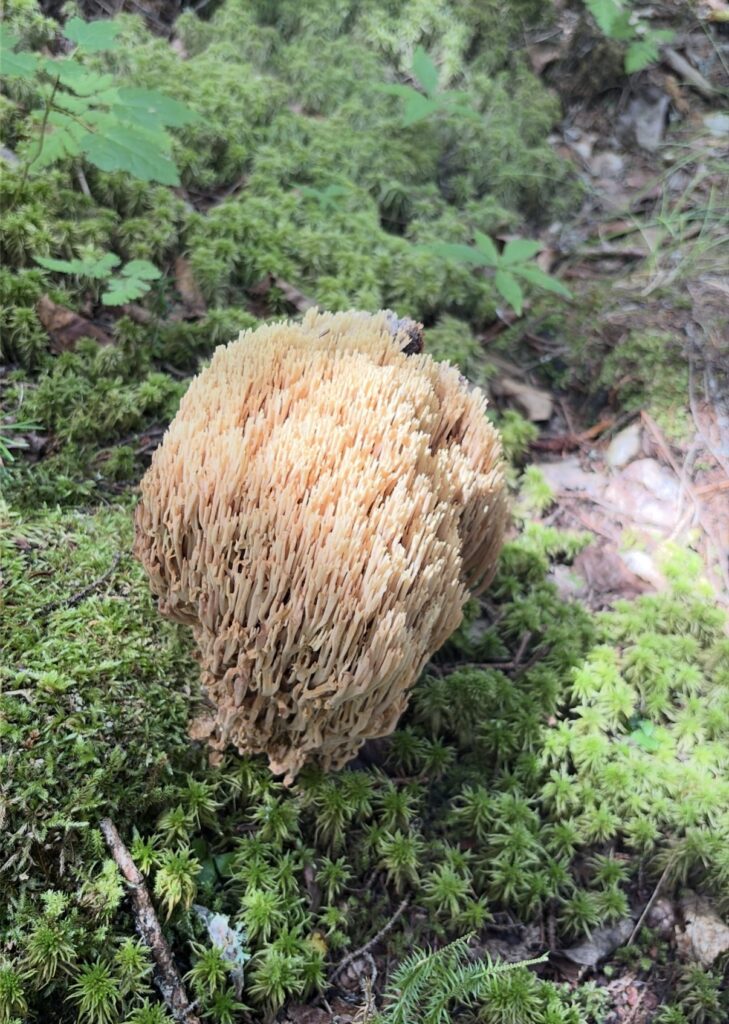
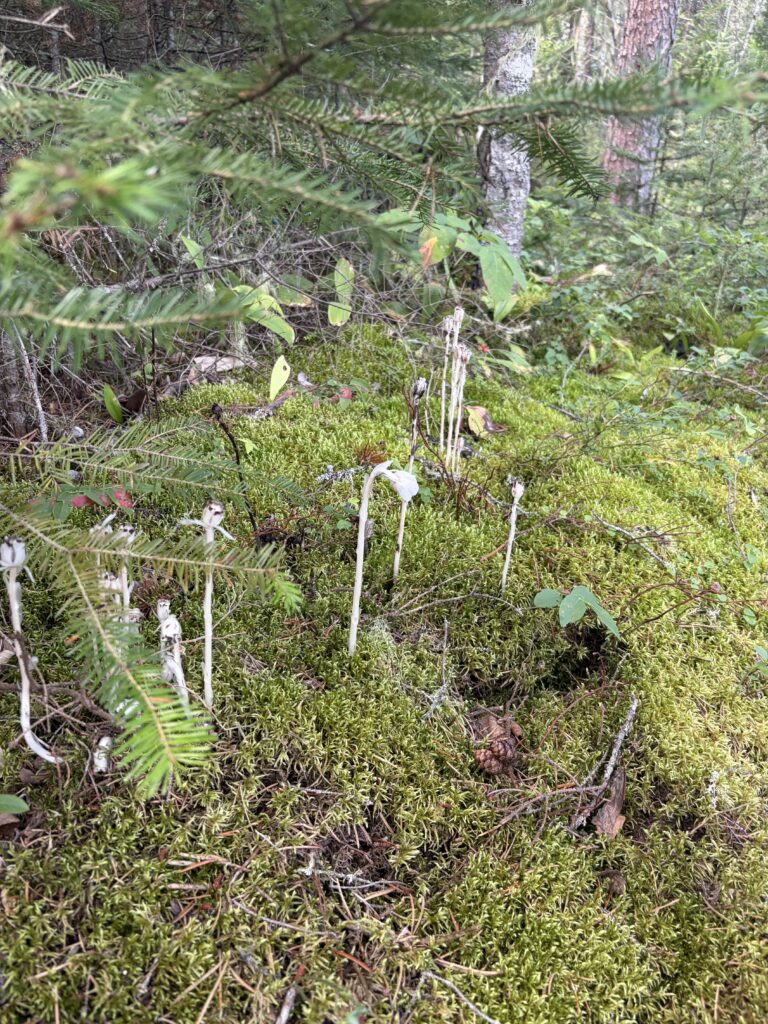
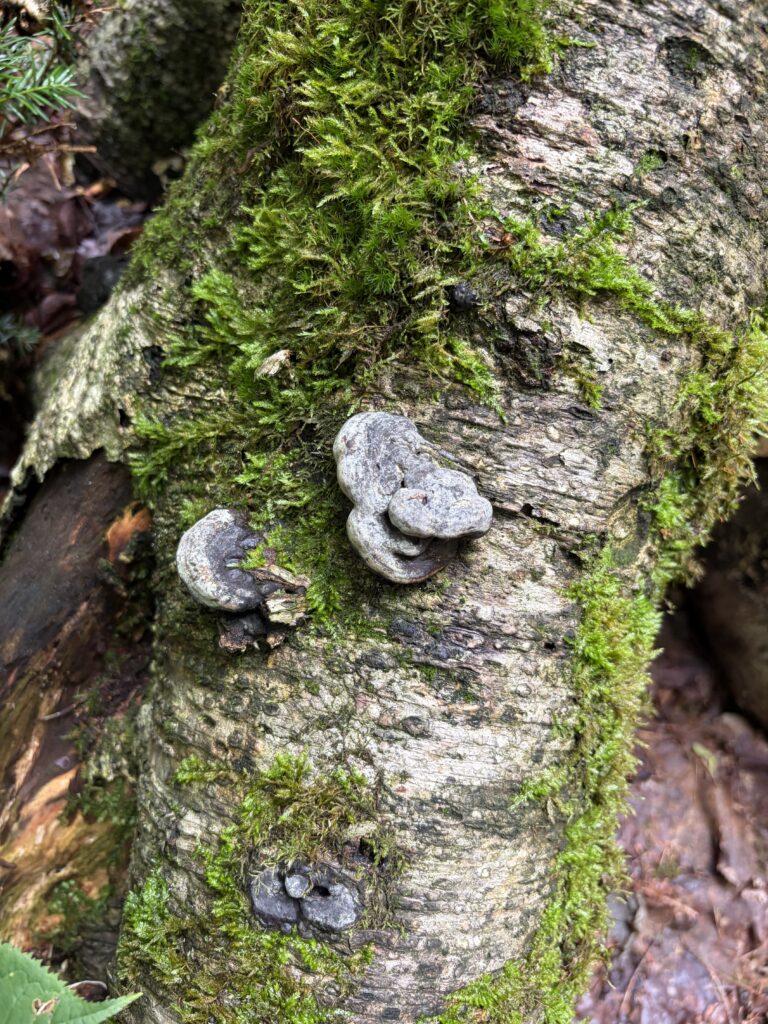
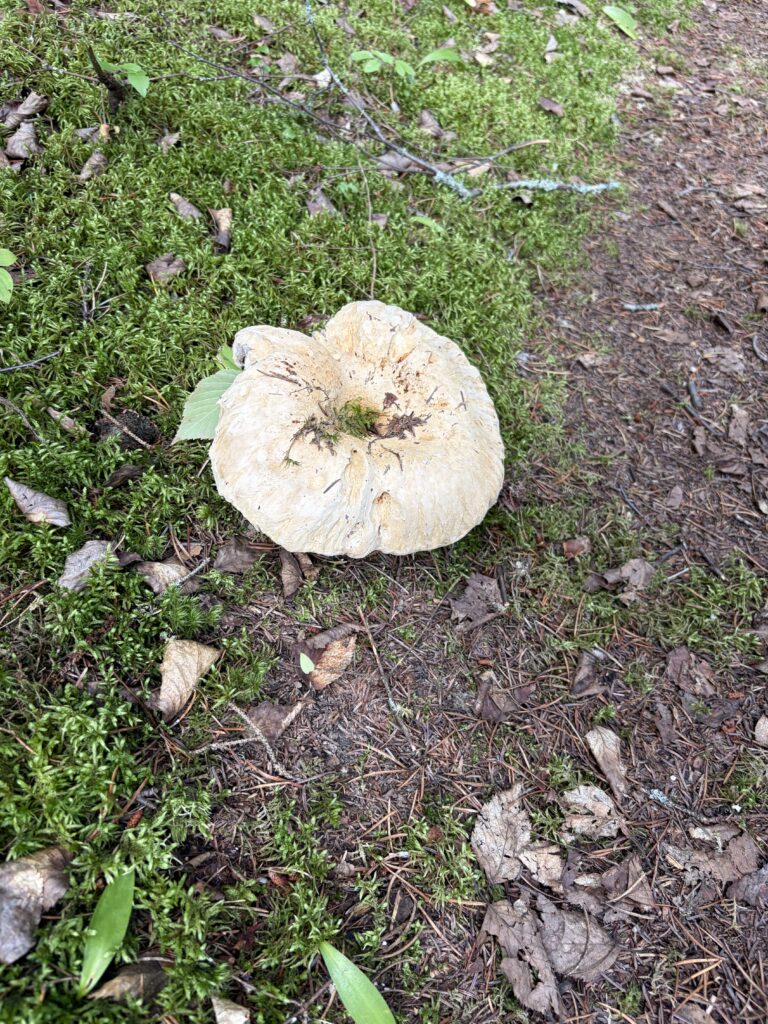
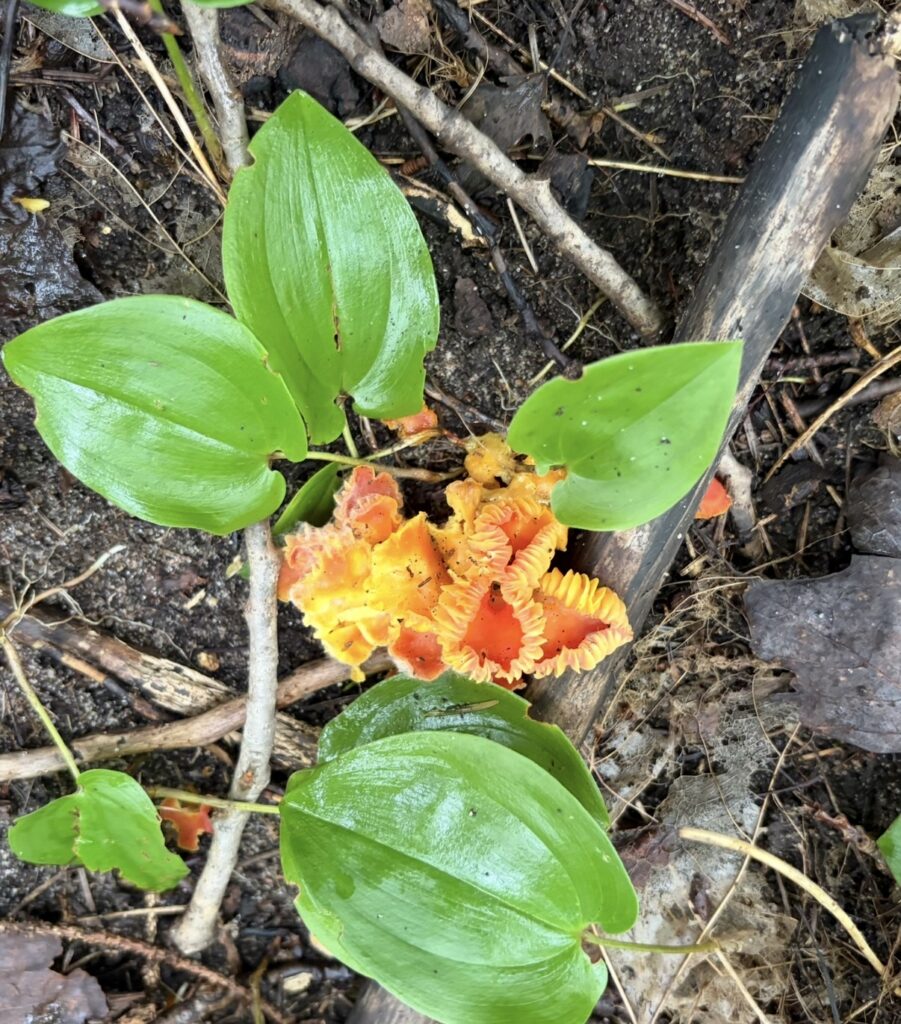
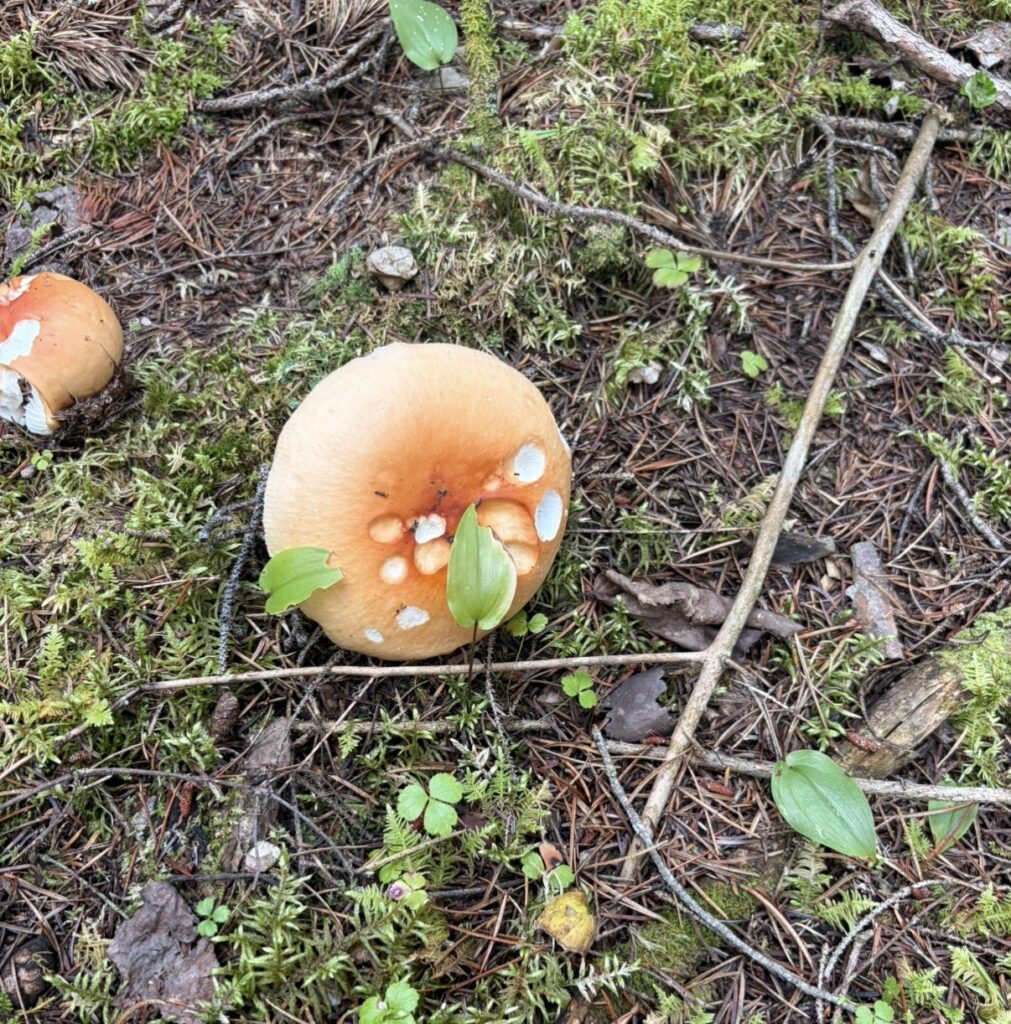
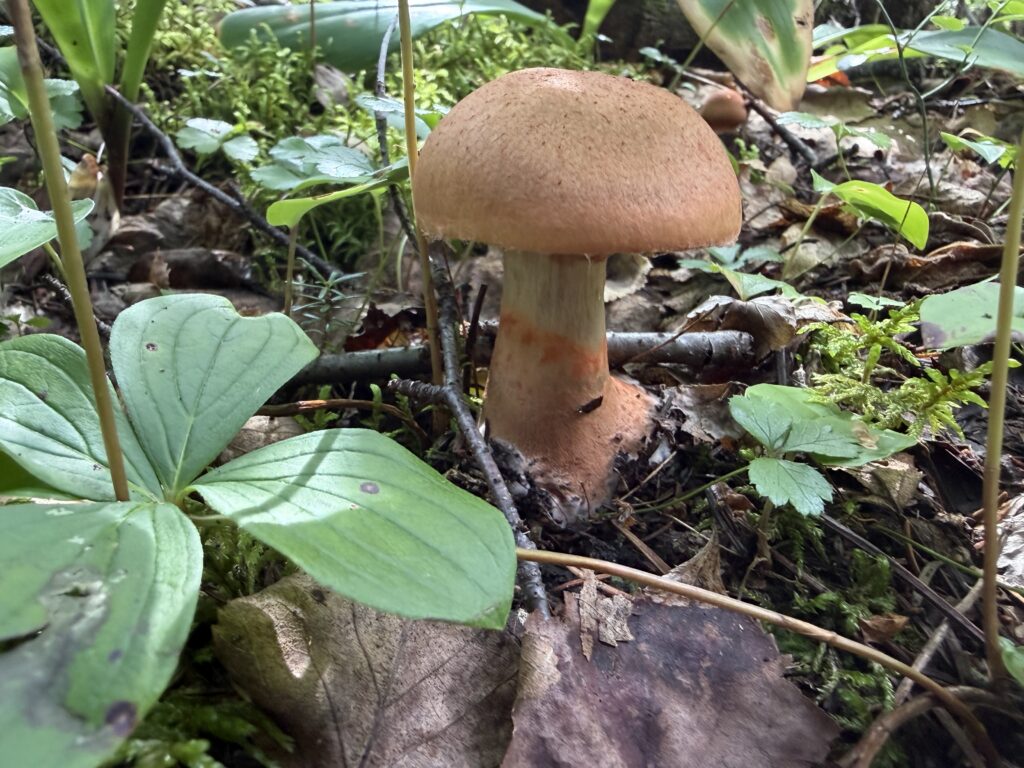
OK, sorry, I couldn’t resist. Those of my generation will recognize a certain TV ad jingle for hot dogs. Those who don’t—well, you just don’t know what you missed.
But those aren’t all!
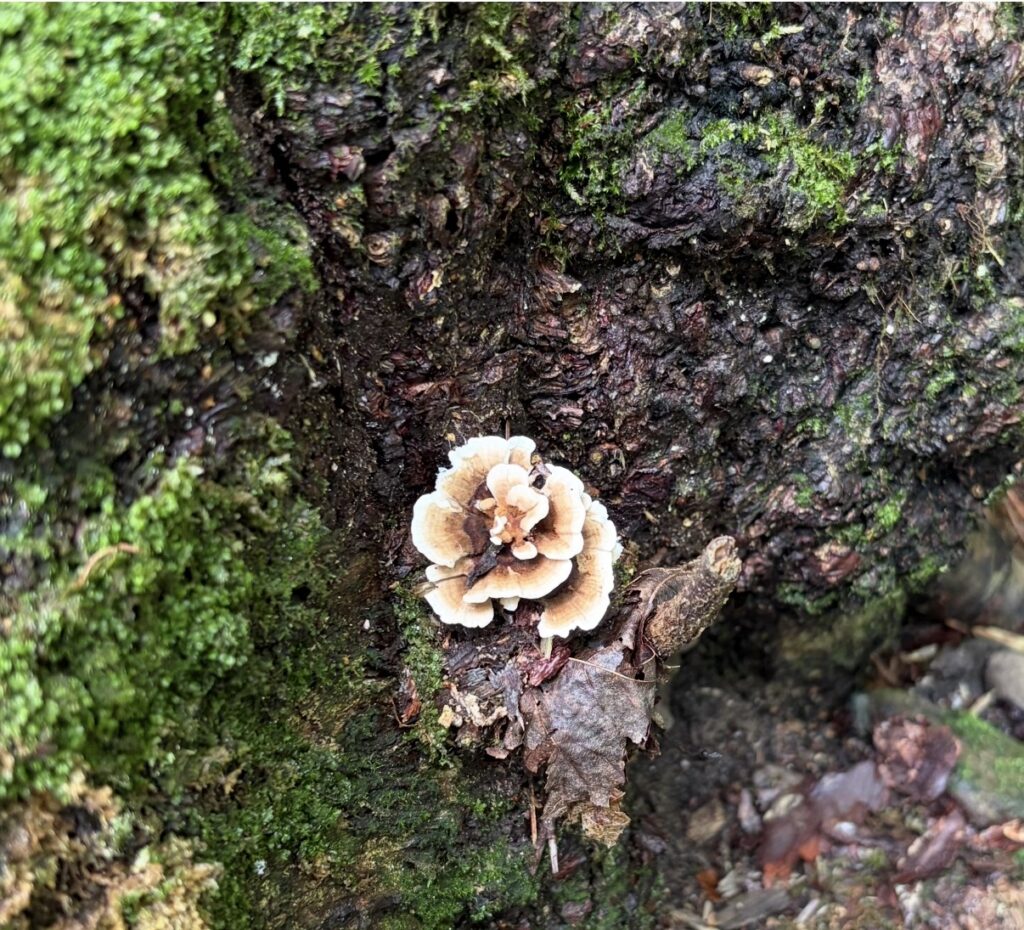
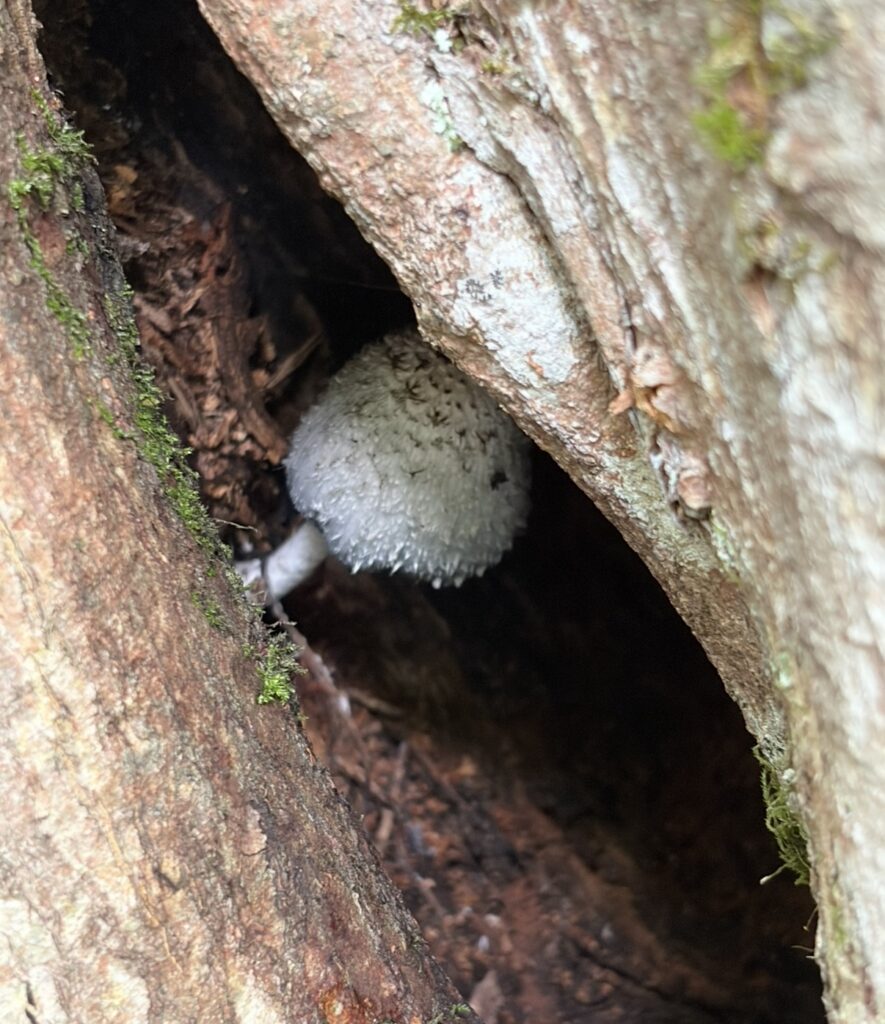
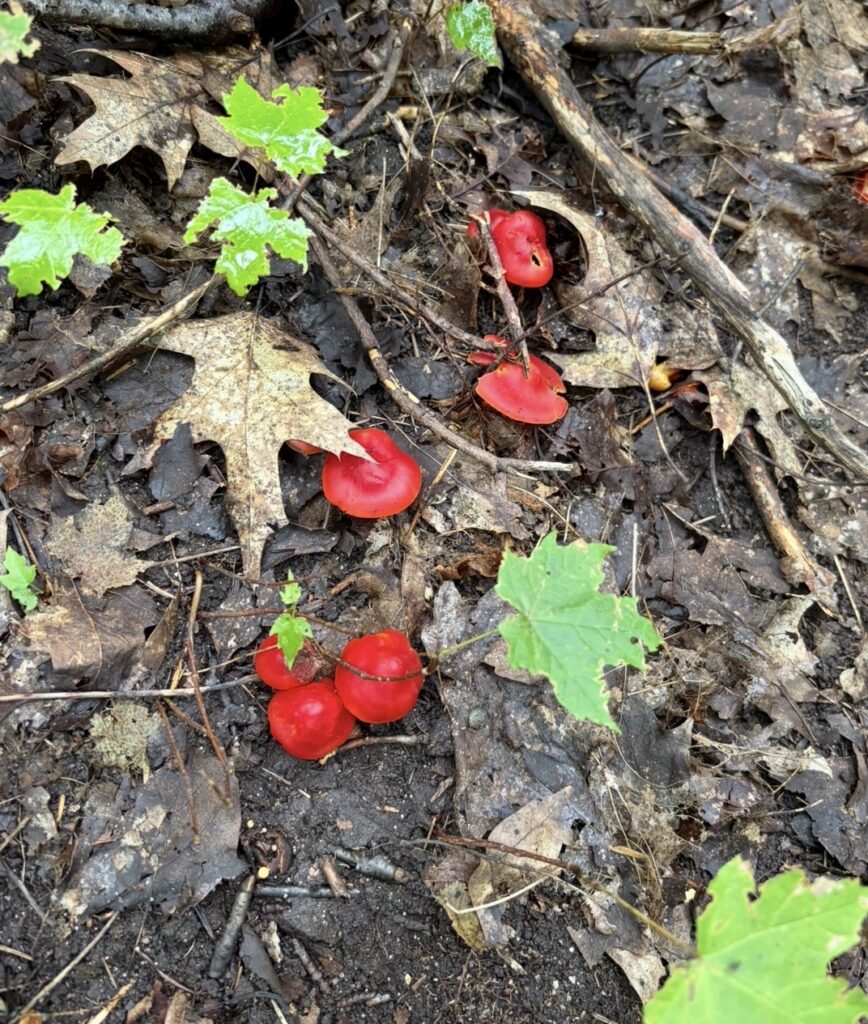
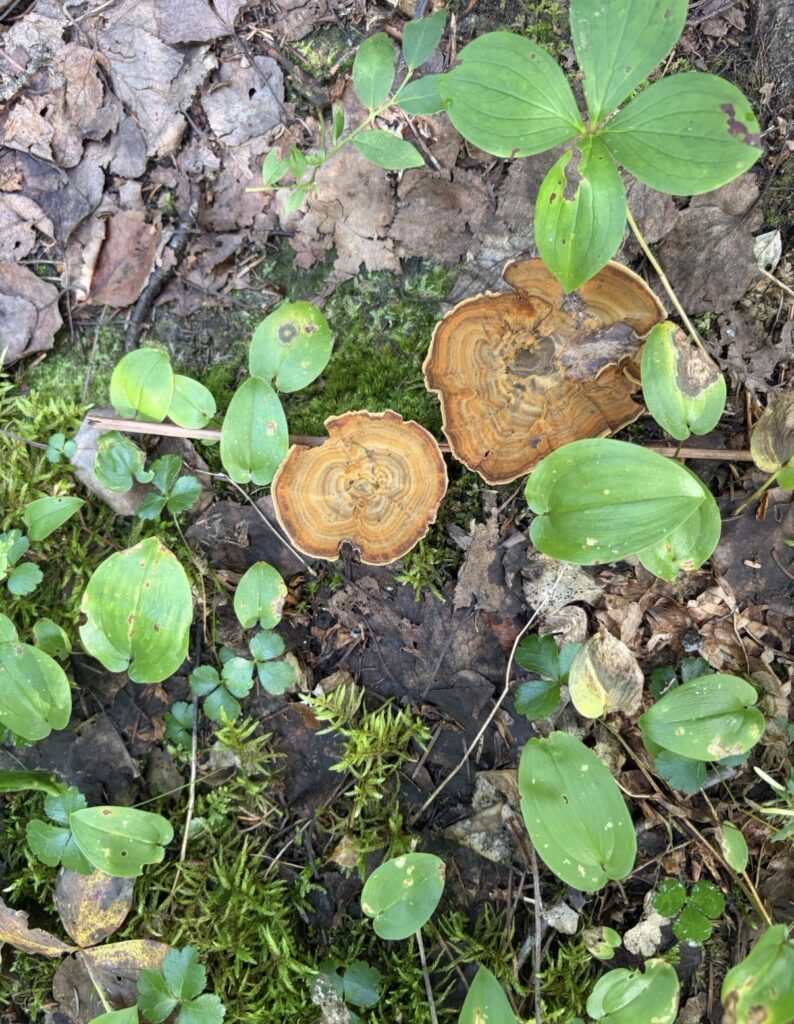
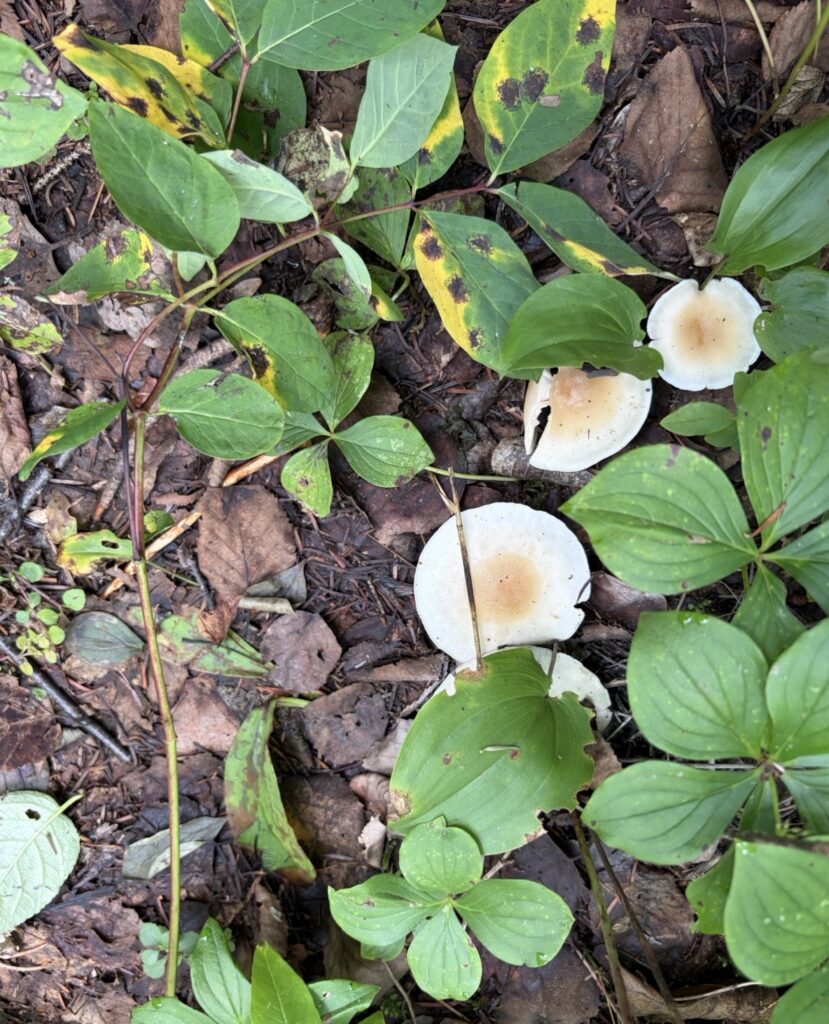
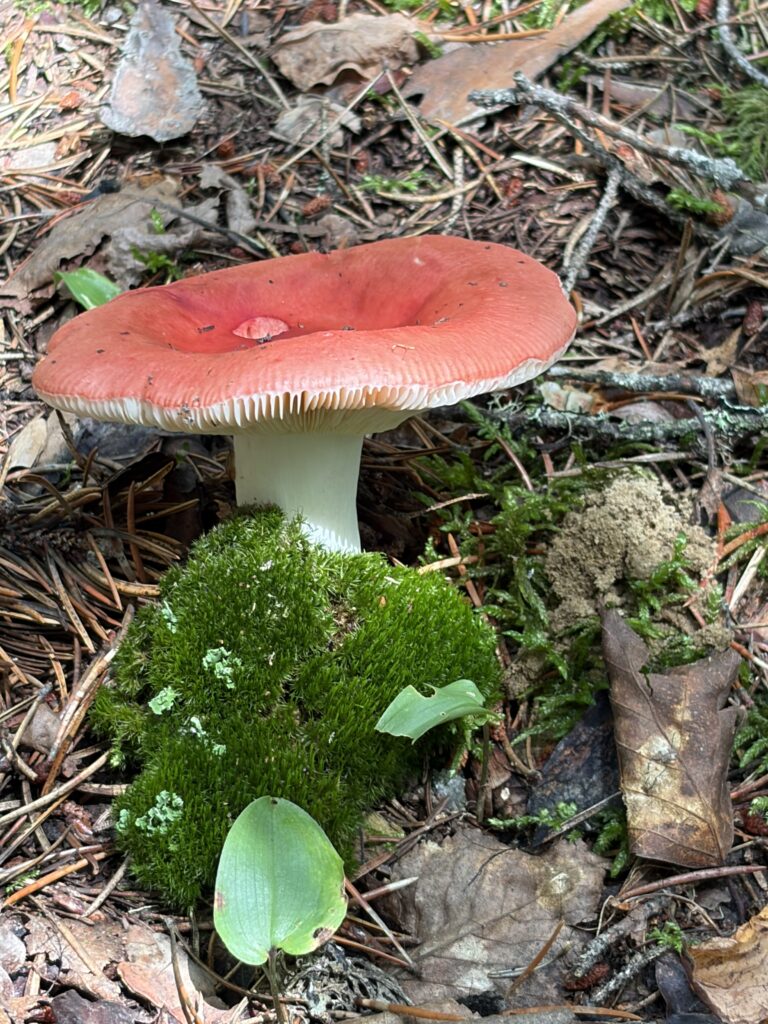
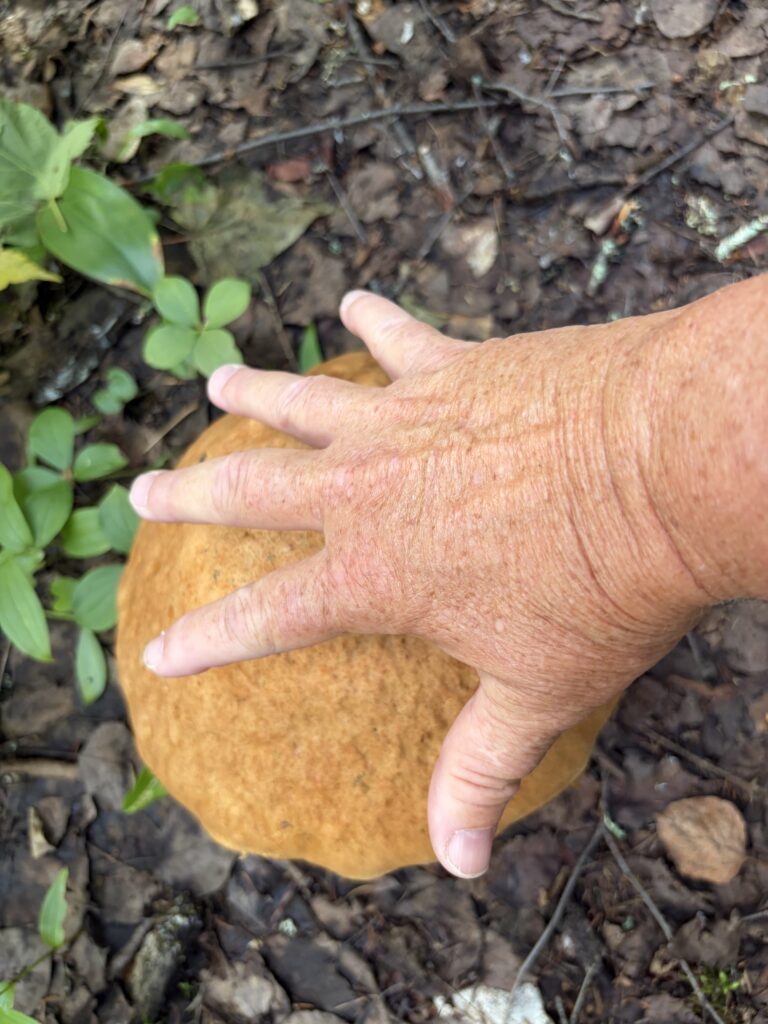
I’m particularly fond of the little white mushroom we found peeking out of a split tree trunk. And there were some very unusual looking (lichens?):
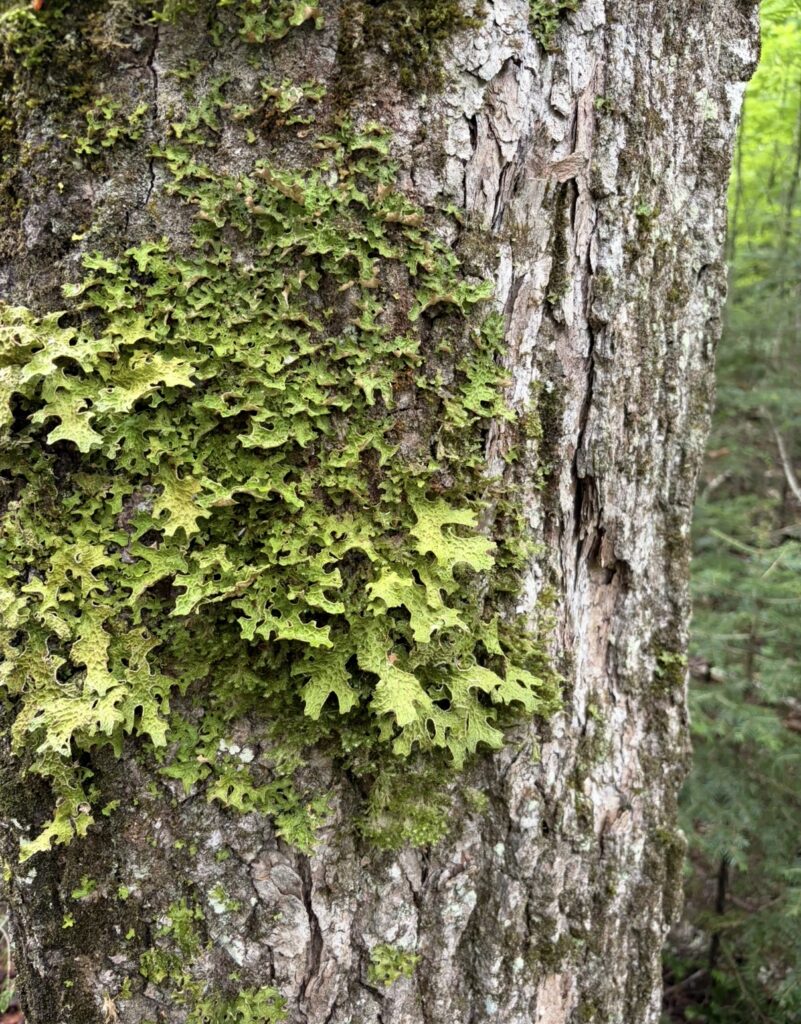
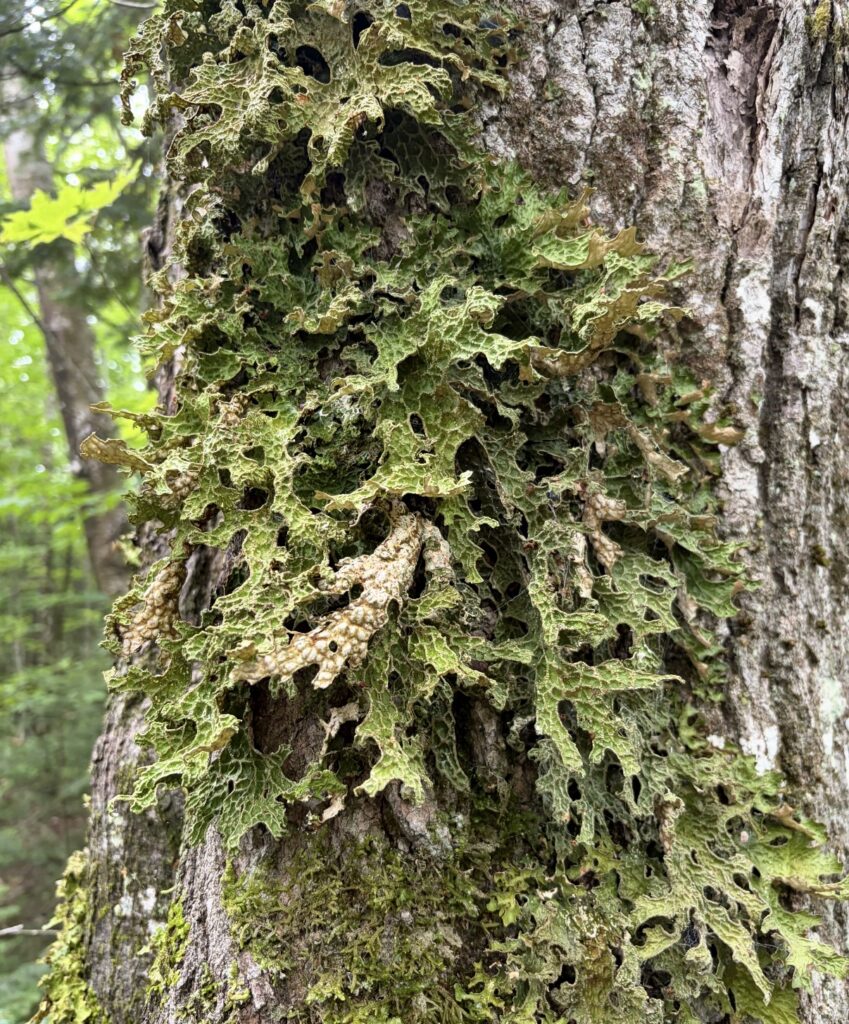
I don’t know if the second picture shows some sort of fruiting body, or a disease taking over; it was just above the first clump on the same tree. Didn’t see any others. I do remember seeing something like it near a waterfall in (I think) Glacier National Park; there was a sign pointing it out as rare, and indicating that it took decades or more and just the right conditions for something like this to grow. Reminded me of the alpine flowers we saw this summer in Rocky Mountain National Park. They live in such harsh environments that it can take one plant 70 years or more to bloom.
Which is why I get mad when I see people callously trampling, picking, or breaking mushrooms, plants, etc. You just don’t know how special something might be.
The area where we saw most of these mushrooms was interesting. The trail climbed up a series of ancient beach ridges from the days when Lake Superior had a much higher shoreline. Over the years as the lake receded, it left a series of near-parallel ascending ‘bumps’ in the landscape.
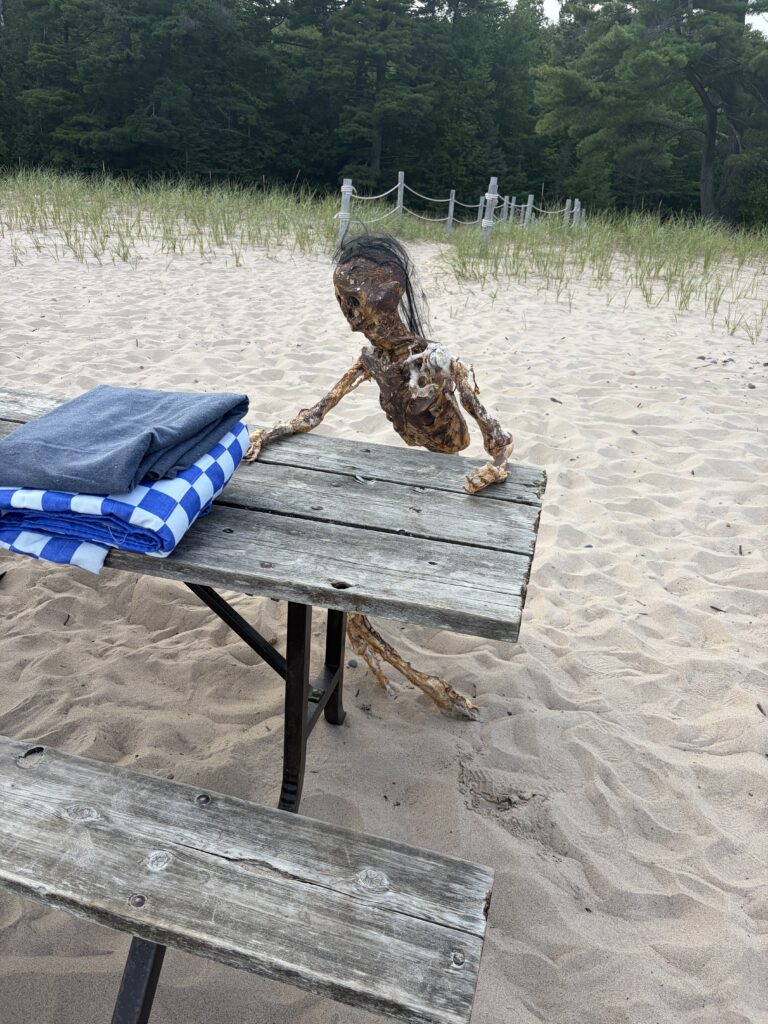
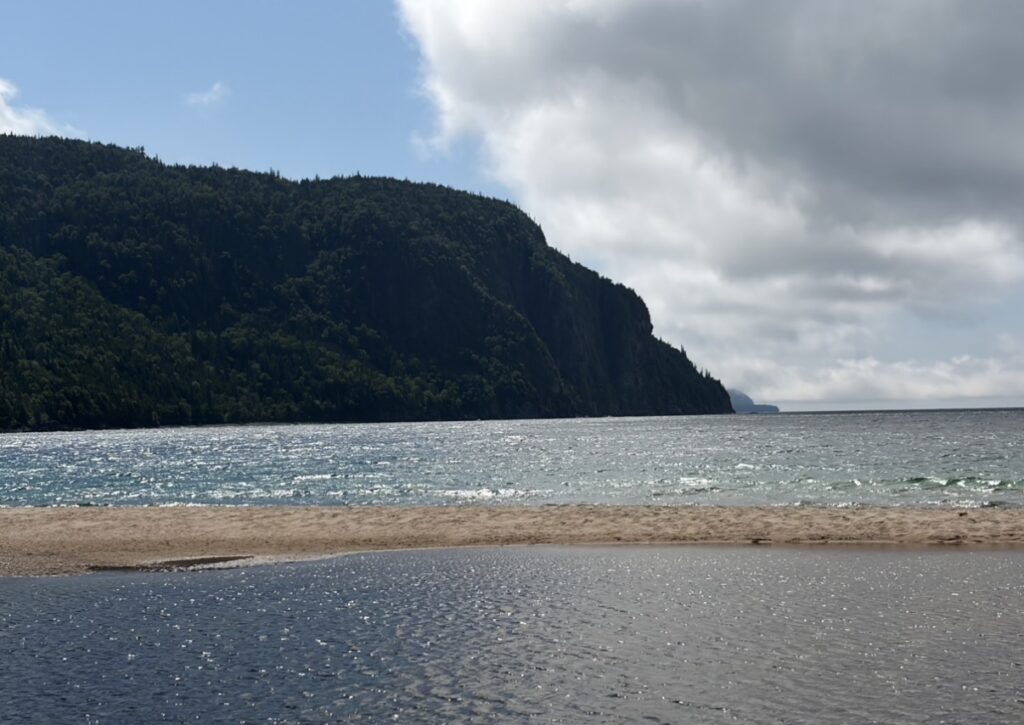
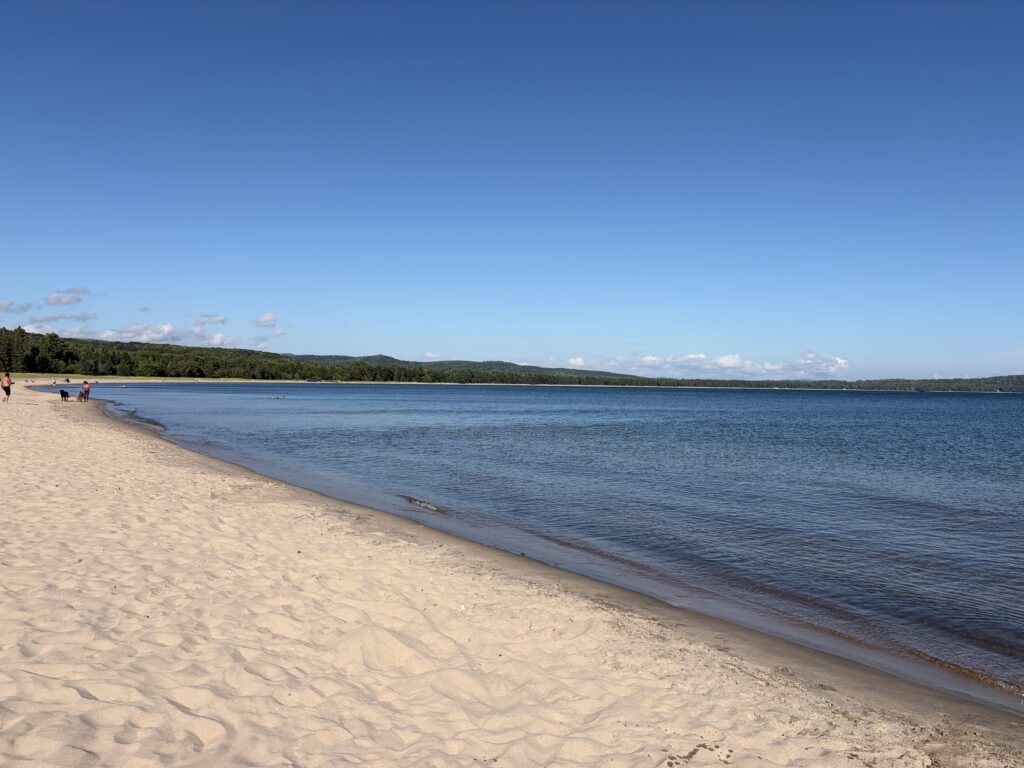
And speaking of shorelines, Superior has beautiful ones. Mostly, they are rocky, reminding me a lot of the Maine coastline. But in places, erosion has created spectacular white sand beaches.
Pancake Bay
Grand Portage
On the way to Ontario we came across the Grand Portage National Monument and on a whim I turned in. A quick check confirmed that Moe would not be able to go into the museum exhibits or even the reconstructed trading post and portage site, but did we know there was a rendezvous going on this weekend? Moe was allowed there, so off we went.
I know a little about rendezvous, thanks to my dear friend Suzi Day. She and her husband Mark participate in rendezvous in Pennsylvania and elsewhere, dressing and living in authentic French and Indian War era lifestyle. From her, I learned that reenactments always involve reenacting an historic battle. No battle? It’s a rendezvous or encampment. (And now you know,)
I was delighted to find out that this encampment was depicting the same era as Mark and Suzi do—early to mid-1700s—and I knew Suzi would want me to take as many pictures and talk to as many people as I could. This gathering showed the dress and daily lives of those involved in the early fur trade—there were trappers, portageurs (the long haul truckers of their day), traders, and their wives and families.
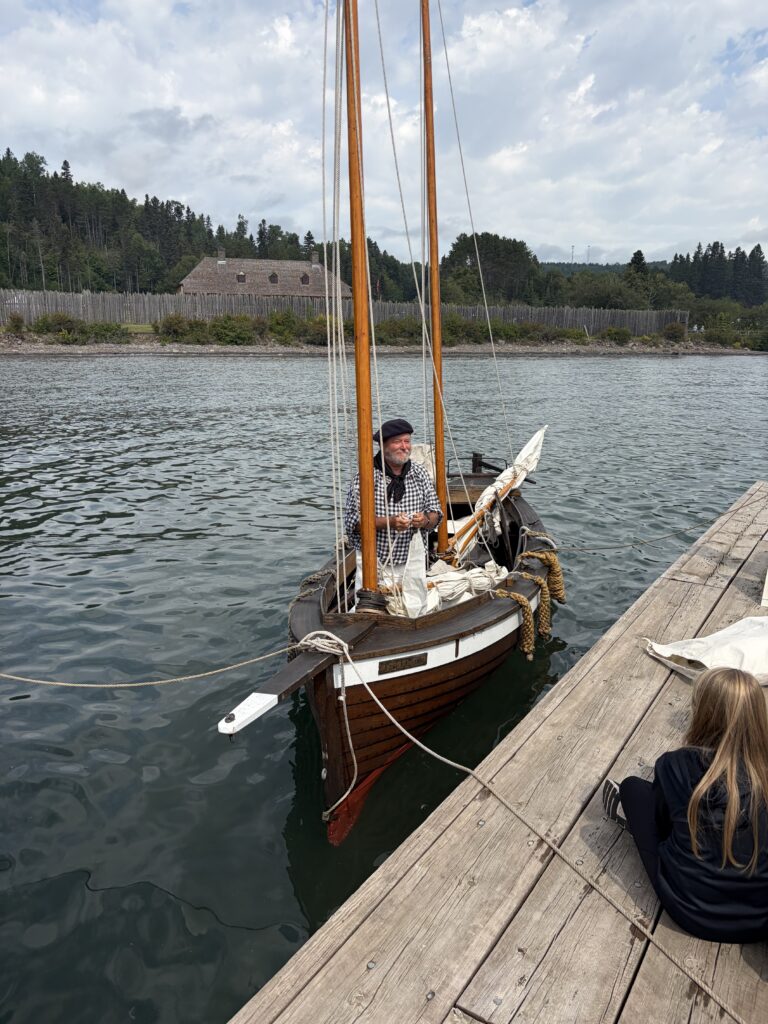
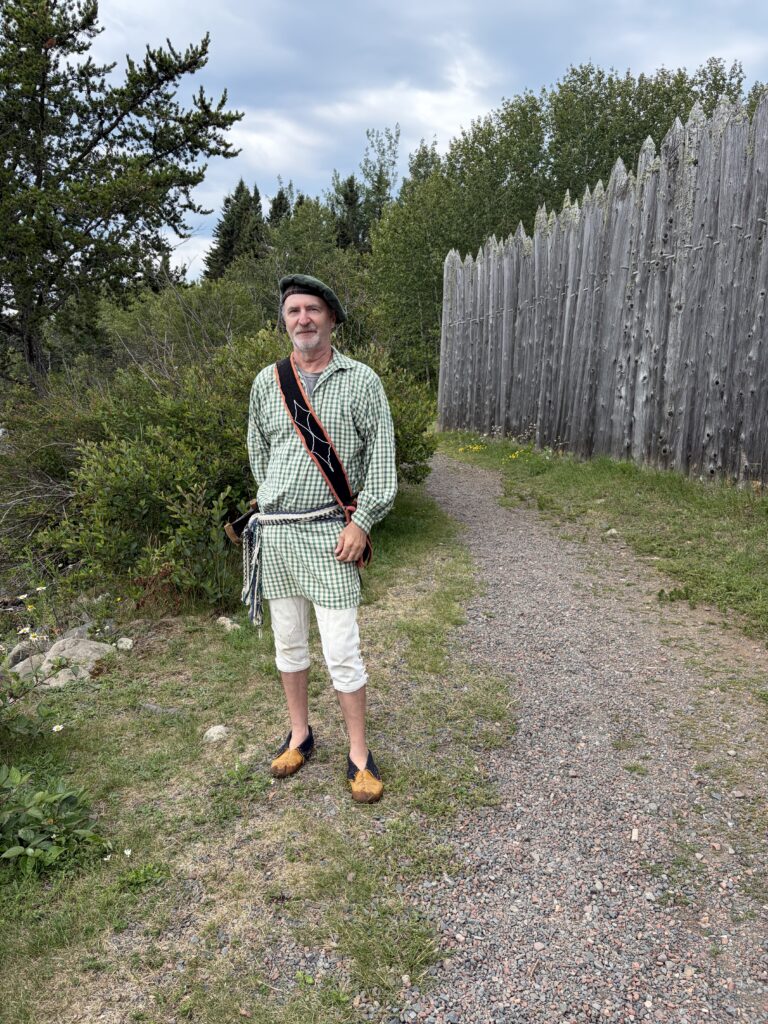
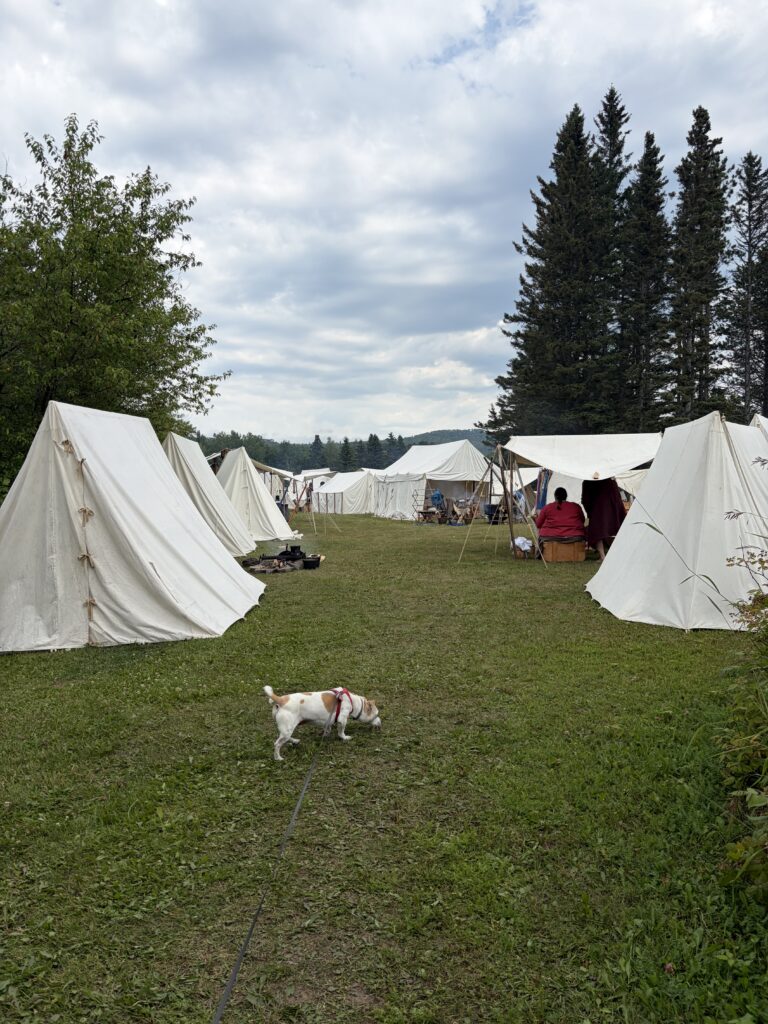
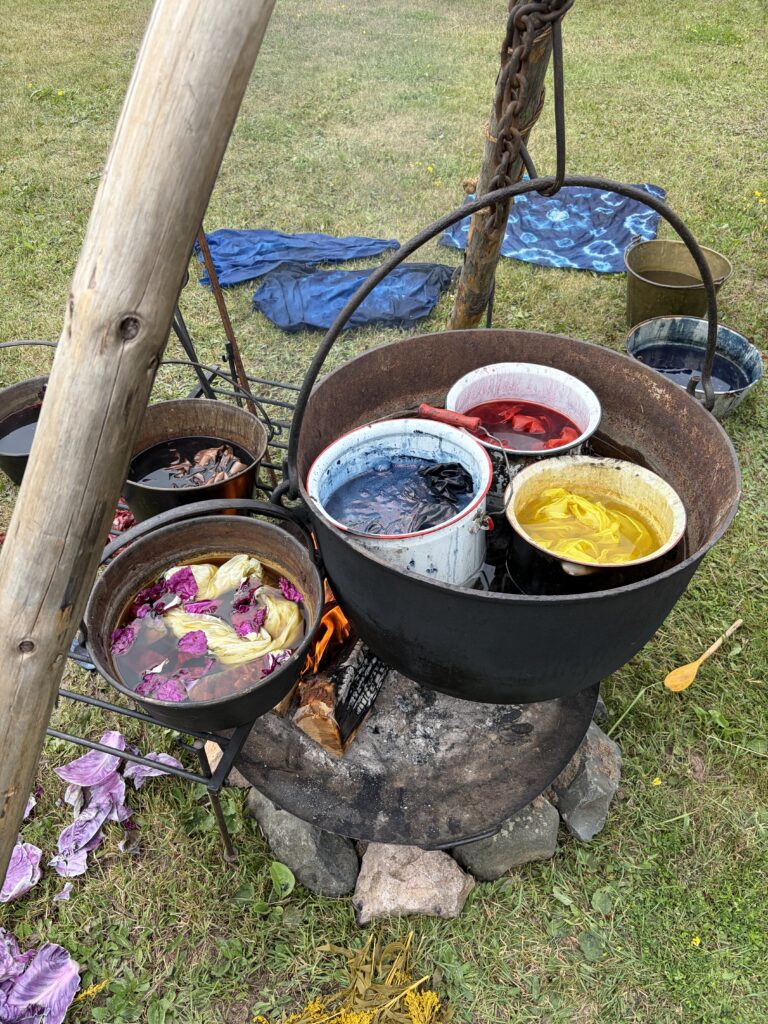
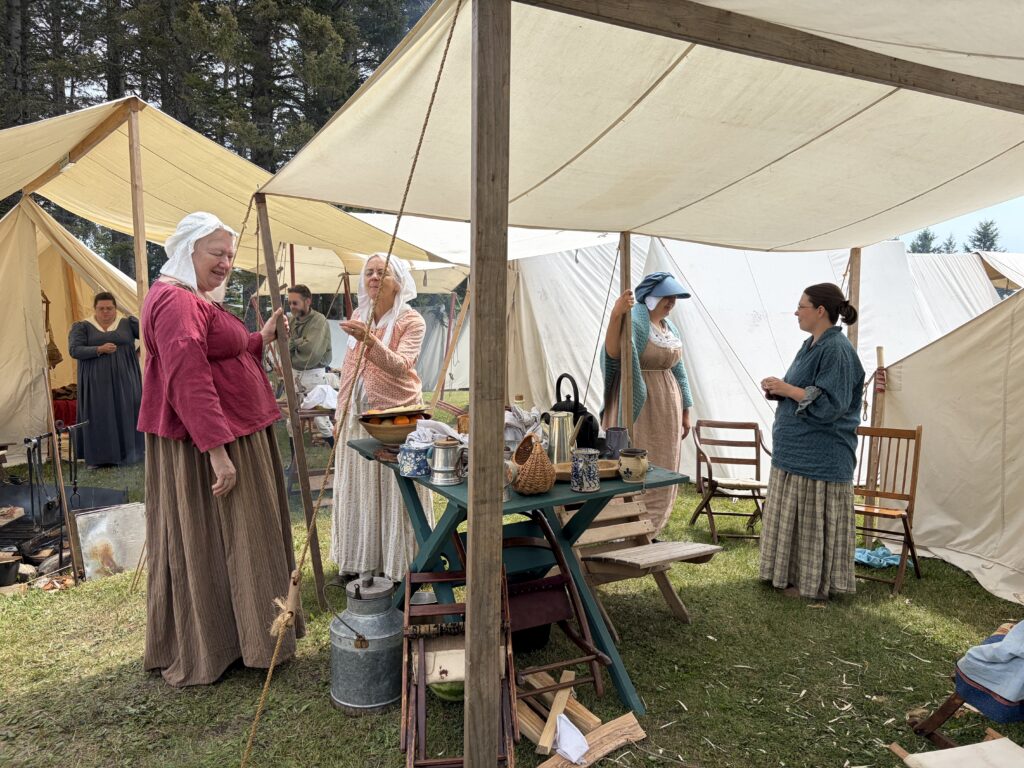
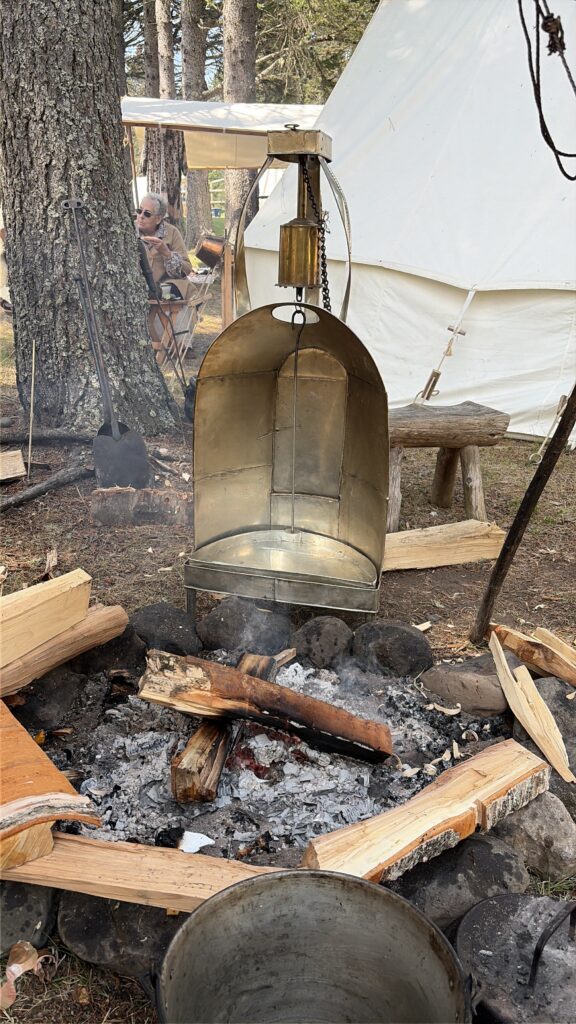
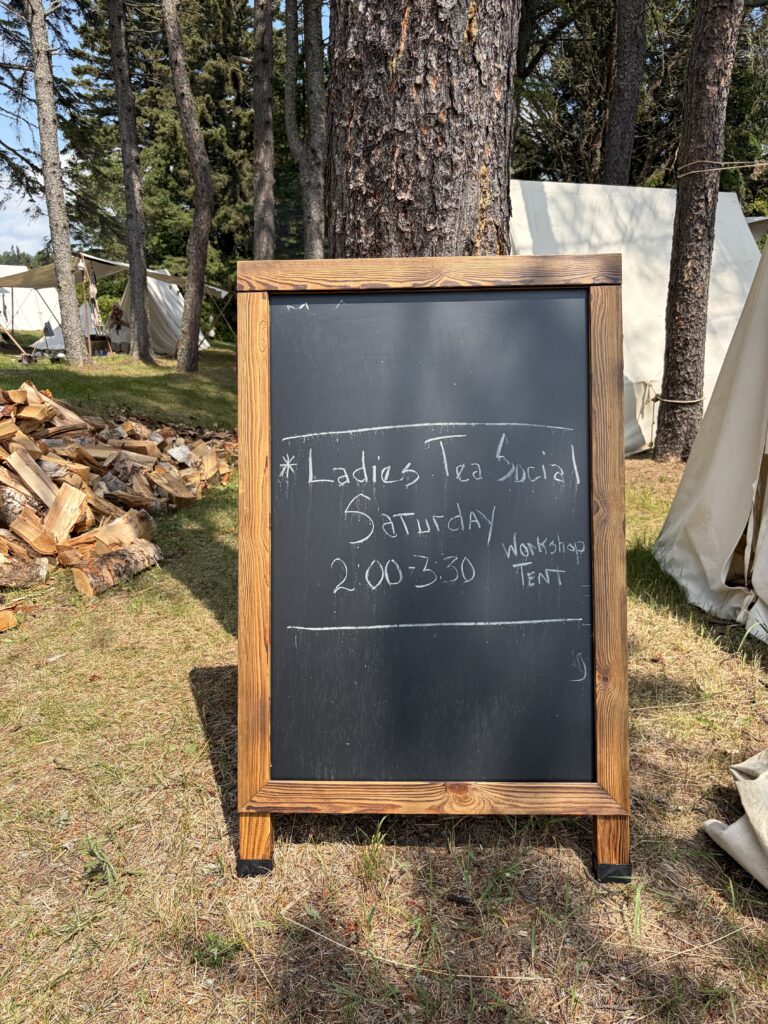
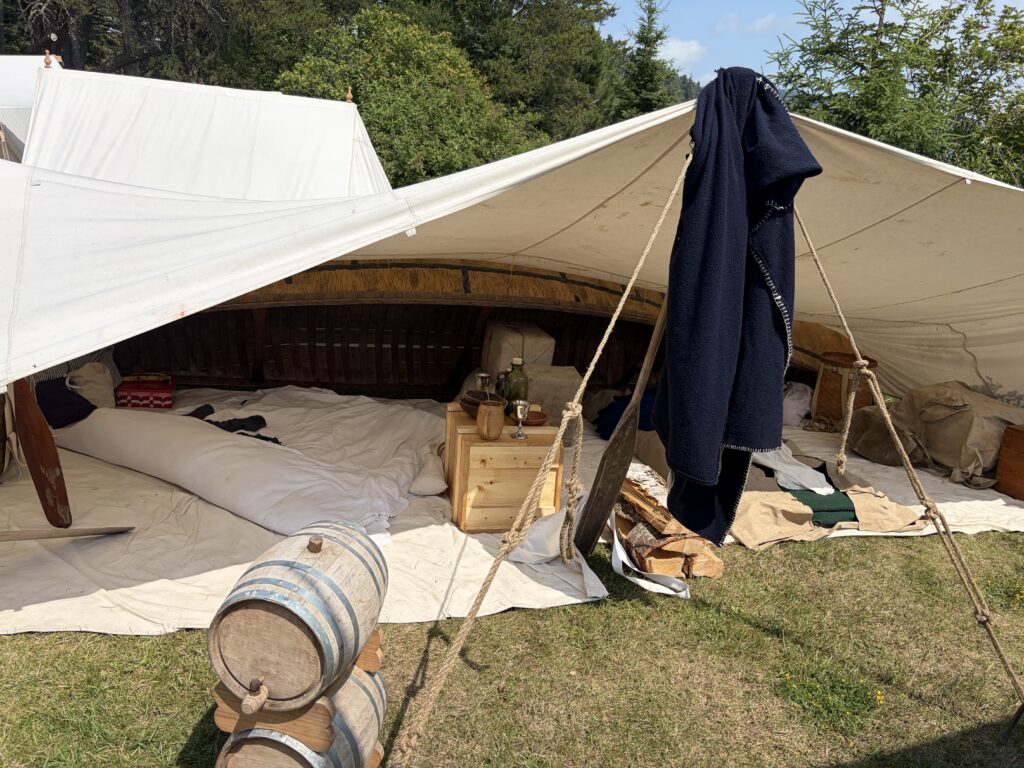
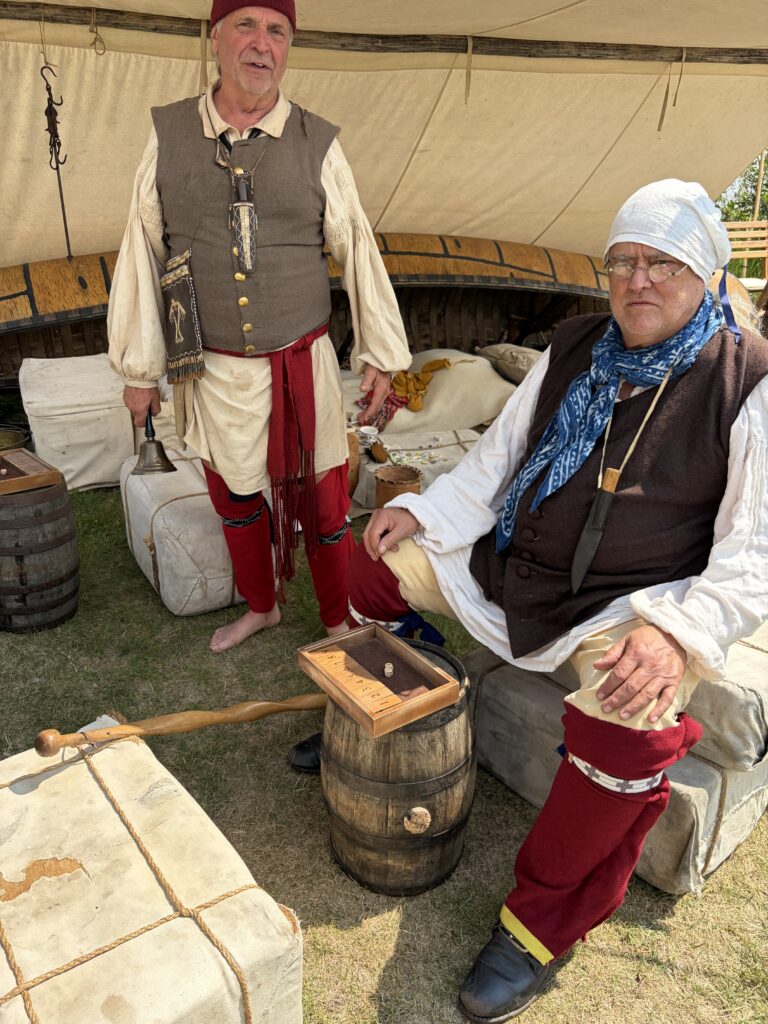
I was so glad we came—we spent nearly the whole afternoon there, talking to everyone and having the best time! Both of us are interested in history, I was eager to know more about the rendezvous that Suzi does, and everyone there was happy to talk about and demonstrate what they do. A group of portageurs had shelters set up against their canoes, and they were playing games of the period. They showed me a few, then invited me to try my hand at Close the Box, a betting game. I won in a clean sweep (beginners luck), but we were having such a good time that one gentleman gave me a portable version of the game, complete with real bone dice.
it’s hard to see in the last picture, but there is nothing covering their legs above their woolen leggings. Although their voluminous shirts cover their upper legs, it’s clear there is nothing but a Native American style breechcloth under the shirt. I asked them about that arrangement. They pointed out that full pants (and certainly deerskin pants, as Canadian portageurs are often incorrectly depicted), would quickly become waterlogged, as they need to get in and out of canoes on a portage. The removable leggings stayed dry and warm.
One of the last men we spoke with lamented the dwindling numbers of participants. “Young people just aren’t interested in our history,” he said. Russ, who holds a volume of knowledge about the history of Ashfield that will probably die with him, agreed.
Minnesota and Lake Superior
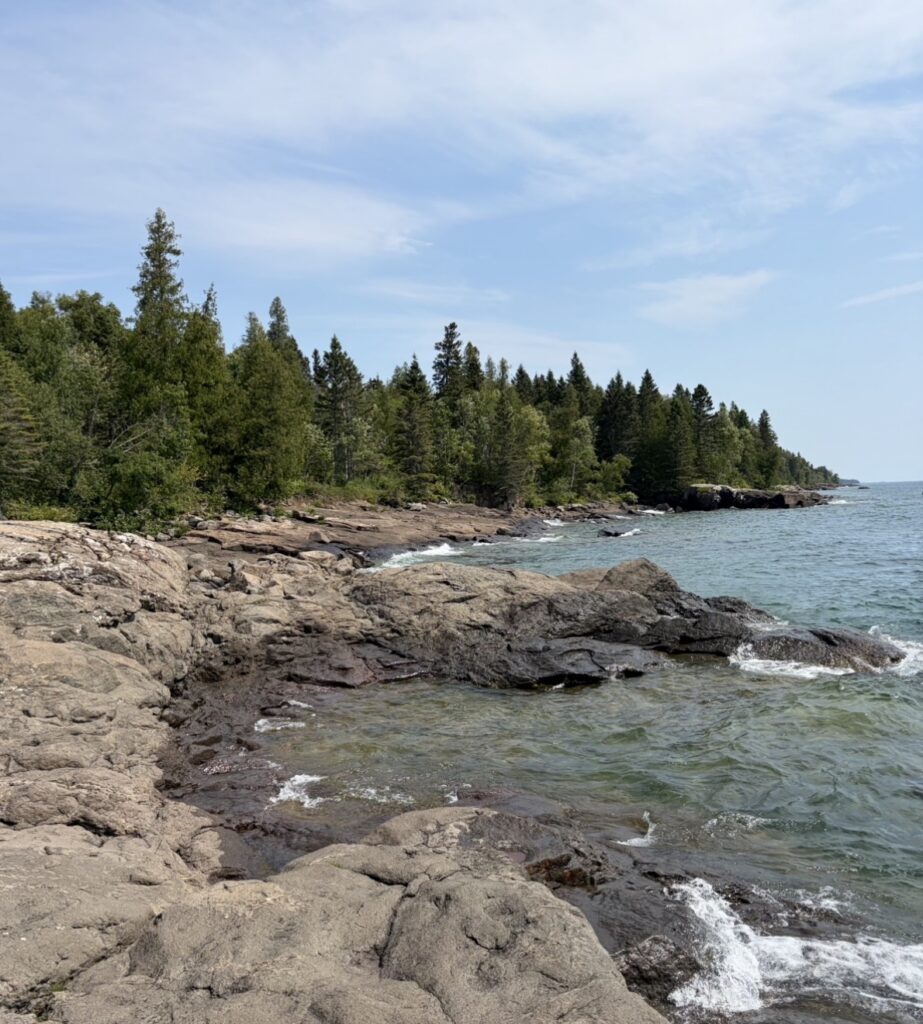
We stayed at one more campground in the MN woods before arriving at Lake Superior—Birch Lake Campground in the Superior National Forest. Now, a National Forest is cool and all, but here’s the thing about a lot of lake campsites. They’re great for boaters and fishermen. Without my kayak, there wasn’t much of interest to either of us. Both Zippel Bay and Birch Lake mentioned hiking, but there wasn’t really a trail in either campground, except for the walk out to the lighthouse at Zippel Bay. (I’m sure there’s hiking SOMEWHERE in Superior National Forest, but not at Birch Lake). So both sites were a bust in my book—and full of mosquitos, to boot!
But then we reached the shores of Lake Superior and Tettegouche State Park, where the scenery and hiking were superb! At the Baptism River Campground, we were able to get a site with electricity (always nice), and we quickly discovered that the local Franklin’s Ground Squirrels were very friendly. I’m learning that there are a lot more than just red and gray squirrels in the US and Canada.
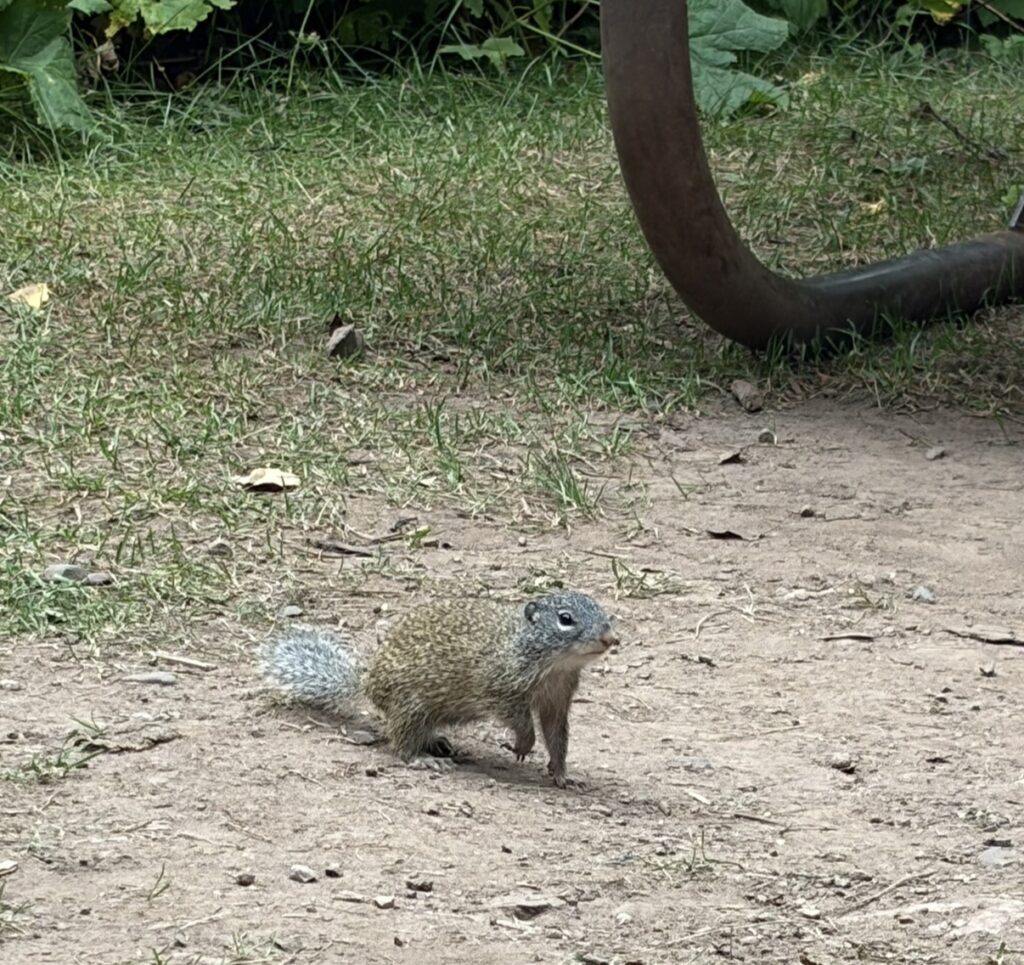
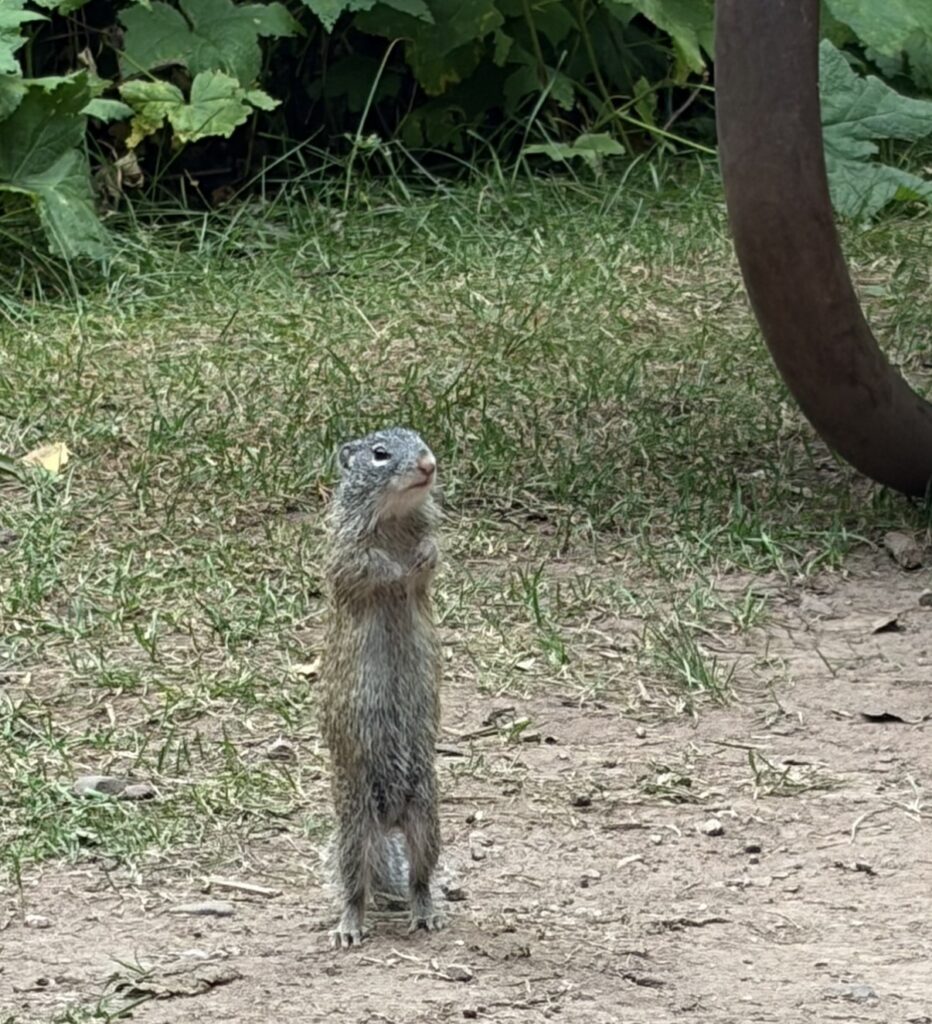
And the scenery!
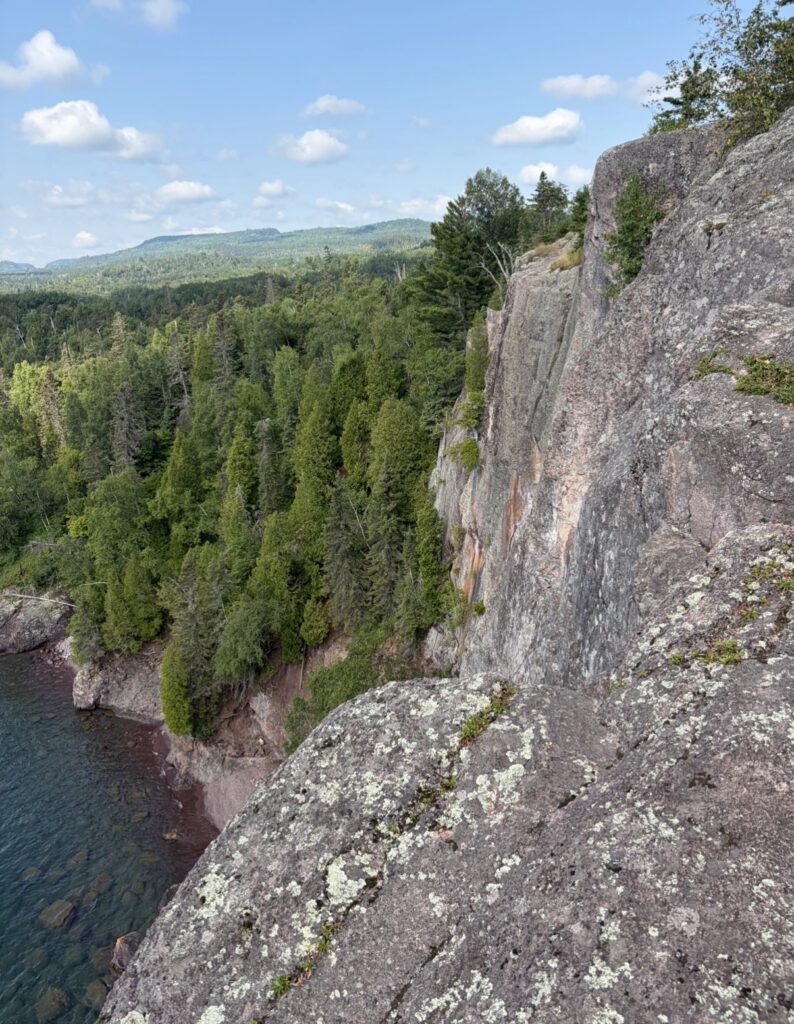
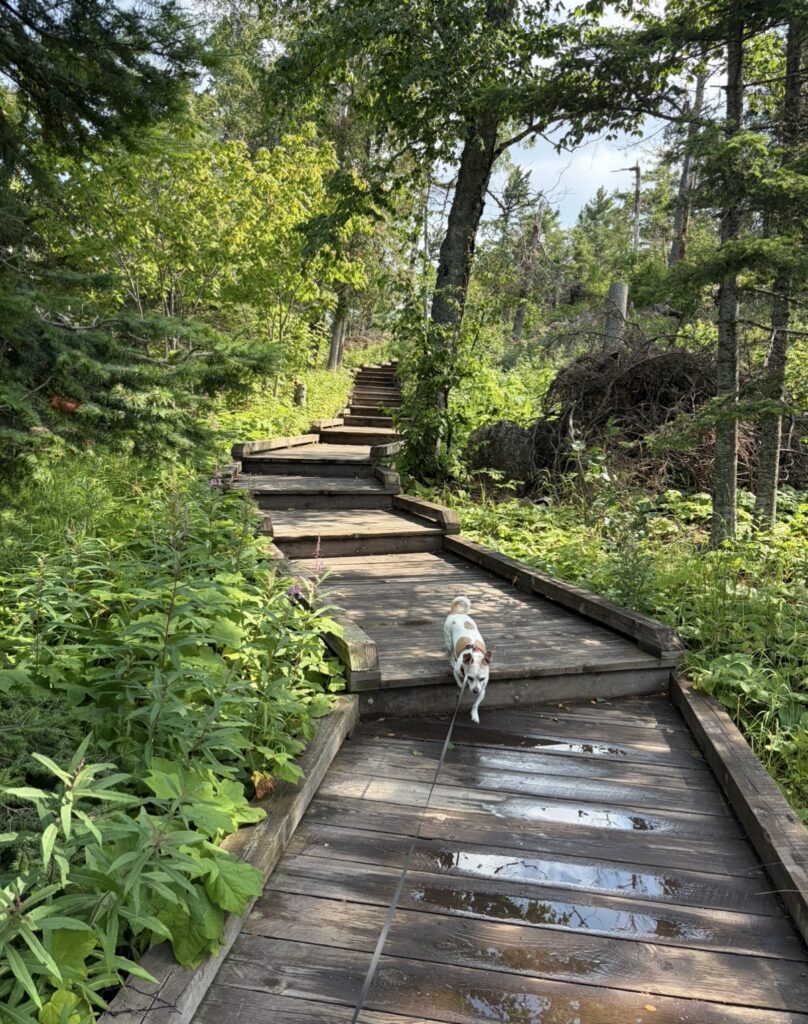
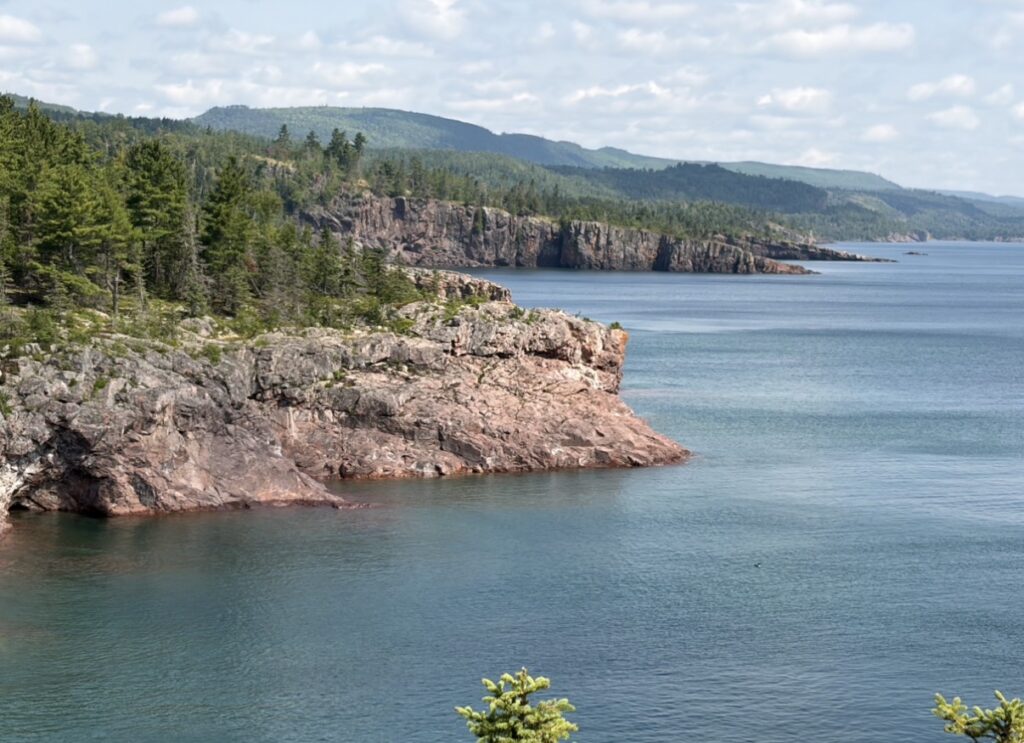
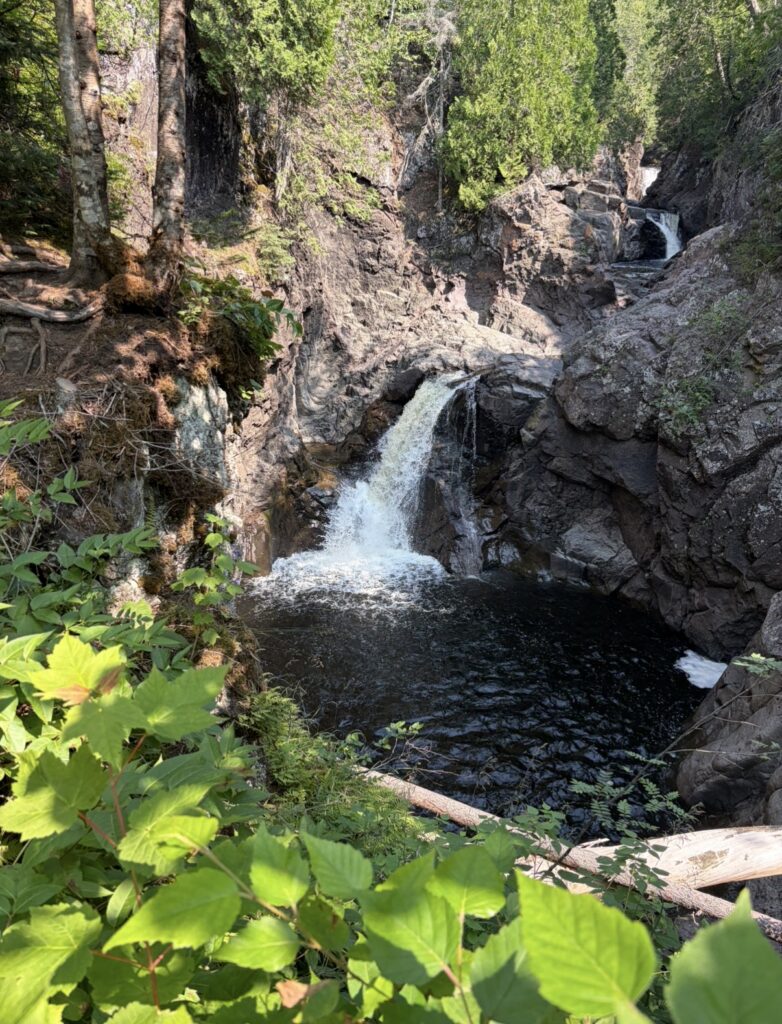
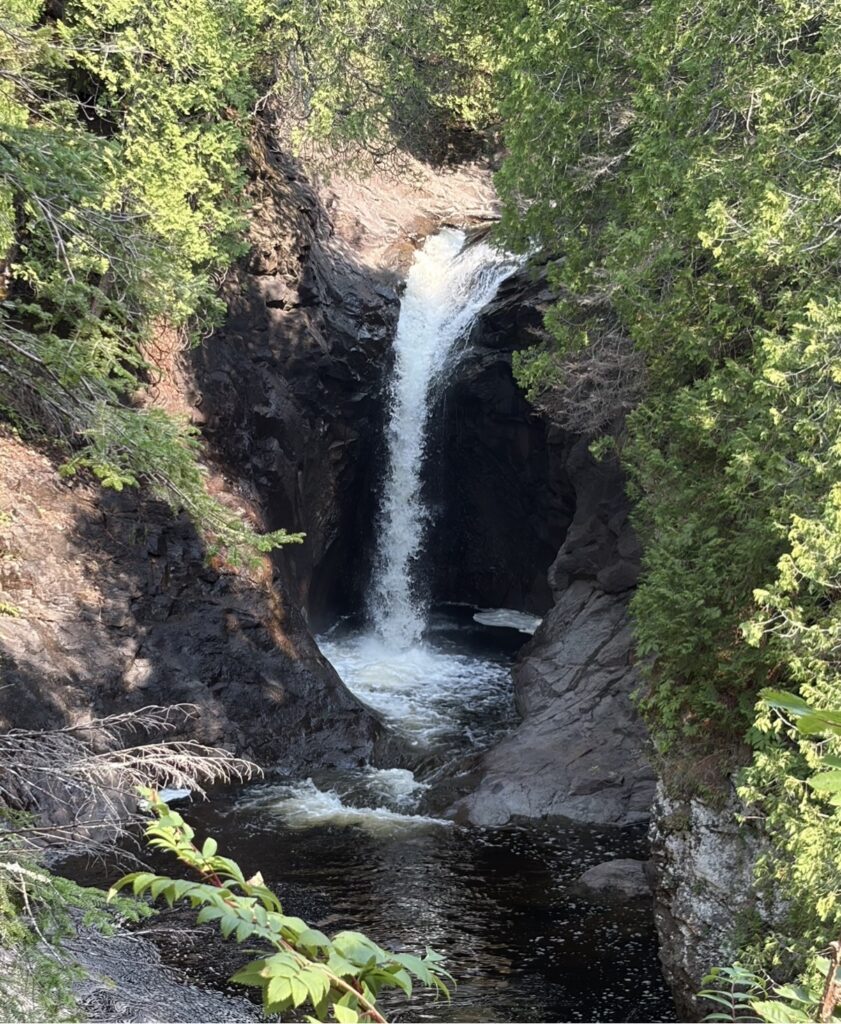
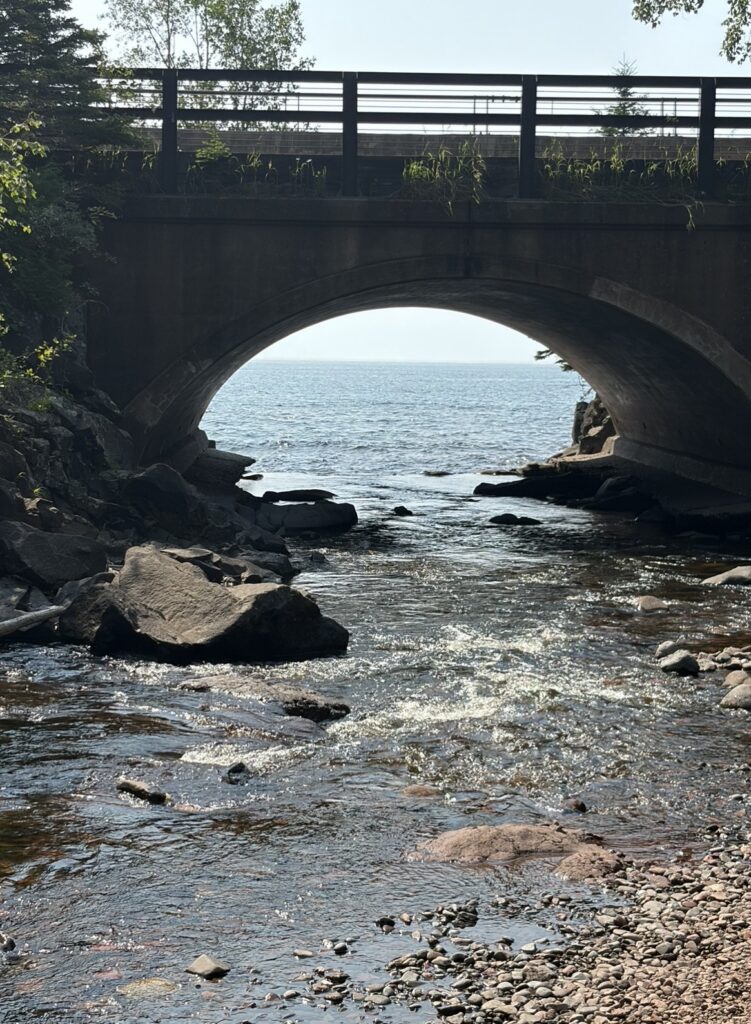
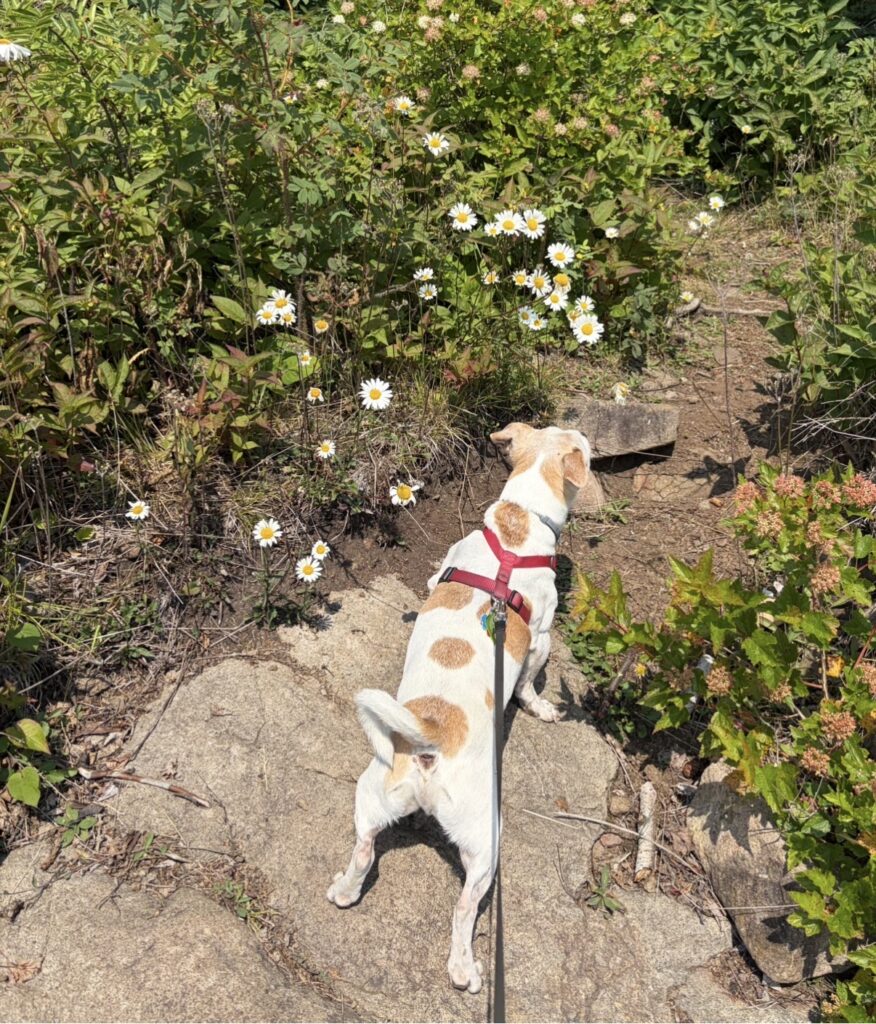
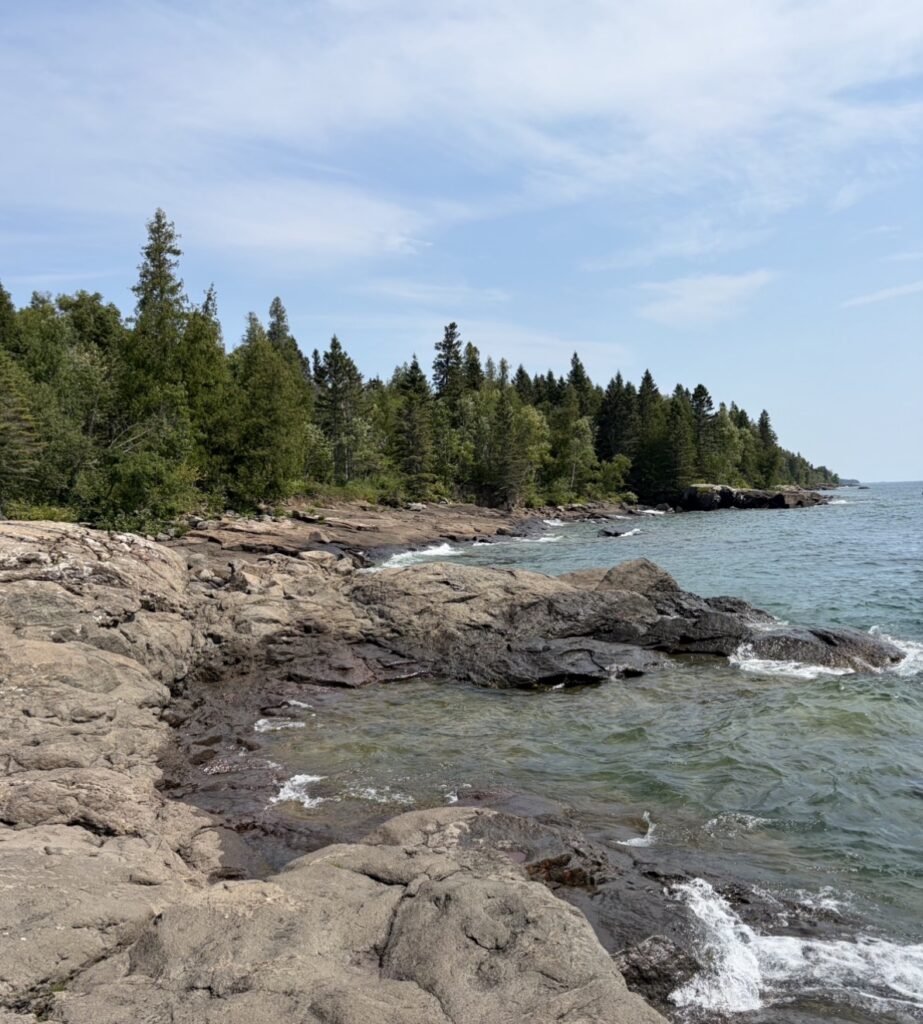
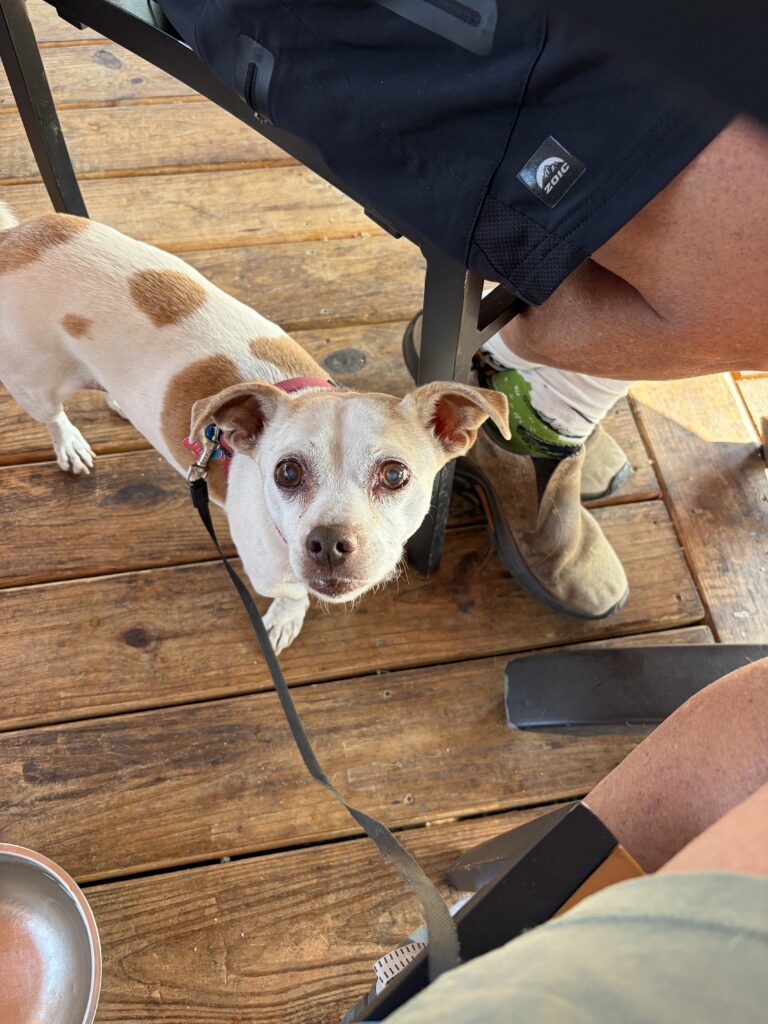
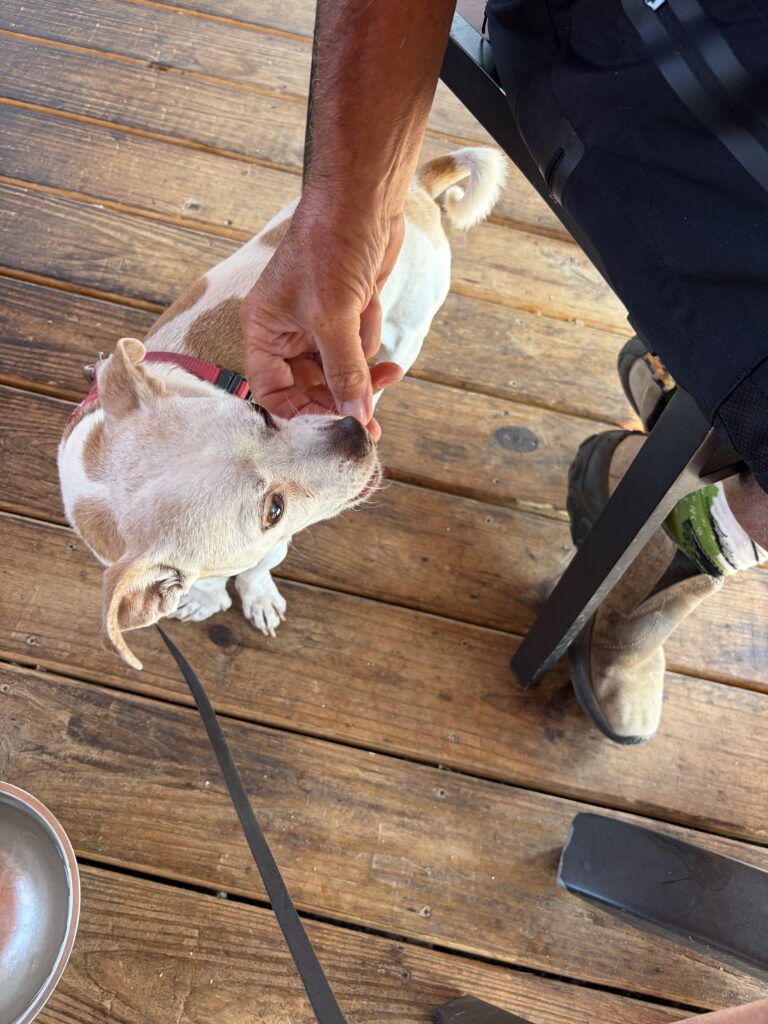
We had an active three days there, and then it was off to Cascade River State Park, also near the Superior shore. We headed into the town of Grand Marais (very scenic but touristy) so Russ could get cell service to upload his bicycling route and contact some of the places he’s hoping to stay. Once in Ontario, the plan is for him to begin riding from our first stop at Kakabeka Falls Provincial Park to Thunder Bay, then on around the northern shore of Superior, while I move campgrounds every few days, giving him time to catch up and at least overnight with me at each campground. By the time Russ finished, it was late enough for an early dinner and, by luck, we were adjacent to a restaurant that welcomed dogs on their outdoor porch. On the left is the look we get any time we look down. Who can resist?
Tomorrow we cross the border into Ontario!
Travels With Moe
Weds. night after arriving at Zippel Bay, we were both in need of a shower. It was brutally hot and muggy, flies and mosquitos were everywhere, and the effort of setting up our screened in tent, while it helped with the bugs, left us literally running with sweat. There’s no electricity here, so no air conditioning in the camper.
There was no way I was going to close all the camper windows to keep Moe safely inside while we showered (if the windows are open he will bust right through the screens and leap out of the camper), so we figured we’d just bring him and leave him in the car with the ac on while we were in the bathhouse.
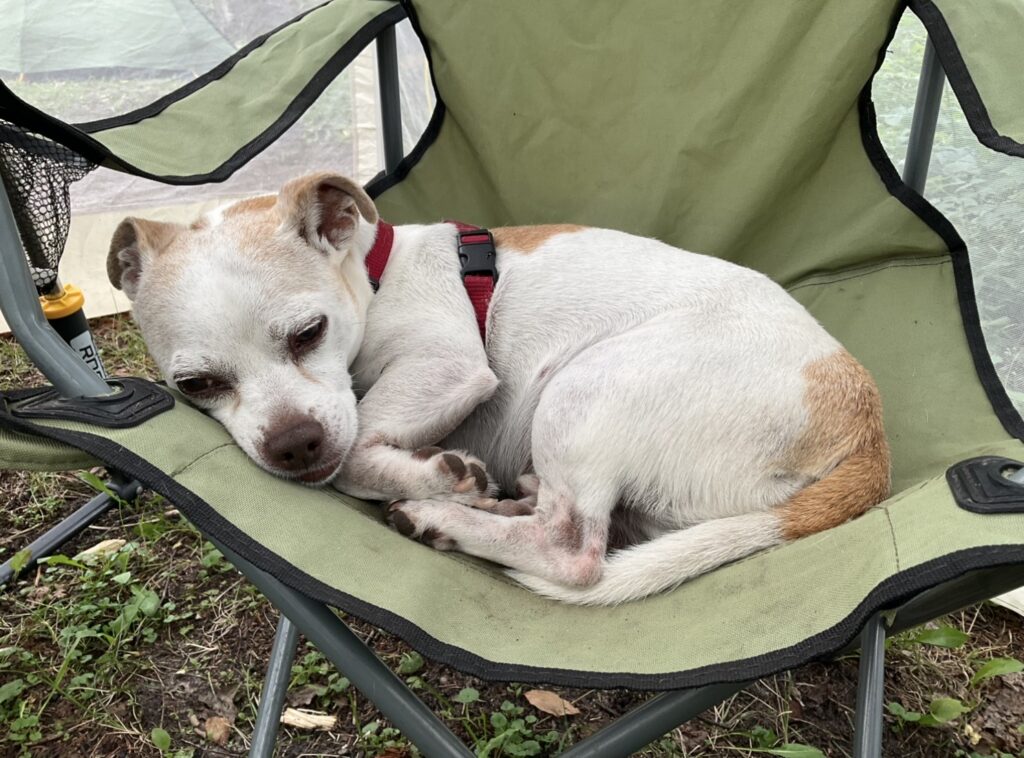
I couldn’t figure out why Moe was so restless that night, but as I couldn’t sleep either in the hot, stuffy camper (no more lovely western-style cooling off at night), I figured it was for more or less the same reason. I even got up to get him more water in the middle of the night, as he was panting and licking the condensation off the top of the cooler.
It wasn’t until I opened the car in the morning that I saw the reason for his discomfort. We’d bought a bag of Beggin’ Strips dog treats the day before and given him one or two on the drive to our campground. I forgot they were still in a bag in the back of the car, but Moe remembered and helped himself liberally to them while we were showering.
I brought his breakfast and a bowl of water to the camper—Moe ignored the food and drank three bowls of water before he waddled out of the camper, looking like a spotted water balloon. That’ll teach him to eat a bag of salty snacks before bed! Does he regret it? Absolutely not—he’d do it in a second the next time I foolishly leave dog treats in the car.
Catching Up—North Dakota to Minnesota (and to 7/30)
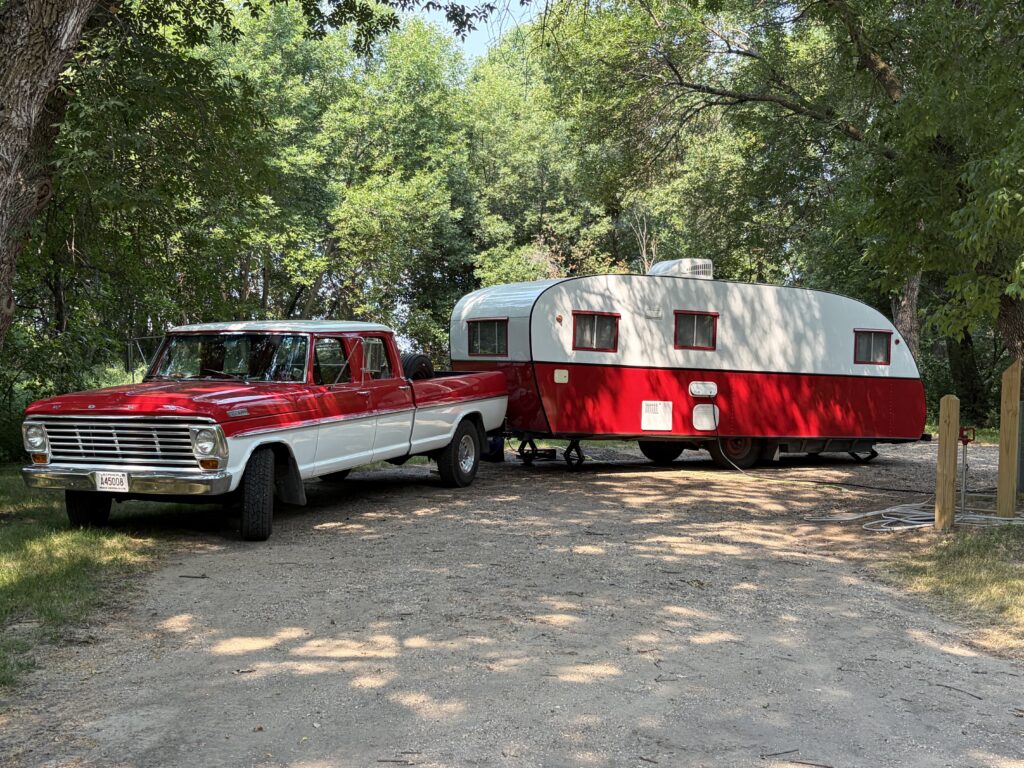
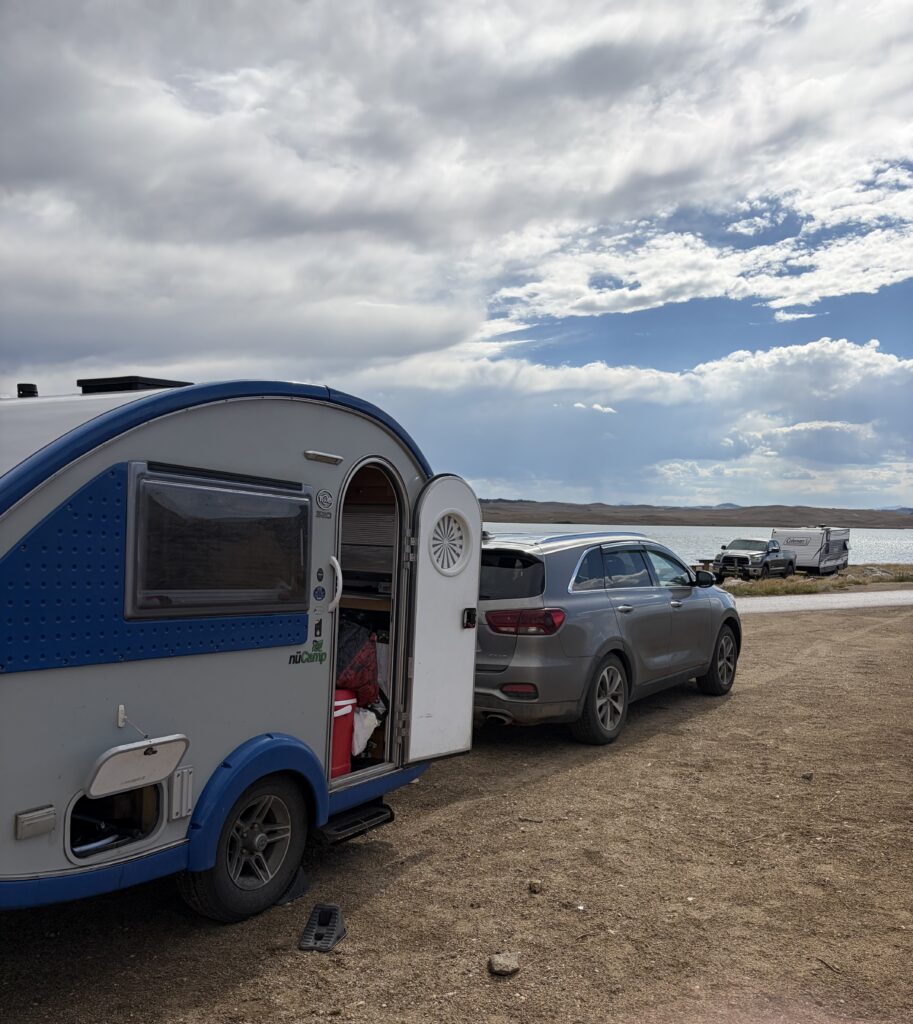
After Badlands, we stayed at a couple of parks in North Dakota before making it to Minnesota and Zippel Bay State Park. The North Dakota parks were nice, but nothing special. Both were on big fishing lakes, which made us the oddballs as we neither boat nor fish. One park did, however, have this very snazzy camping duo. I never got to meet the owners, though Moe and I walked past them more than once in hopes of getting to ask about their vehicles. Maybe I should have electric blue striping added to my Kia?
The transition from dry western climate to a more humid eastern woodland was pretty abrupt—as soon as we reached Minnesota, the air turned muggy and the mosquitos came out in force! Maybe not surprisingly, Zippel Bay State Park where we’re staying isn’t crowded (at all). But as we pulled into our camping loop, there was another T@b just two sites away. We had a nice chat with the owners, a bit younger than us: he is recently retired, she’s still working, and they had a beautiful chestnut brown, blue-eyed Australian shepherd named Freya. We got to visit while Moe and Freya made friends.
Later, talking to the father of a family on our other side, we learned that this park marked a culmination of sorts—he’d hiked or camped at every one of the 65 state parks in Minnesota! When I asked him what was next, he said he had yet to visit the two national parks in the state.
Badlands National Park
it was HOT when we got to Cedar Pass Campground. The host, a young woman named Jade, was a delight. Most camp hosts are older; retired people who live part or all of the year in their RVs, hosting at different campgrounds (back in ‘22, we’d met a host who lived year-round in her RV; she spent the summer in Virginia and the winter in a campground in Florida.). Jade had chosen the lifestyle early on, and she was loving it; traveling all over the country, one camp host assignment at a time.
Here, I’d managed to book three nights, as Russ had expressed a desire to bike through the park. The next morning, he set out before me. Moe and I left later, in air conditioned comfort. Once again, we were surrounded by scenery of indescribable beauty.
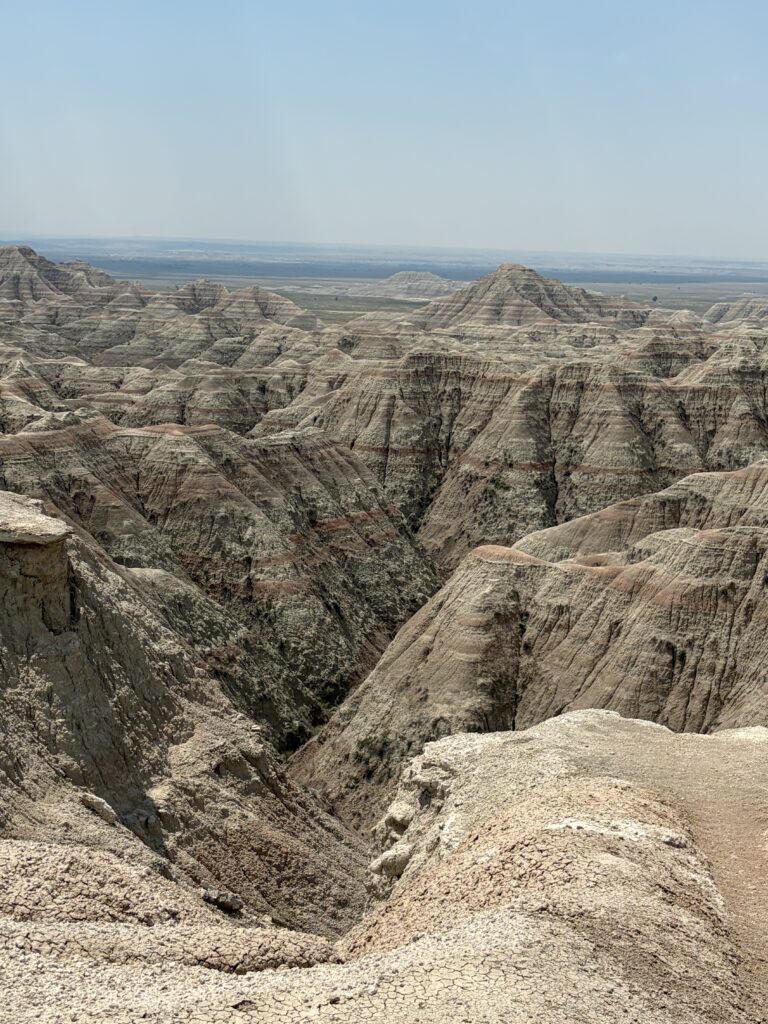
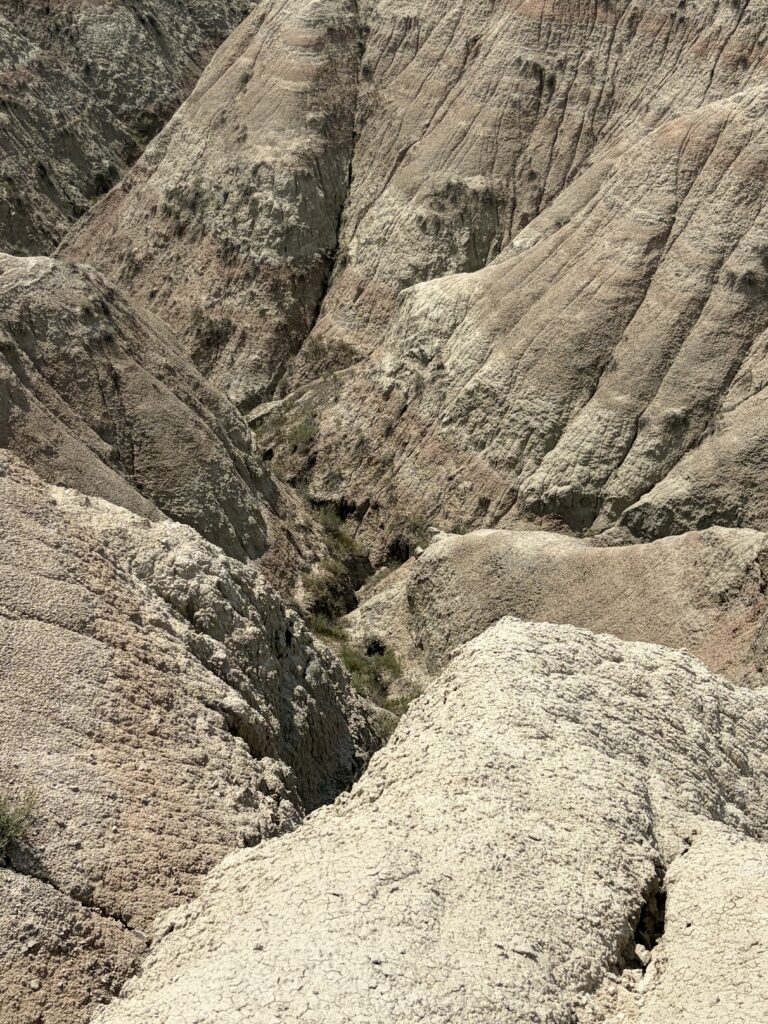
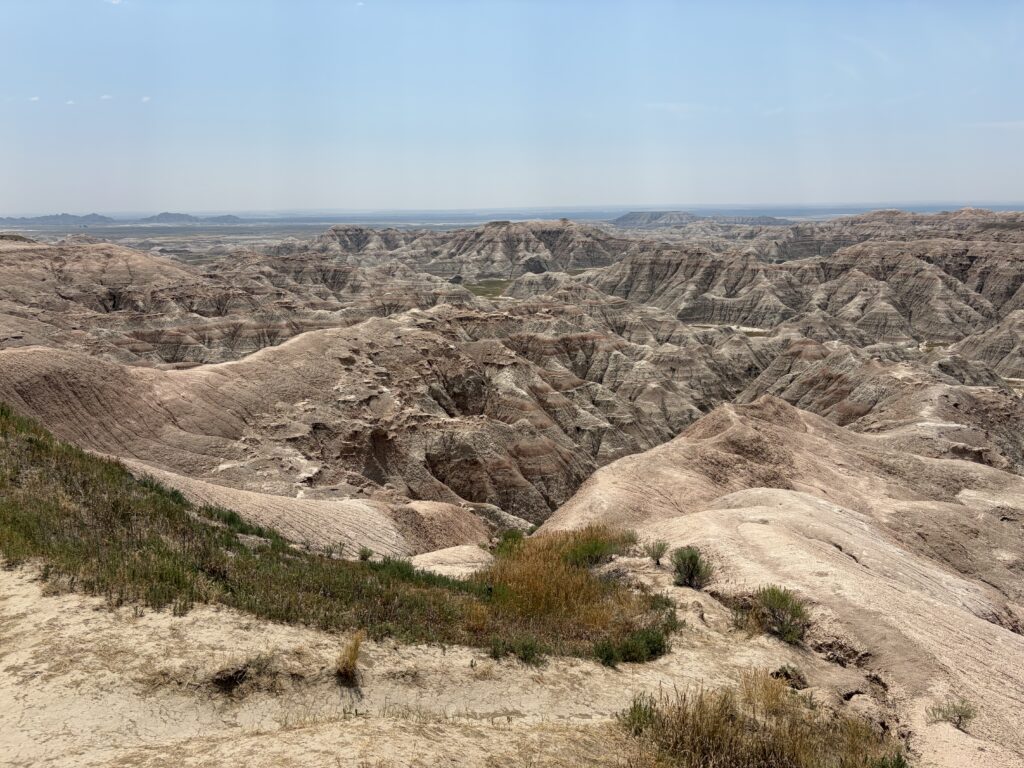
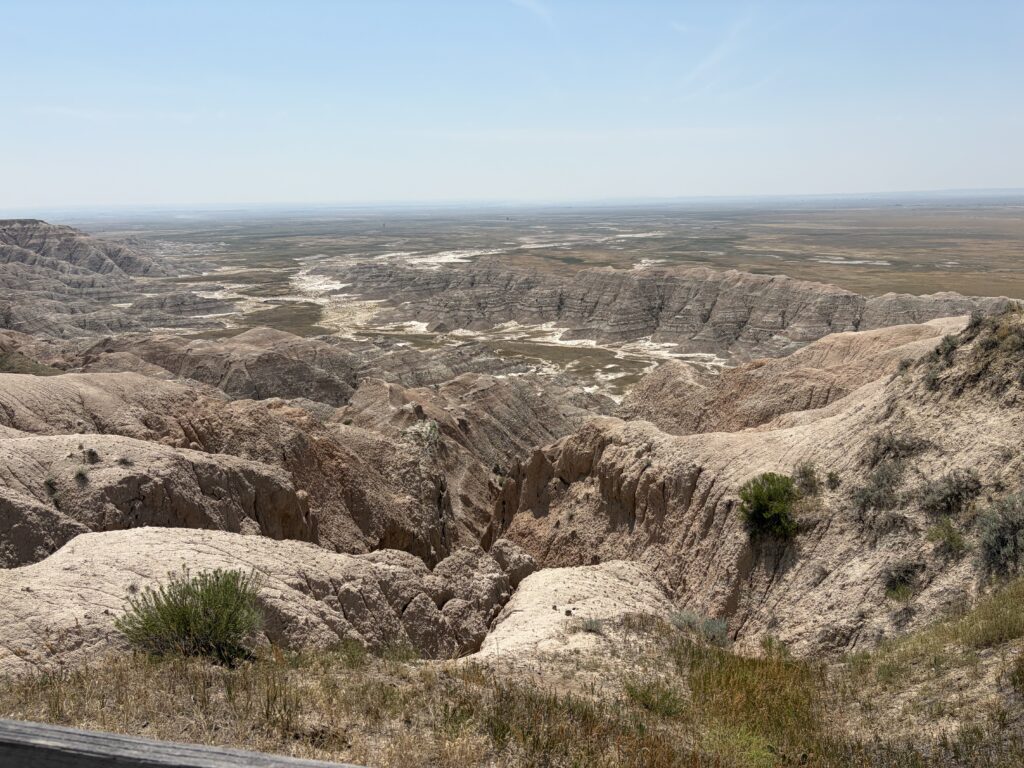
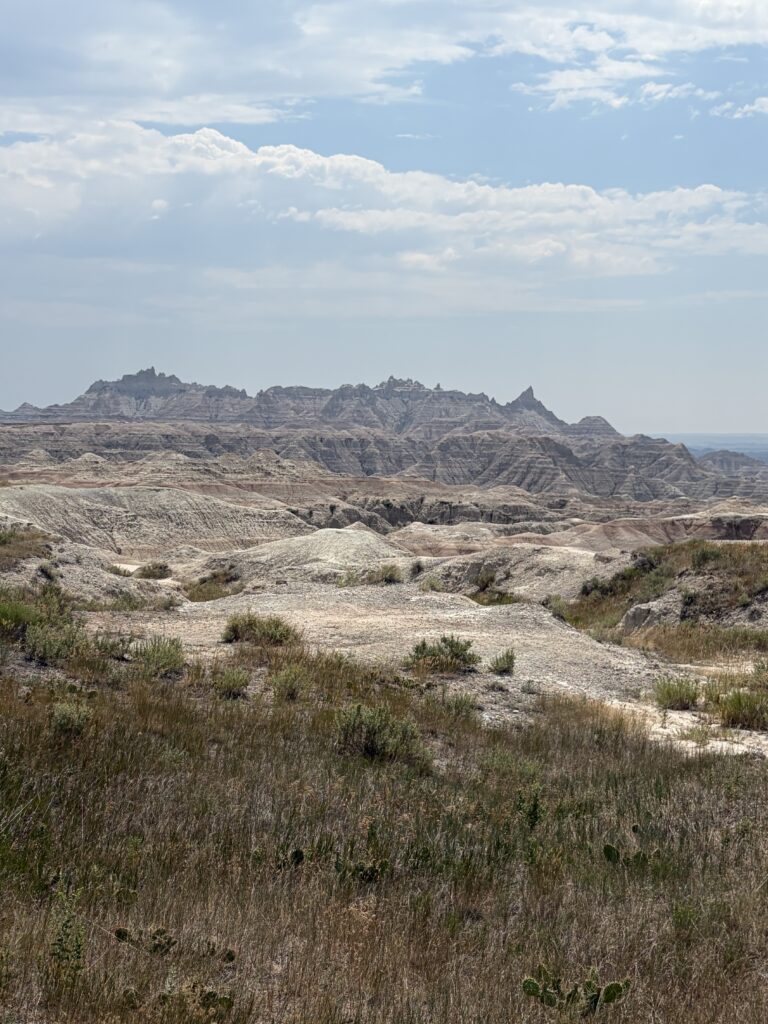
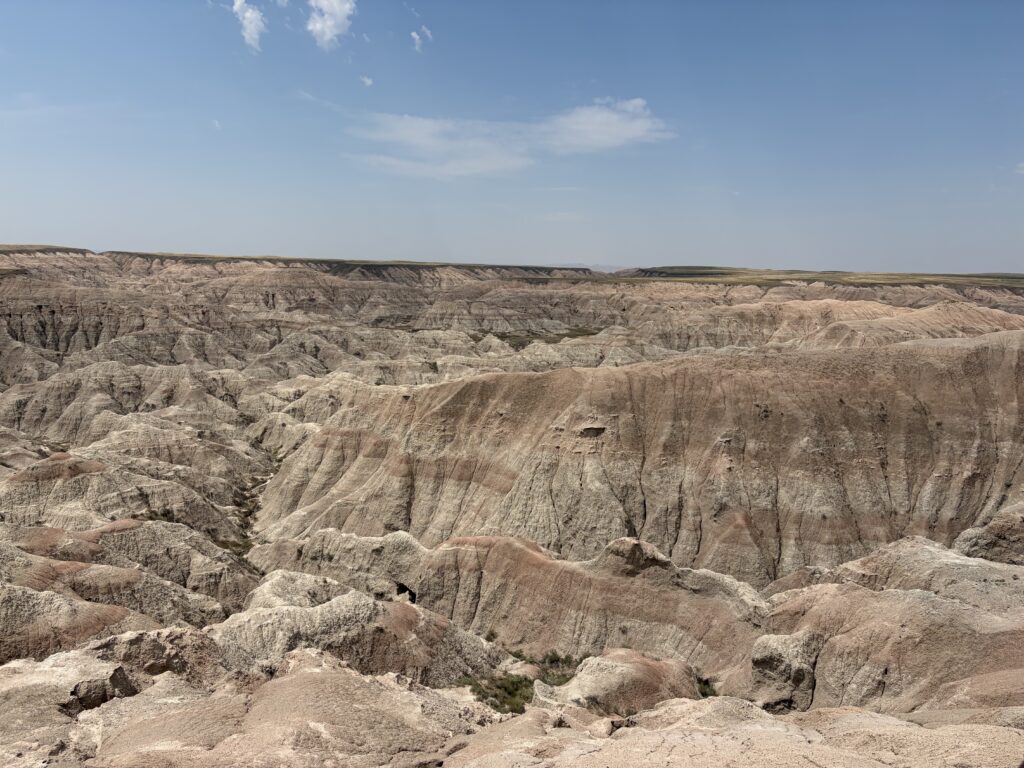
Moe had a great time, even though he wasn’t allowed on any trails.
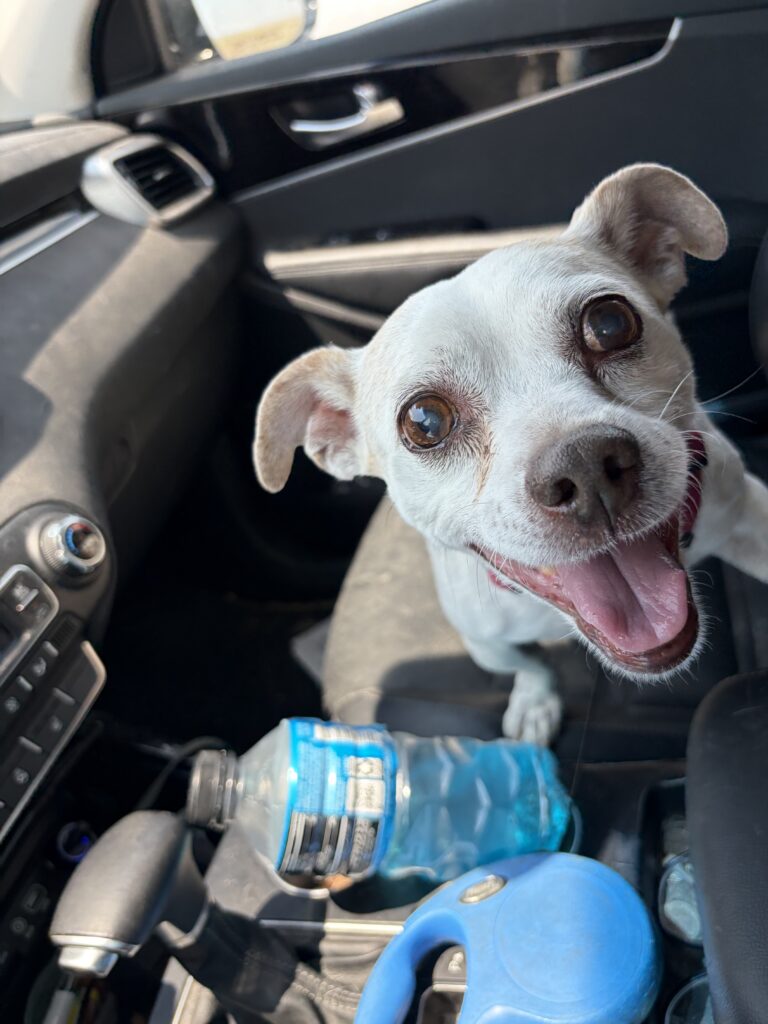
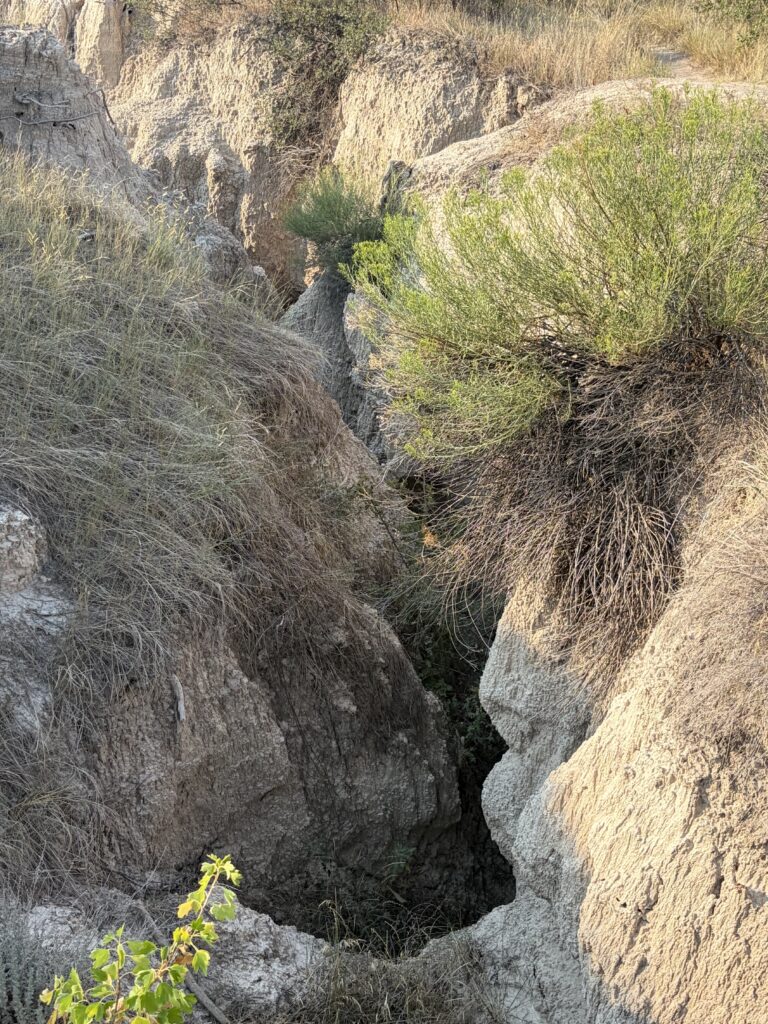
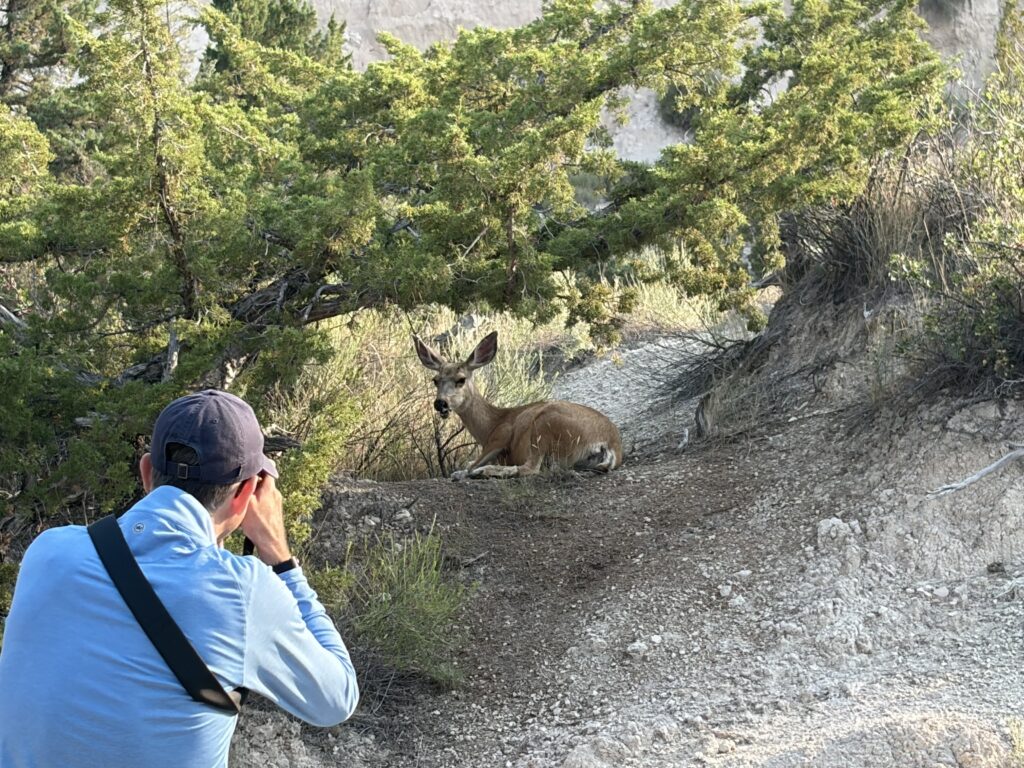
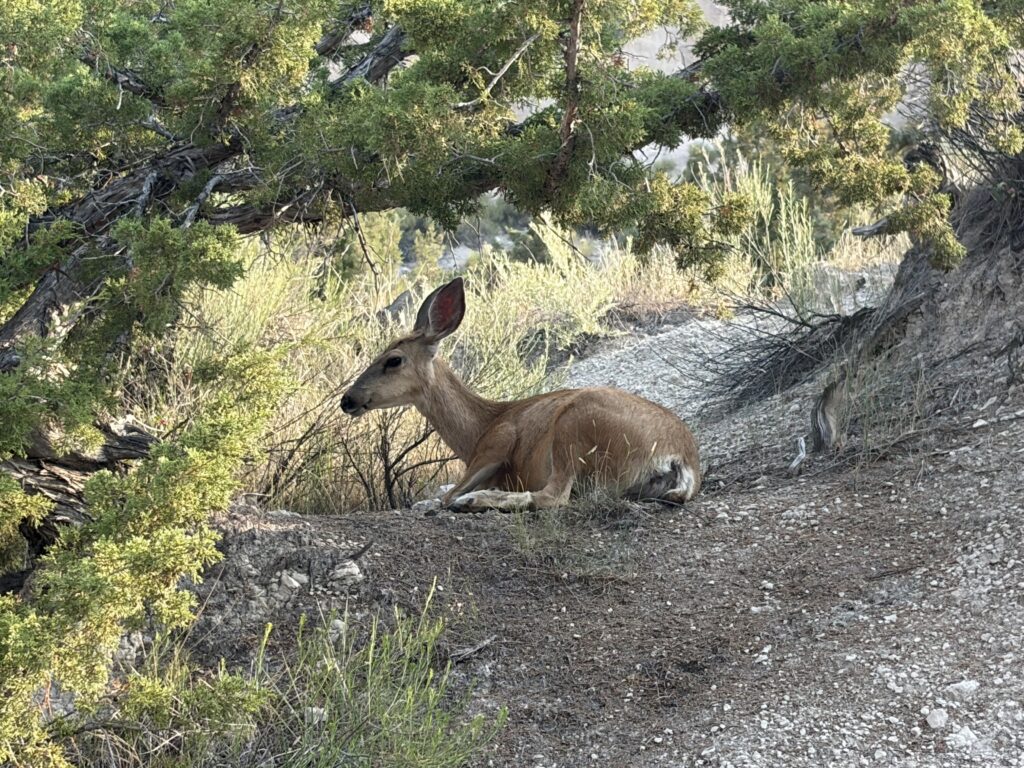
Russ’s ride was short, due to extreme heat. The next day I headed out early to hike some of the shorter trails along the eastern road through the park. One of the trails—Cliff Ledge—was surprisingly lush, a pocket of trapped moisture holding trees and shrubs and plenty of wildlife, including one very photogenic mule deer. Russ rode out one of the dirt roads that cut across the park.
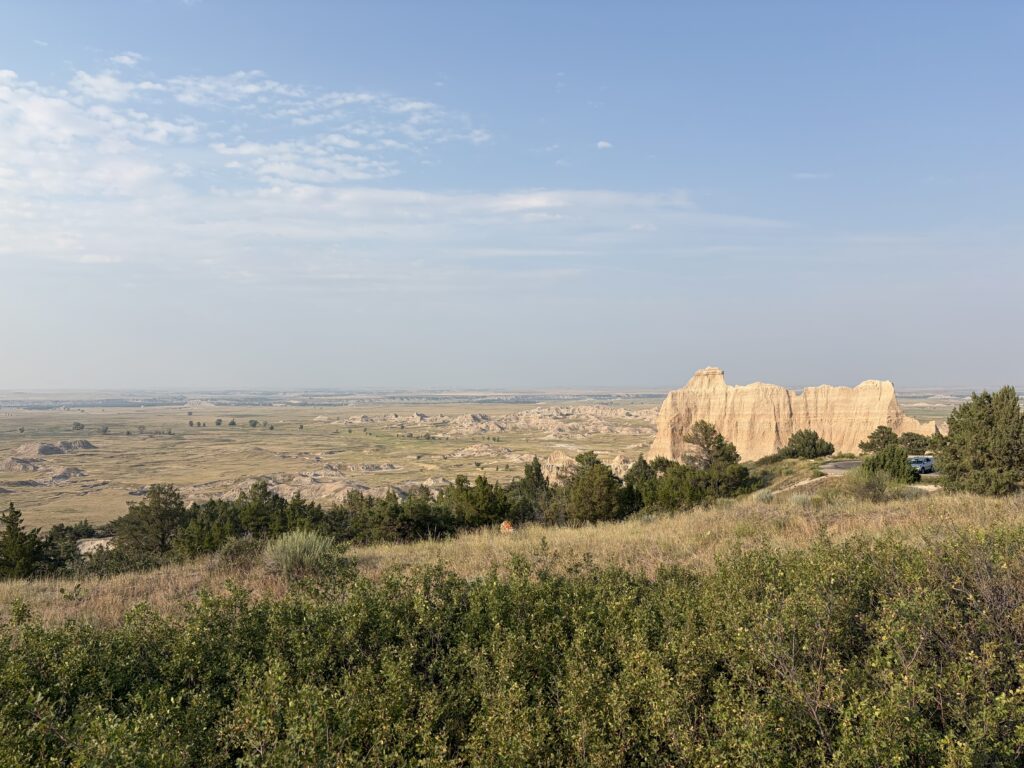
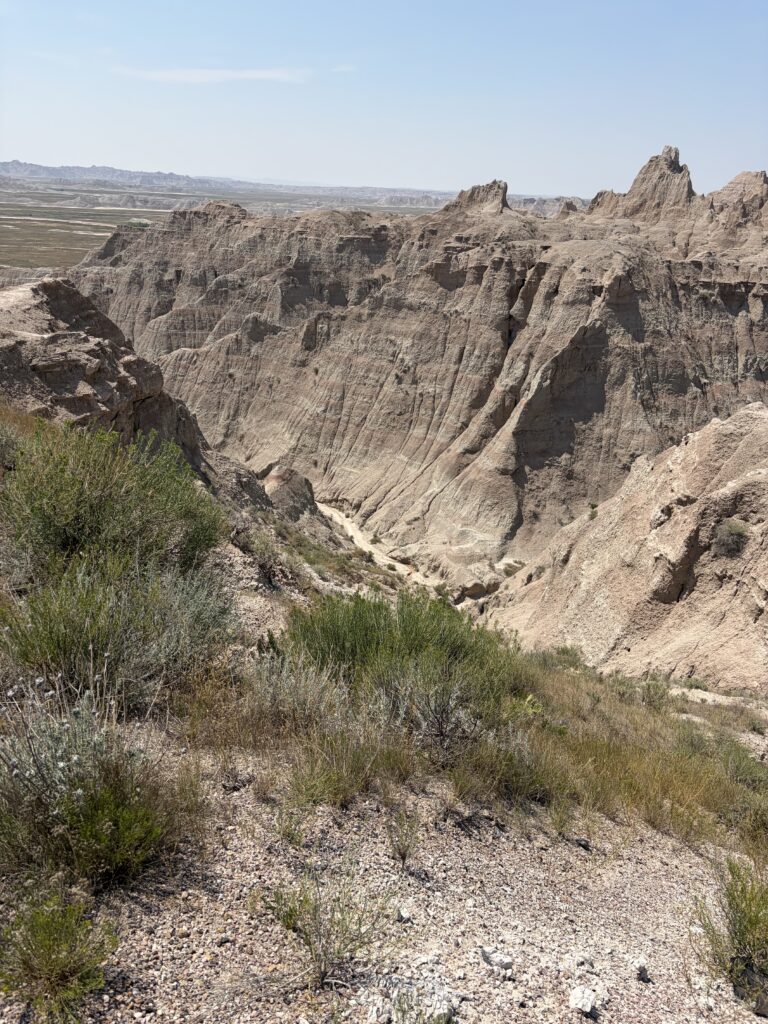
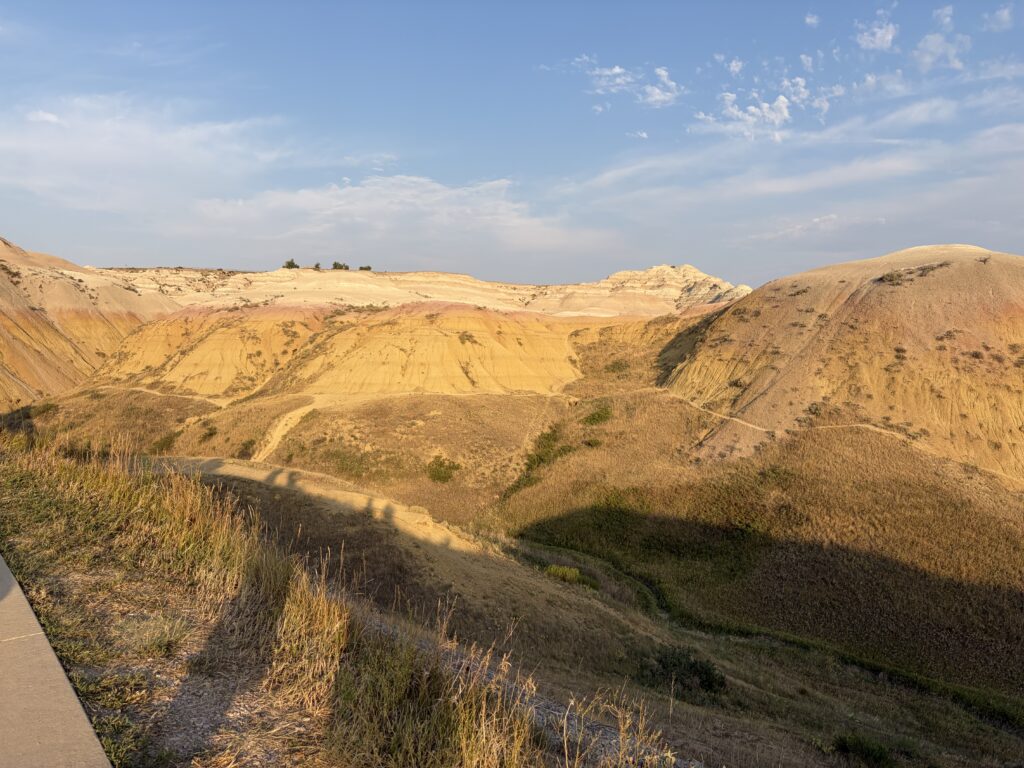
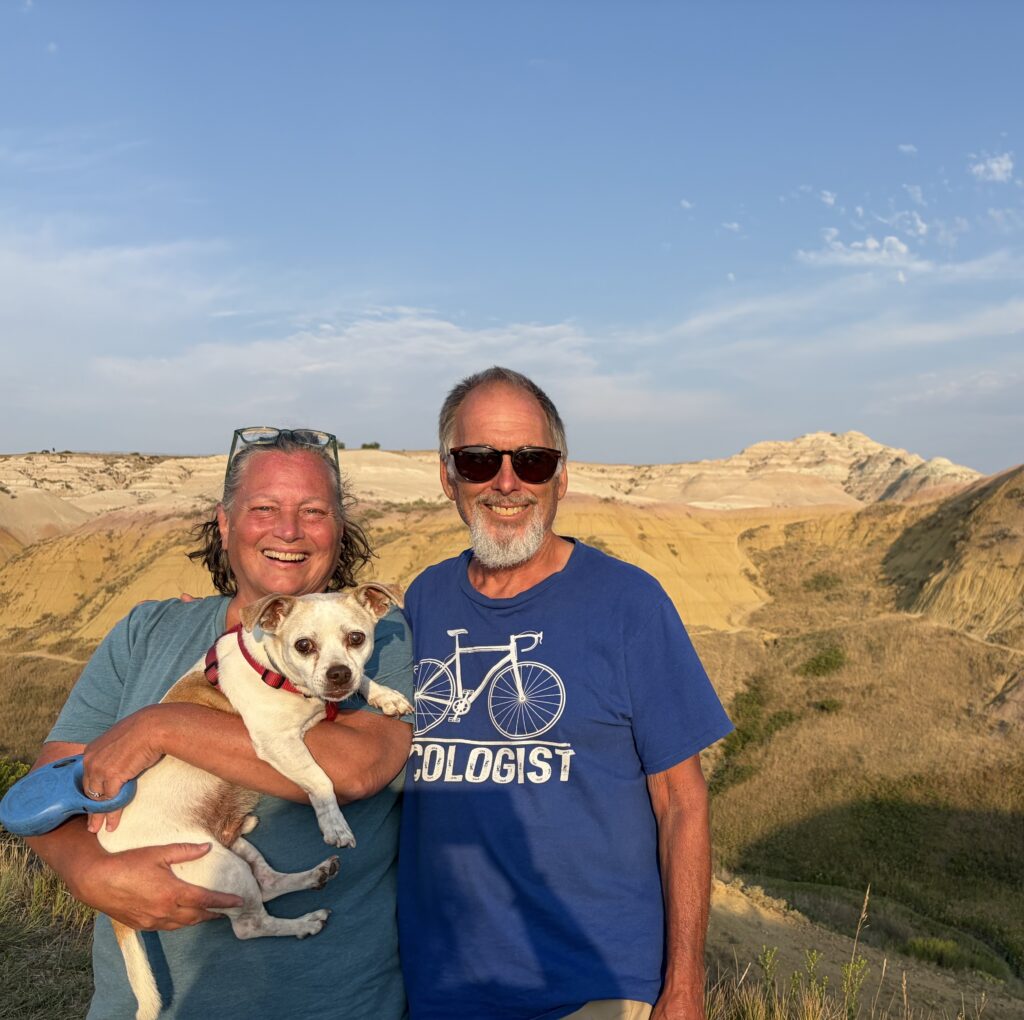
Later, we set off together for some “golden hour” photography. I particularly wanted him to see the Yellow Mounds area at sunset. Our timing was perfect.
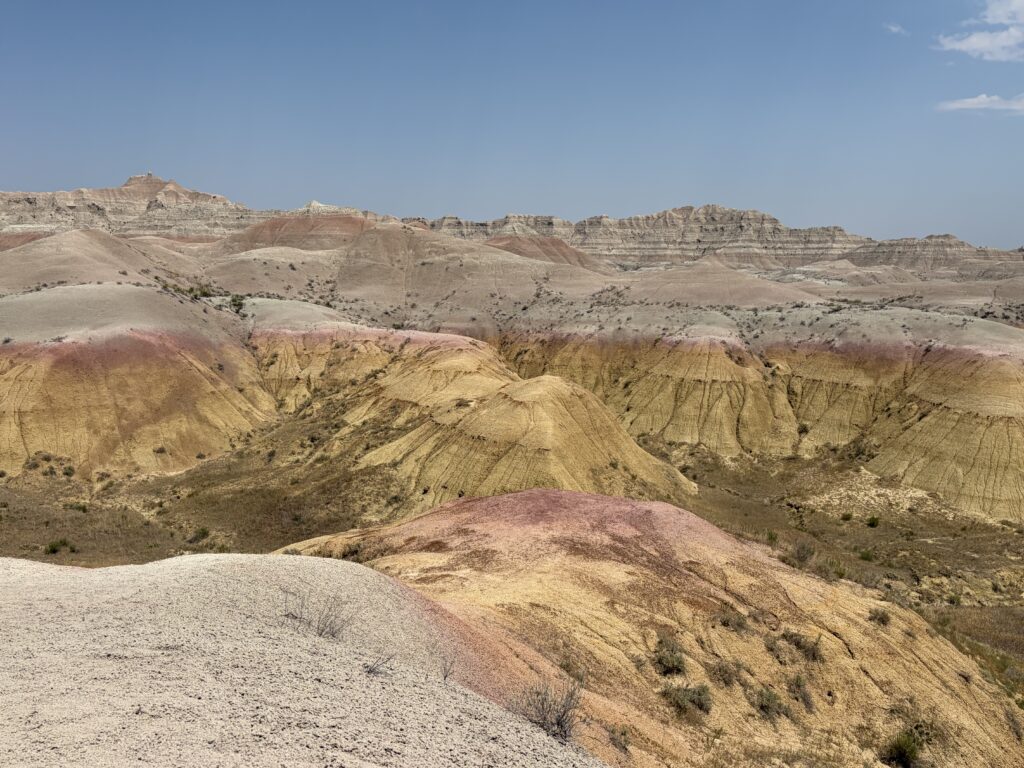
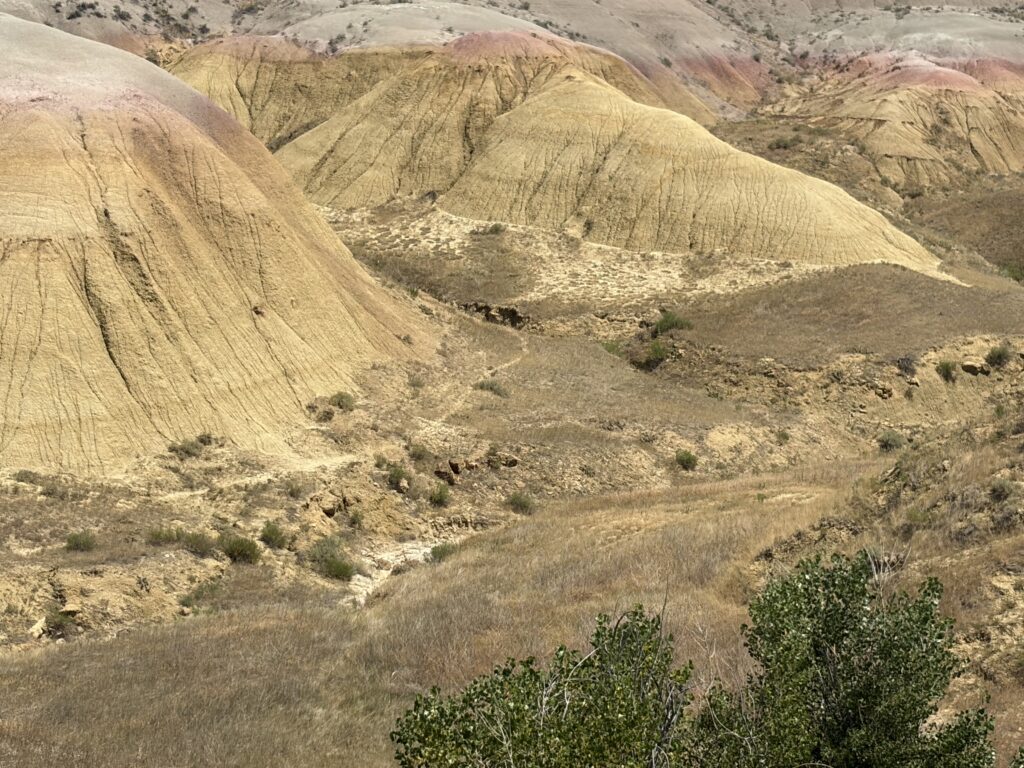
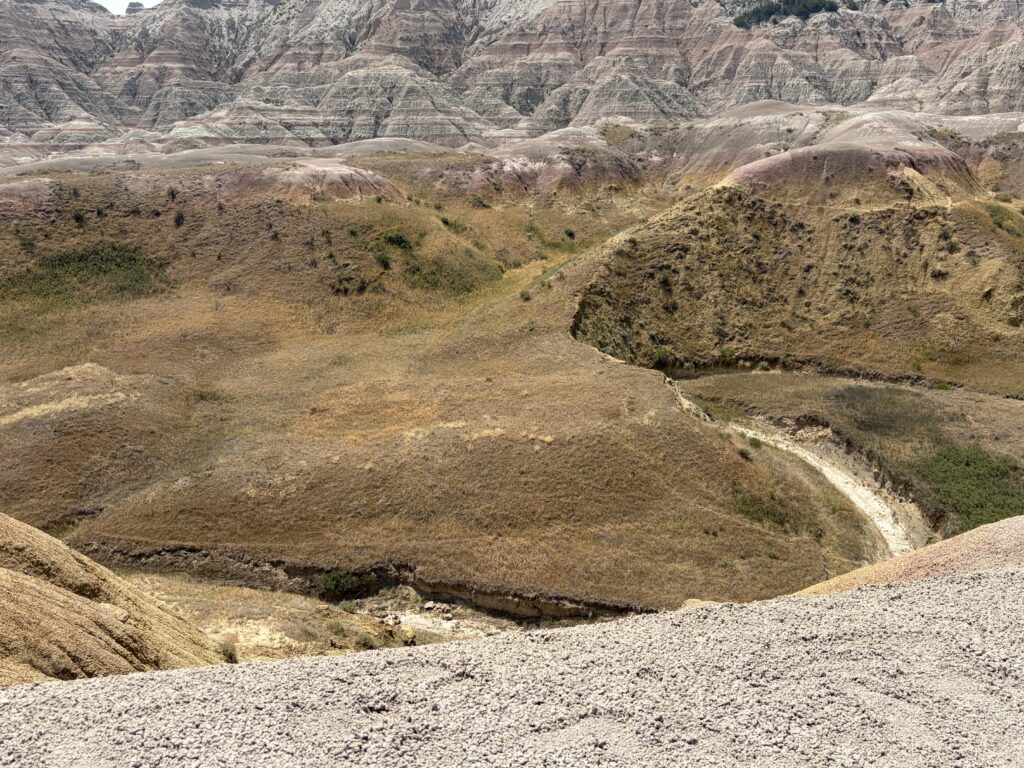
As we were returning to camp, we’d stopped at one more lookout when we spotted a herd of bighorn sheep galloping down the road. They were all wearing tracking collars except for one young lamb. One ram veered off the road, only to be startled by an equally startled mule deer.
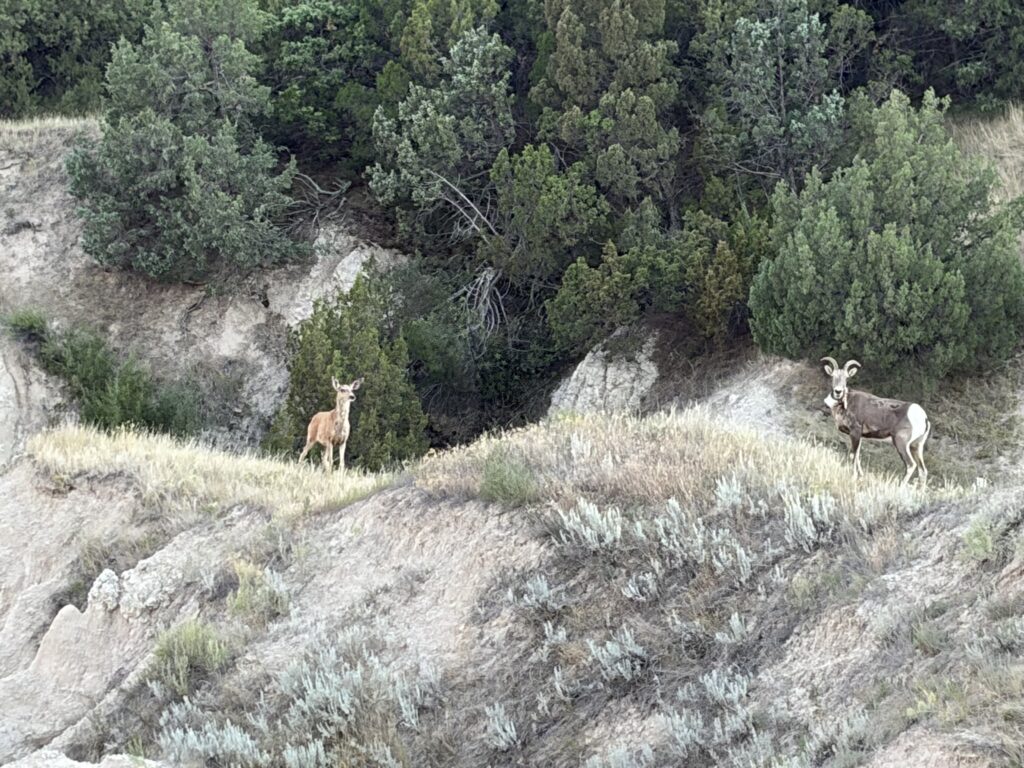
Moe wasn’t quite sure about them:
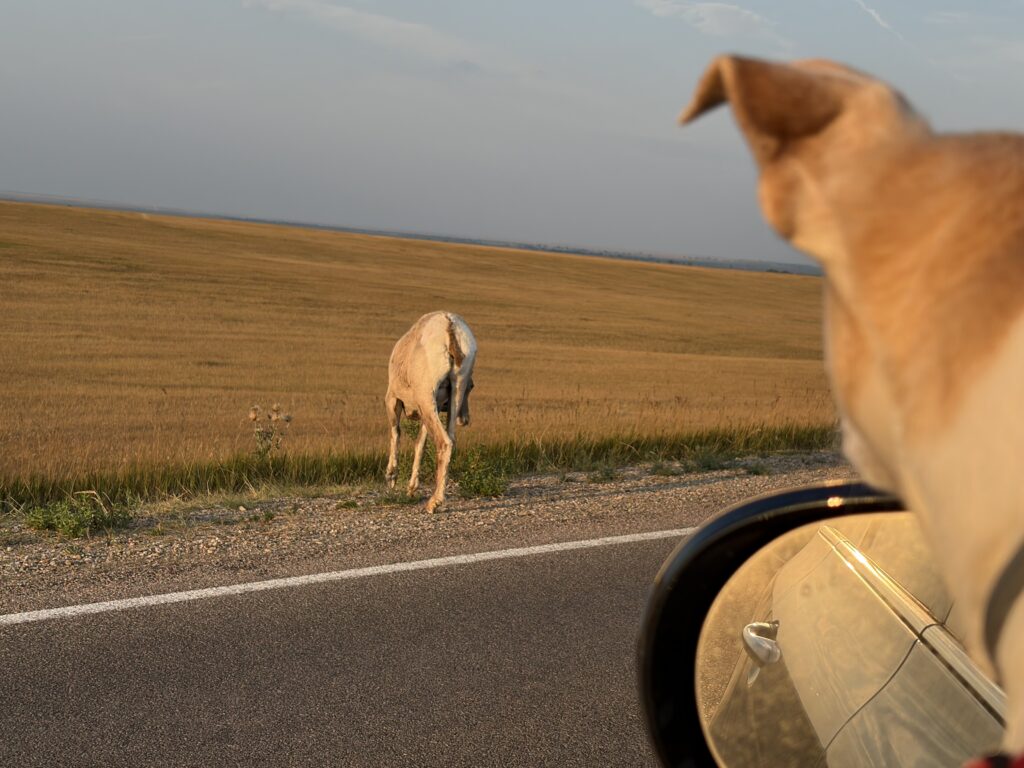
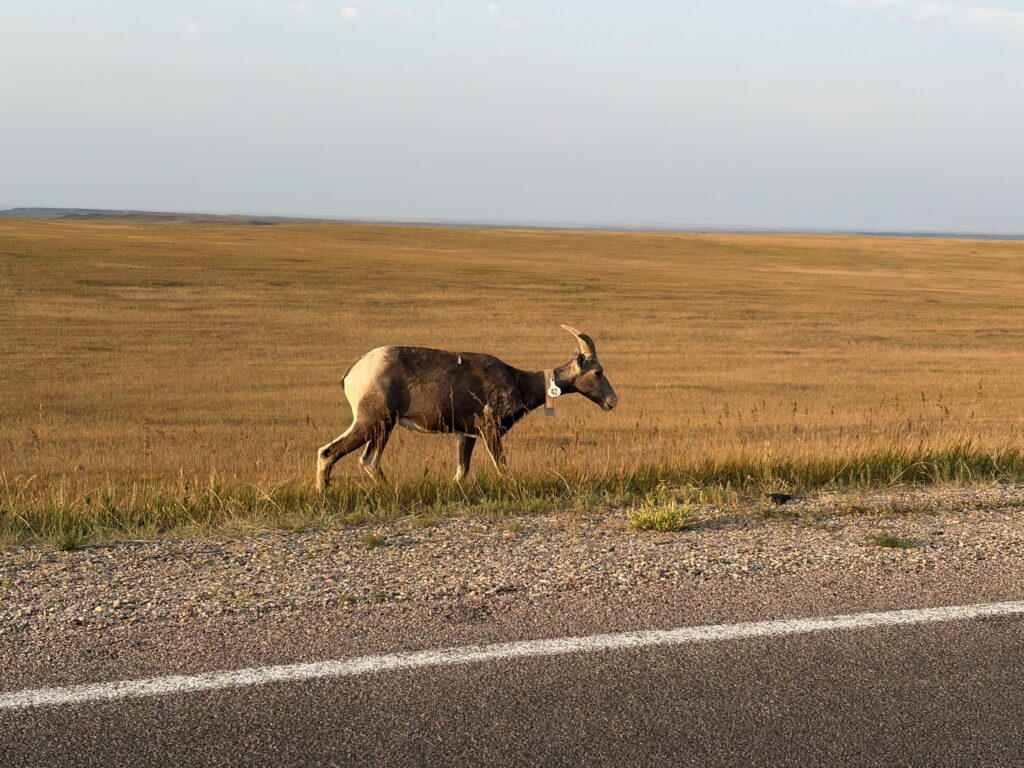
but we thoroughly enjoyed the encounter.
Through Scottsbluff to Custer State Park
it was too much to drive from Rocky Mountain National Park to to Custer State Park, so I’d booked one night at the Riverside RV park in Scottsbluff, NE. The bluffs were pretty cool (see Russ’s blog: russloomis.com), but the RV park turned out to be a good example of why I usually avoid RV parks: noisy, crowded, and over-lit at night. I have no idea how Russ managed to sleep in his tent under lights better suited to a football stadium. By the time I got up at 6 am, I wanted out of there. We left at 8 am.
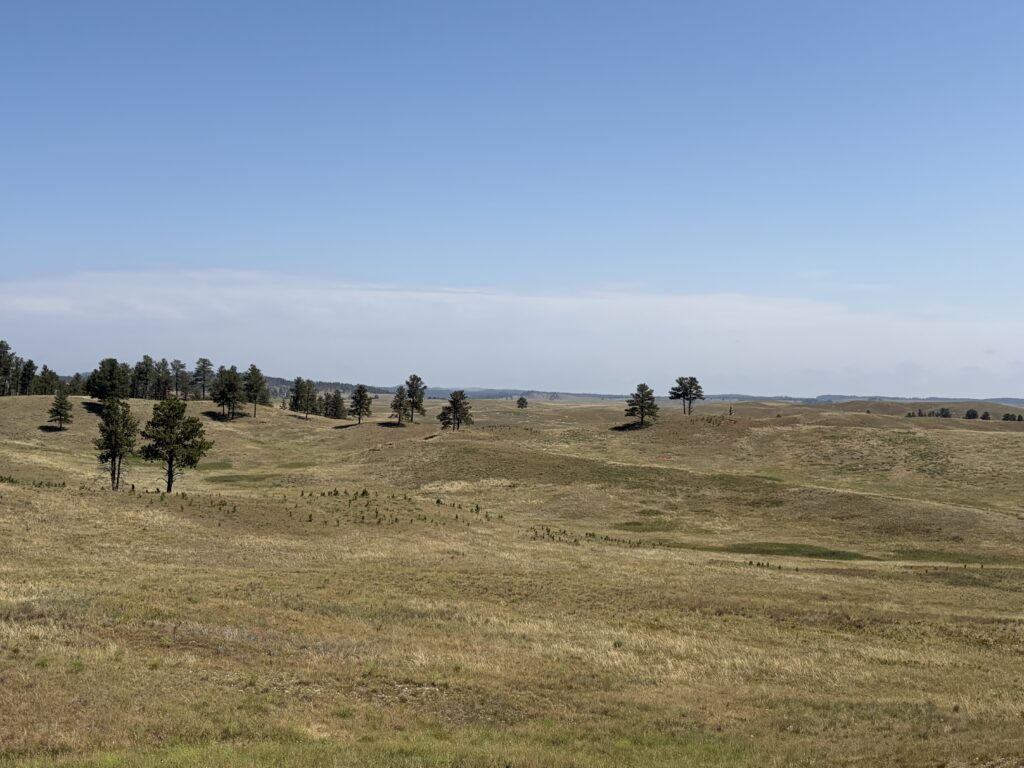
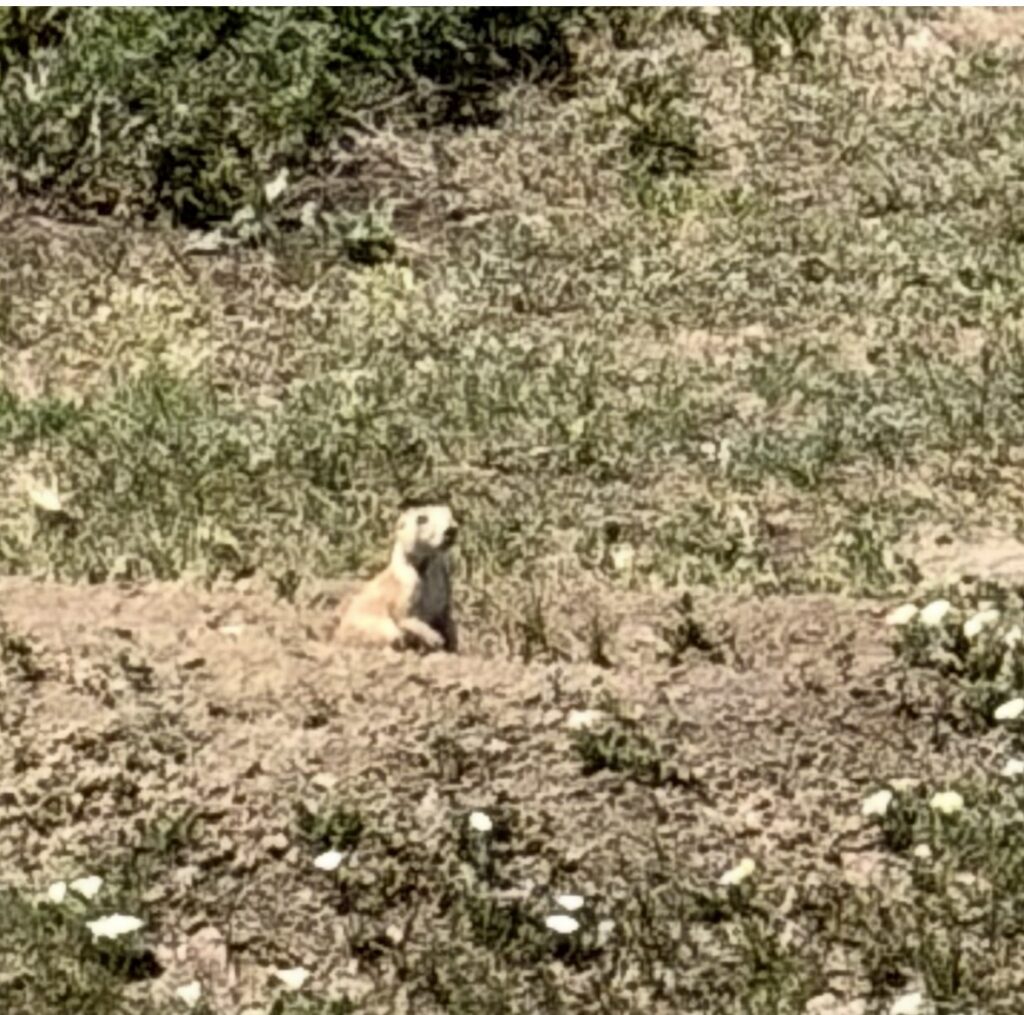
We were early, so stopped off at Wind Cave National Park, which I’d never heard of, to see if we could tour the cave. Unfortunately, the tours were booked until later in the afternoon, so we made a note to try again on another trip. Arriving early at Custer State Park worked out just fine, as we came into the park through the wildlife loop, which did not disappoint.
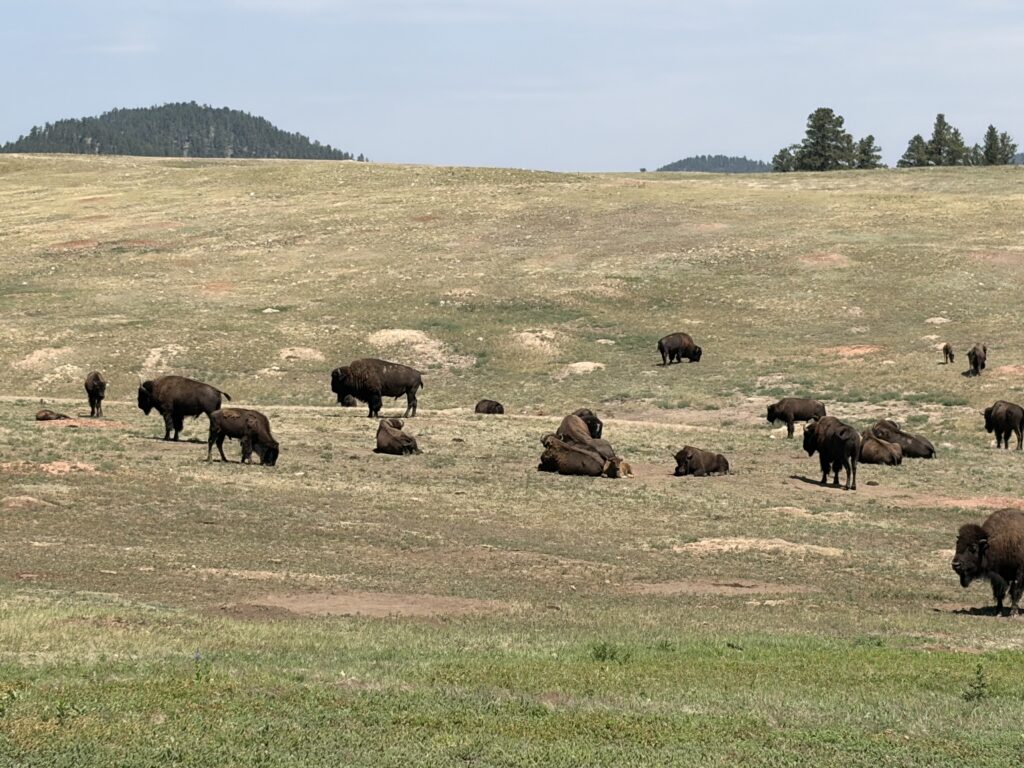
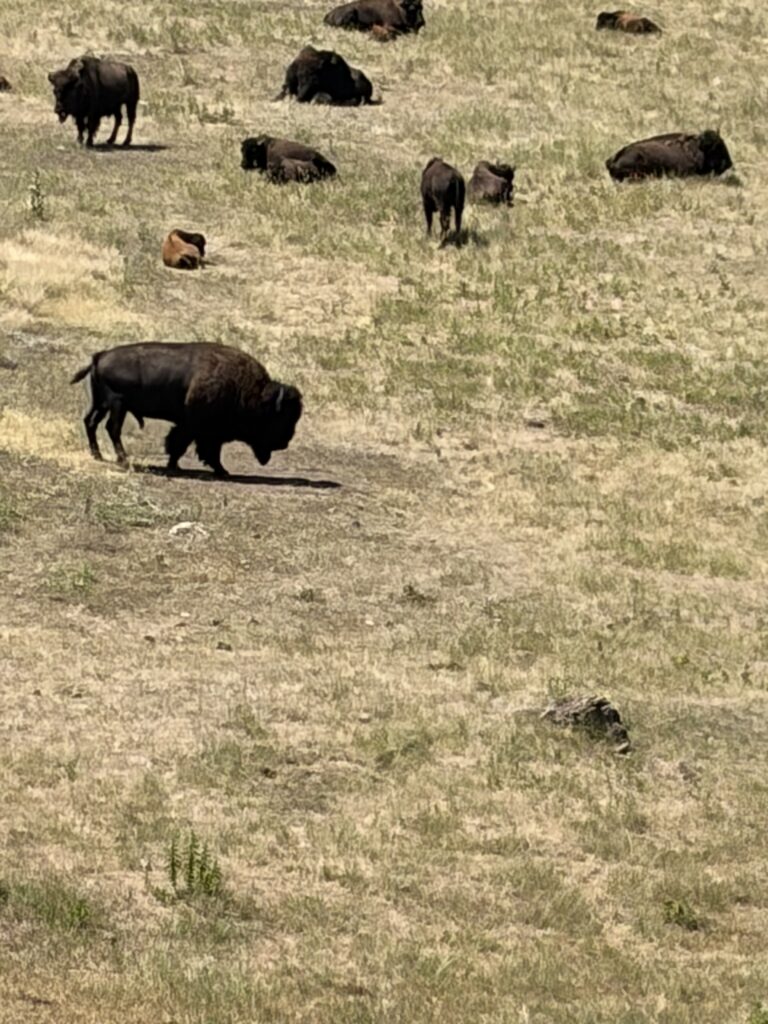
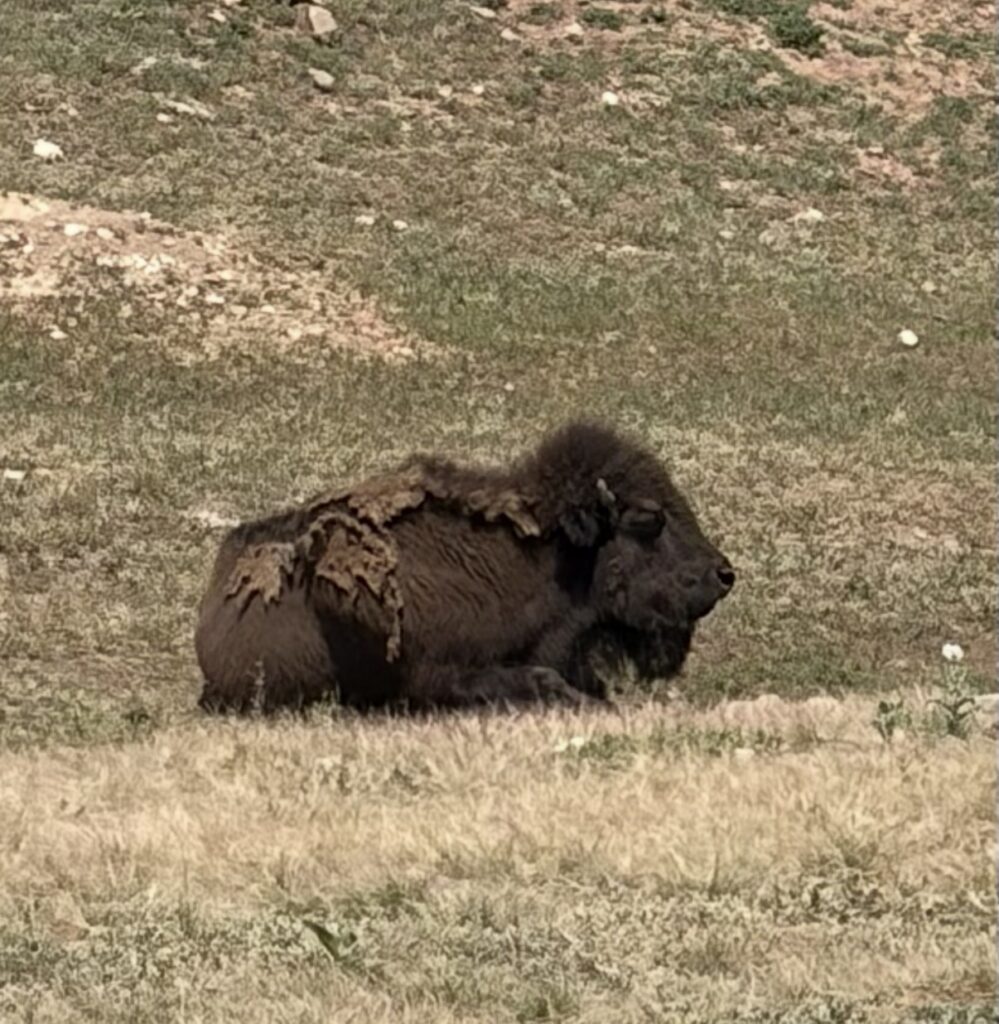
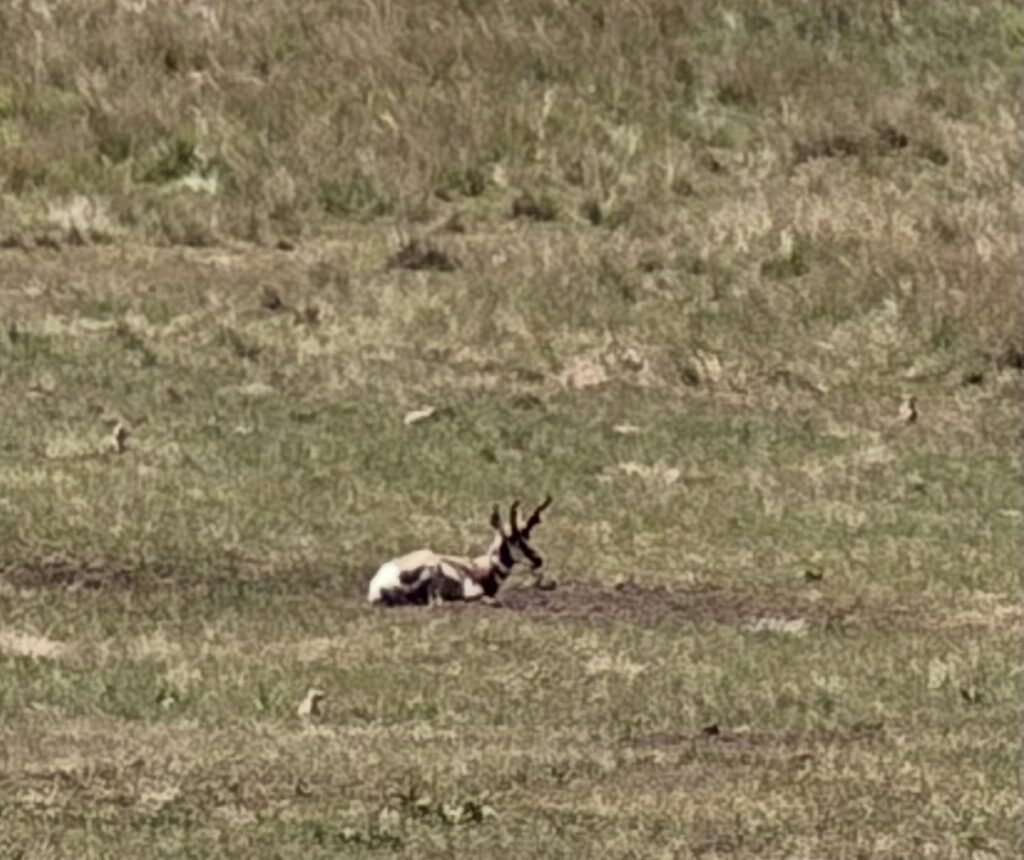
There was a bit of a problem when we arrived at our campsite: we arrived a day later than originally booked; I’d tried to notify them by calling the main booking office, but apparently the message didn’t get through. Our site had been given to someone else. After going through at least three levels of beaurocracy, we were given a backup site (no shade, but electric hookup). No big tragedy; we were only there for one night.
And the park continued to delight. As I drove the short distance to the camp store to pick up provisions, I encountered a herd of bighorn sheep right by the road. I pulled in, and watched the ewes and lambs graze in the small grassy area right next to the parking lot.
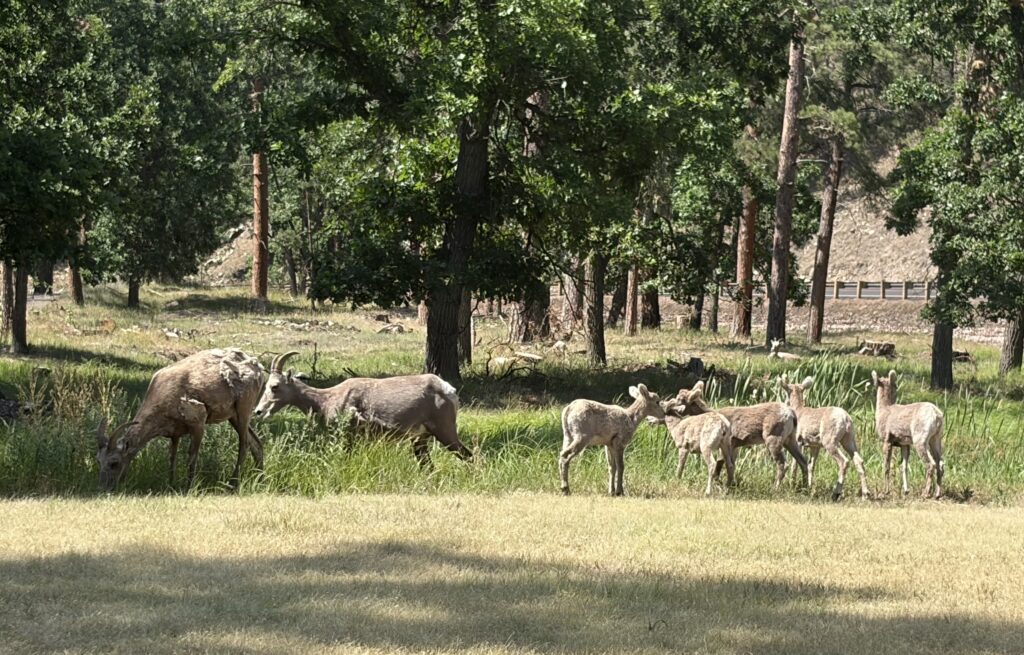
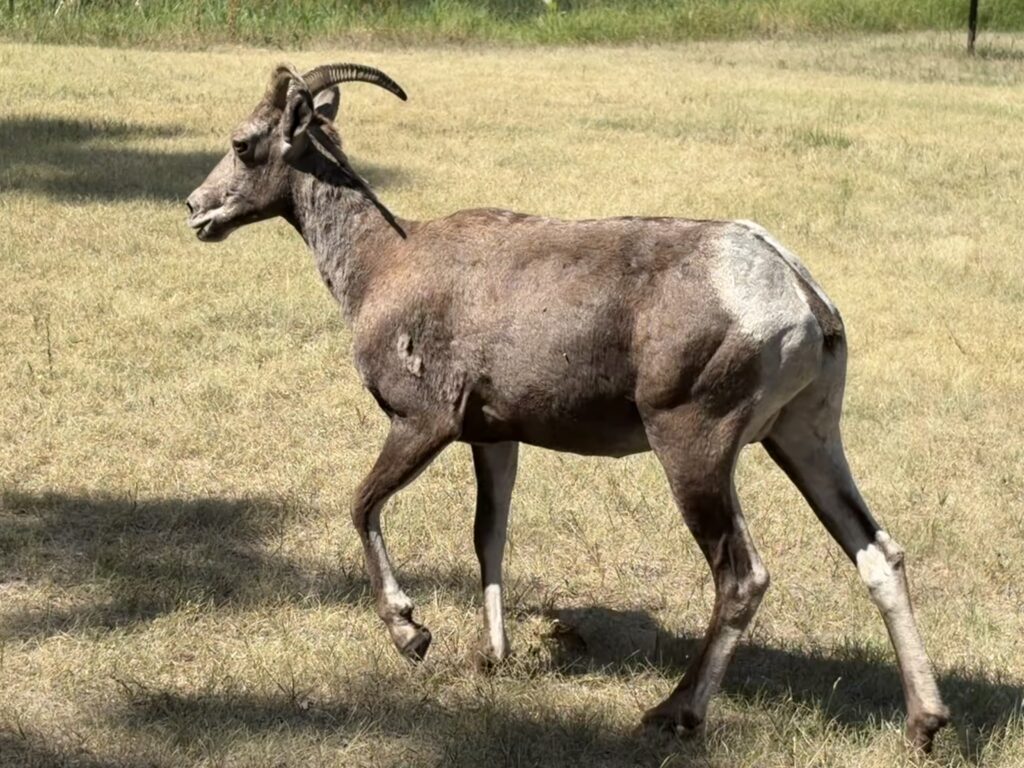
I learned that ewes and rams both have horns, but only the rams develop those distinctive big curled horns. The lambs, like lambs everywhere, gamboled about adorably.
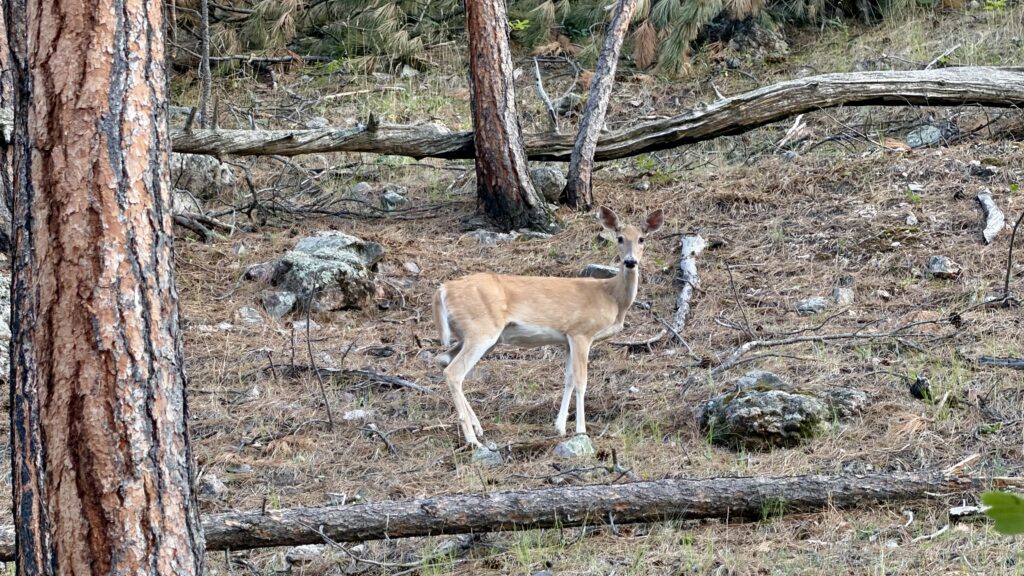
After dinner we took Moe for a walk along the paved hiking/biking path and saw even more wildlife: this time, mule deer relaxing near the path.
The evening was cool and lovely, and the next day had more surprises for us, as the road out of the park went through some pretty spectacular scenery, and some heart-stoppingly small tunnels.
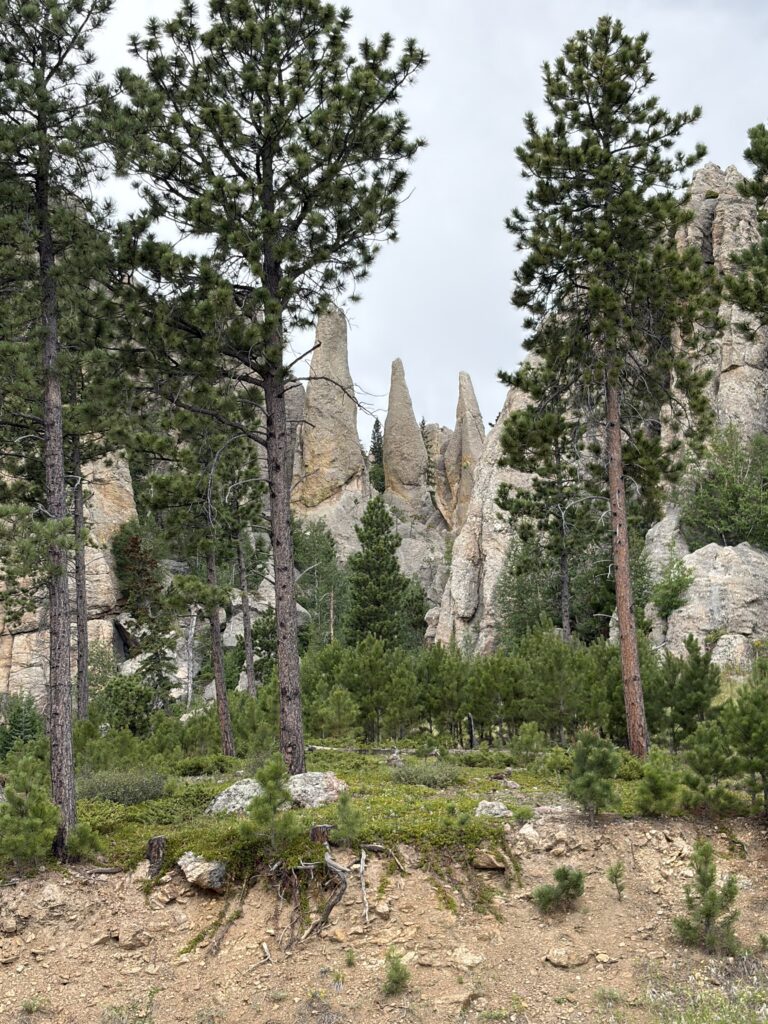
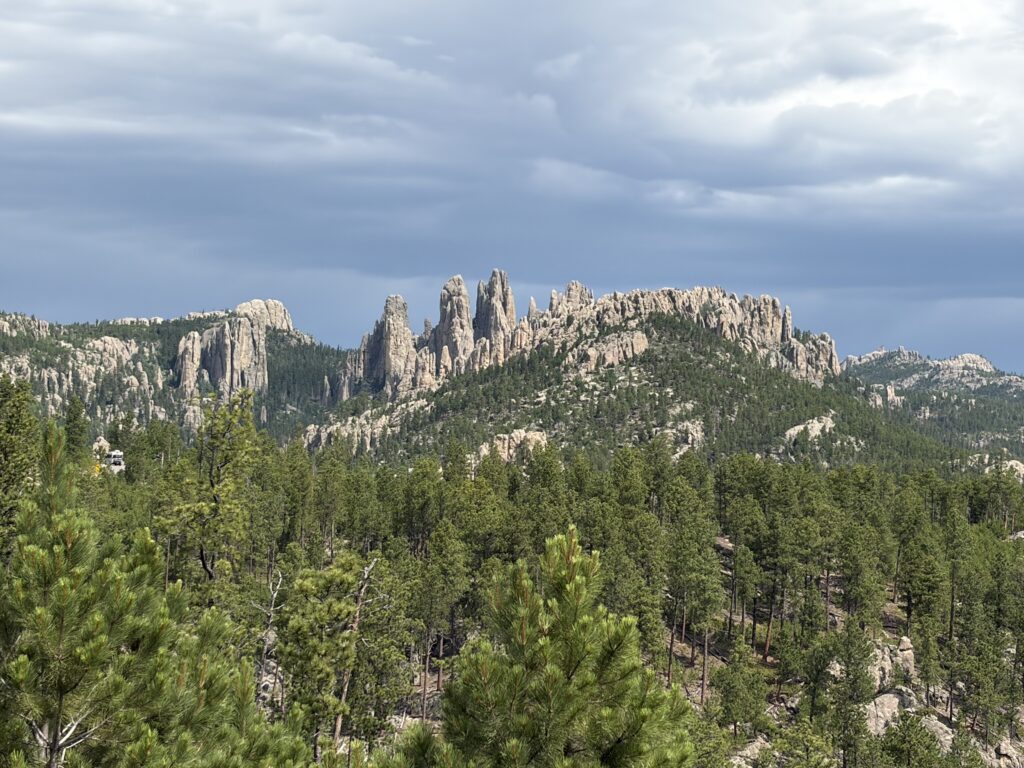
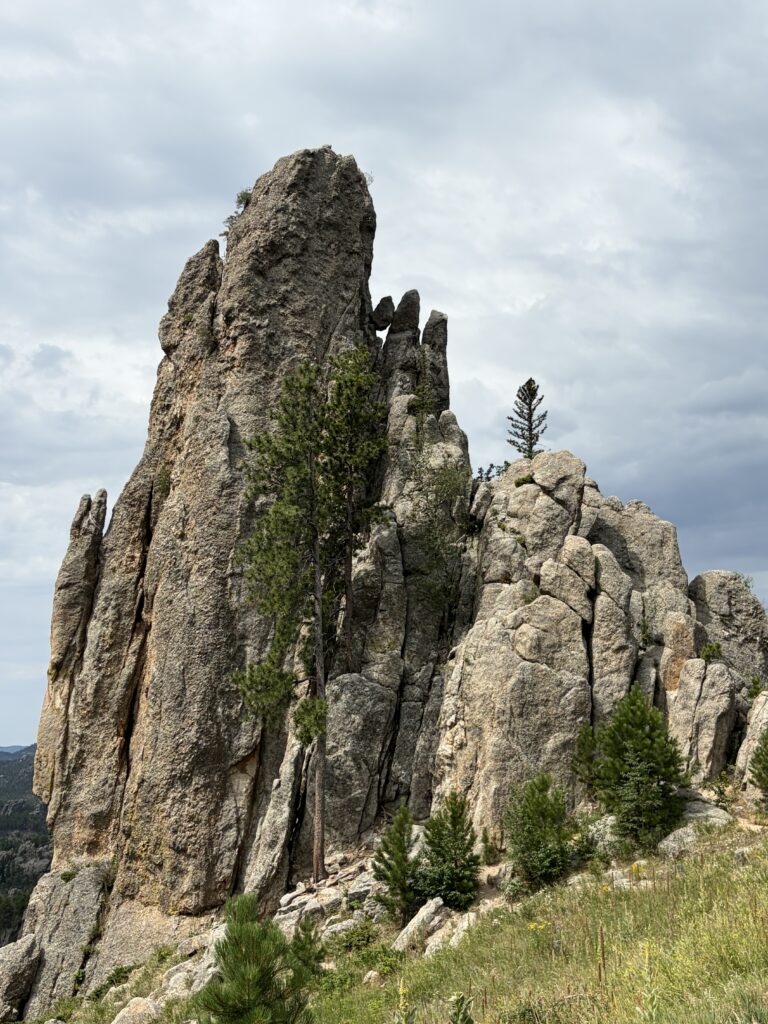
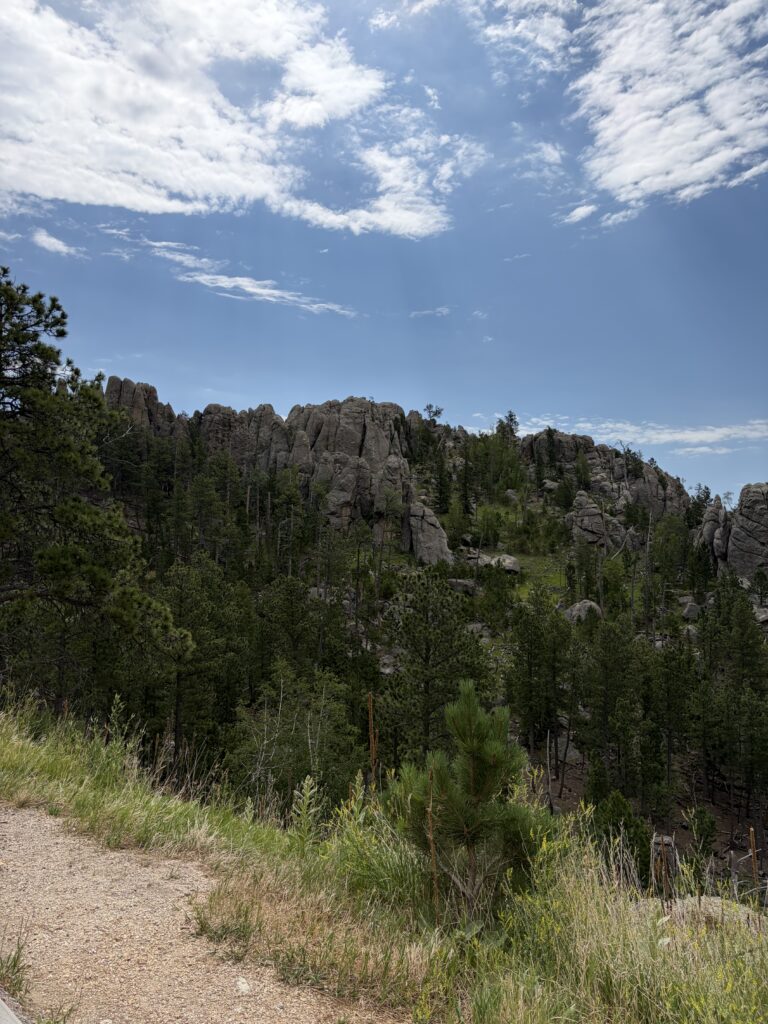
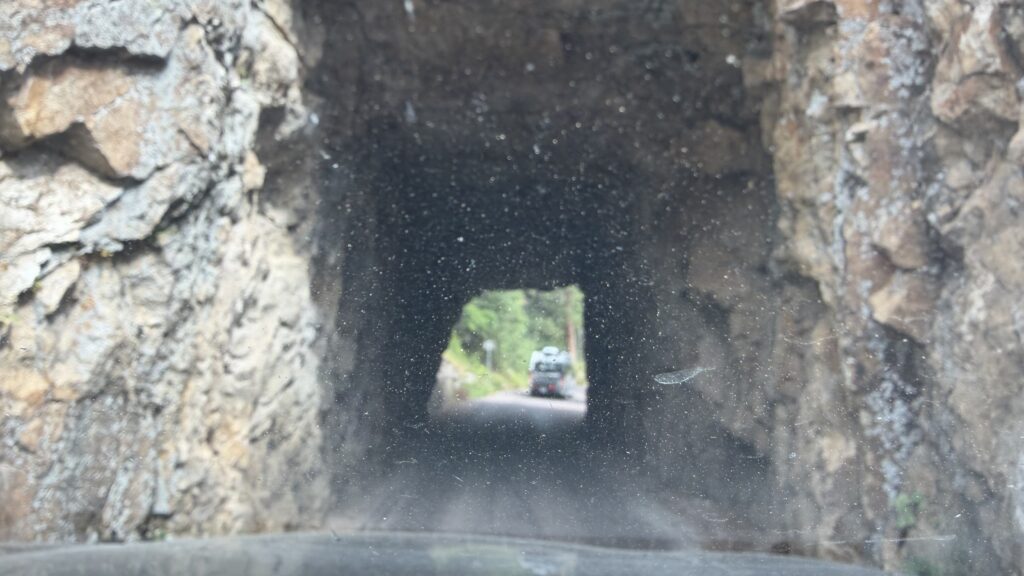
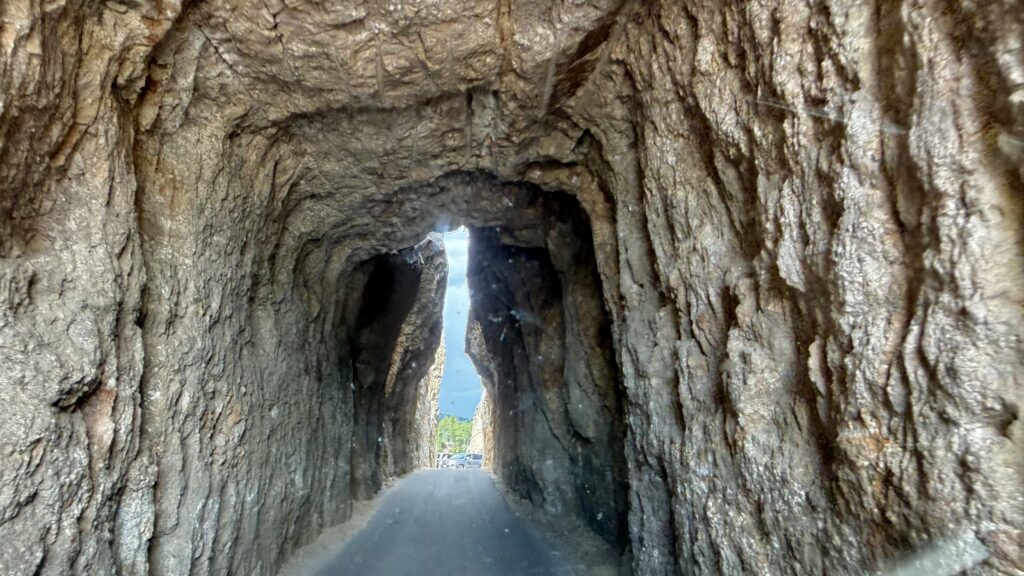
There was less than a foot to spare through that last tunnel. The car and camper are still intact—phew!
And with that, we were off to the Badlands.
Rocky Mountain National Park
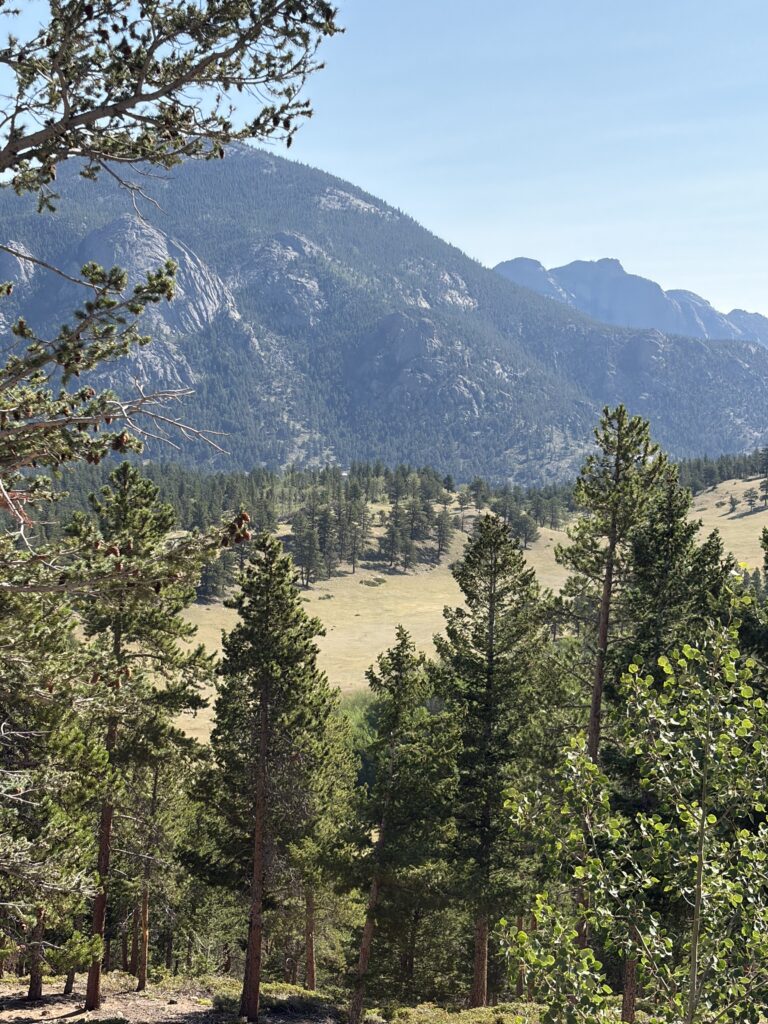
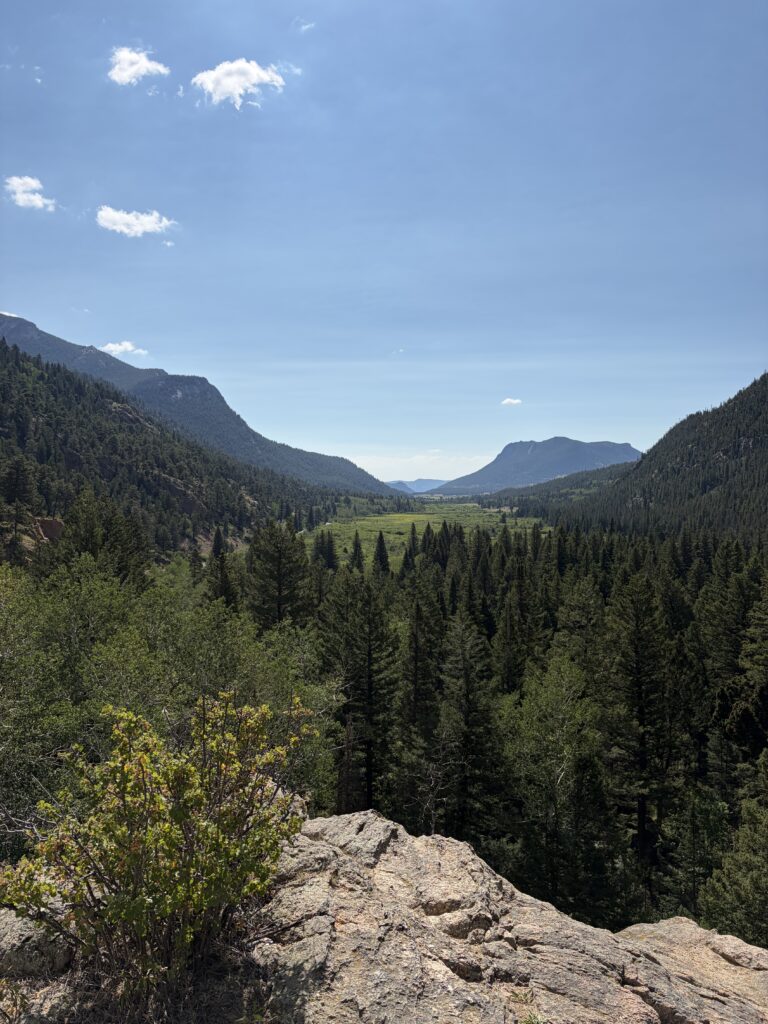
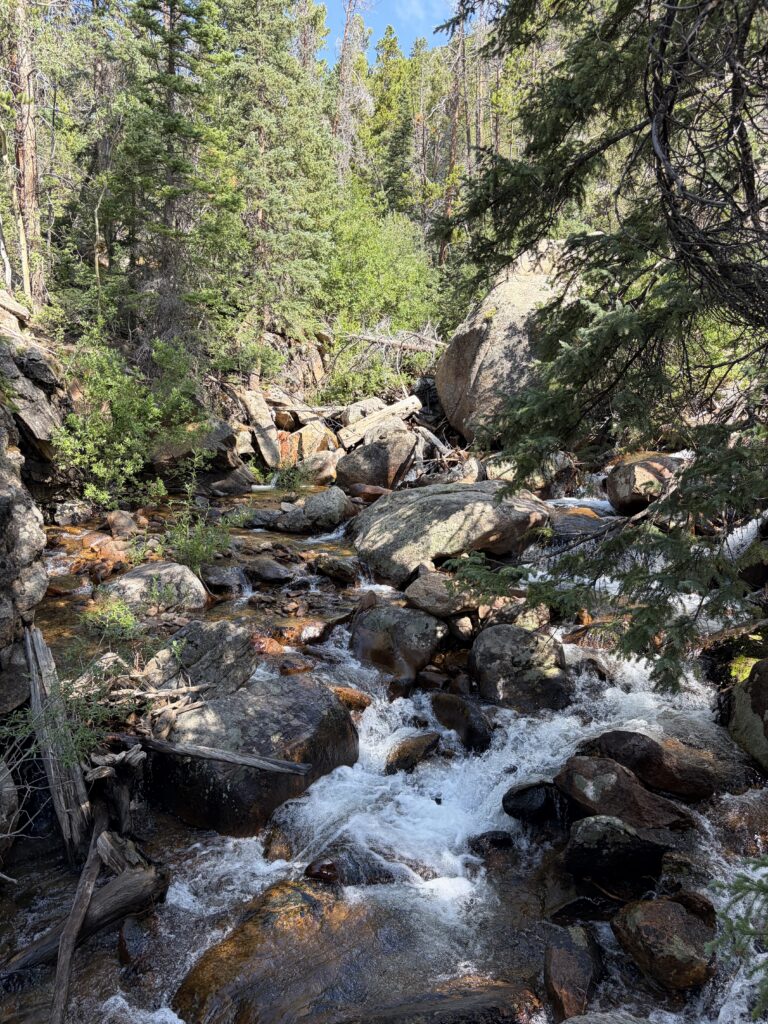
Like Glacier, Makoshika, and a few other places we’ve been, words can’t describe Rocky Mountain National Park, and even the best pictures can’t do it justice. One thing I did notice was that overcrowding has become the norm since we first went traveling in ‘22.
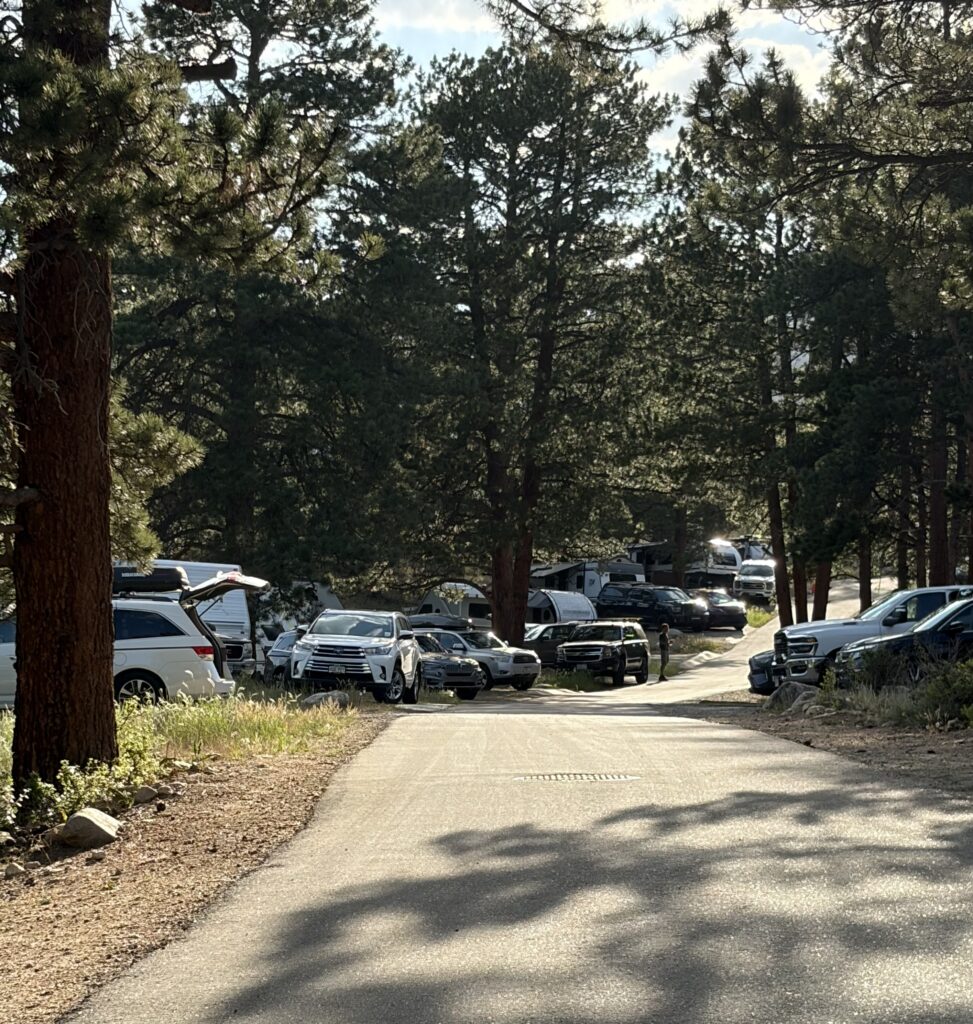
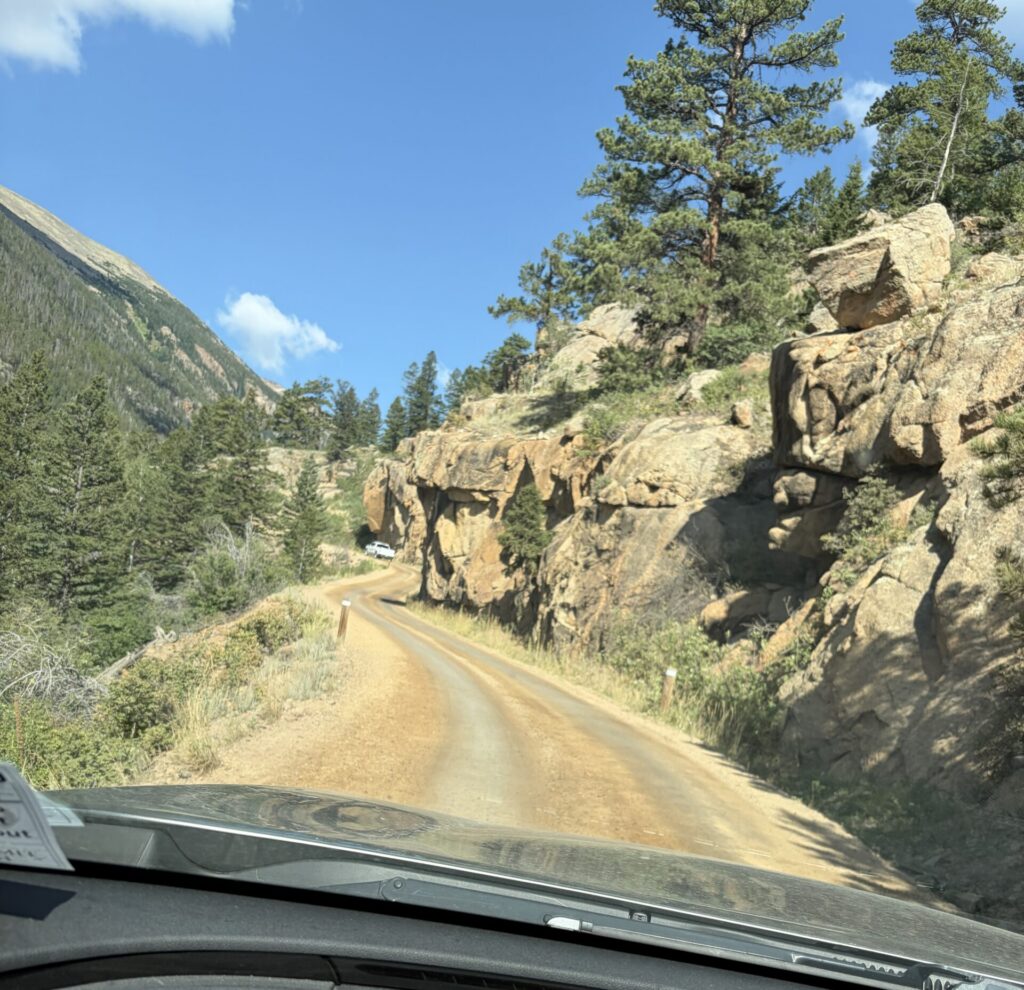
It also means that reservations are hard to come by, unless you book 6 months or a year in advance. I was only able to get two nights, which only left one full day to explore. We decided to drive up the one way, dirt, Old Fall River road to the Tundra Visitors’ Center and then down the paved Trail Ridge Road. An excellent choice, as it turned out, even if the twisty, narrow road and multiple hairpin turns had Russ in a near-constant state of panic.
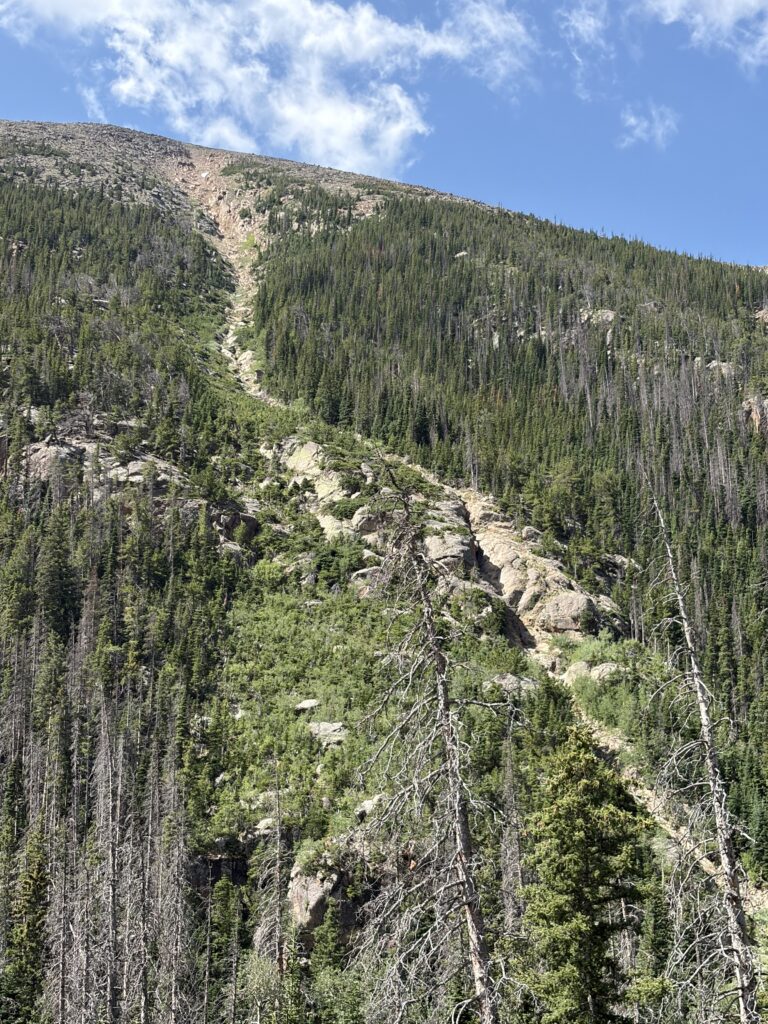
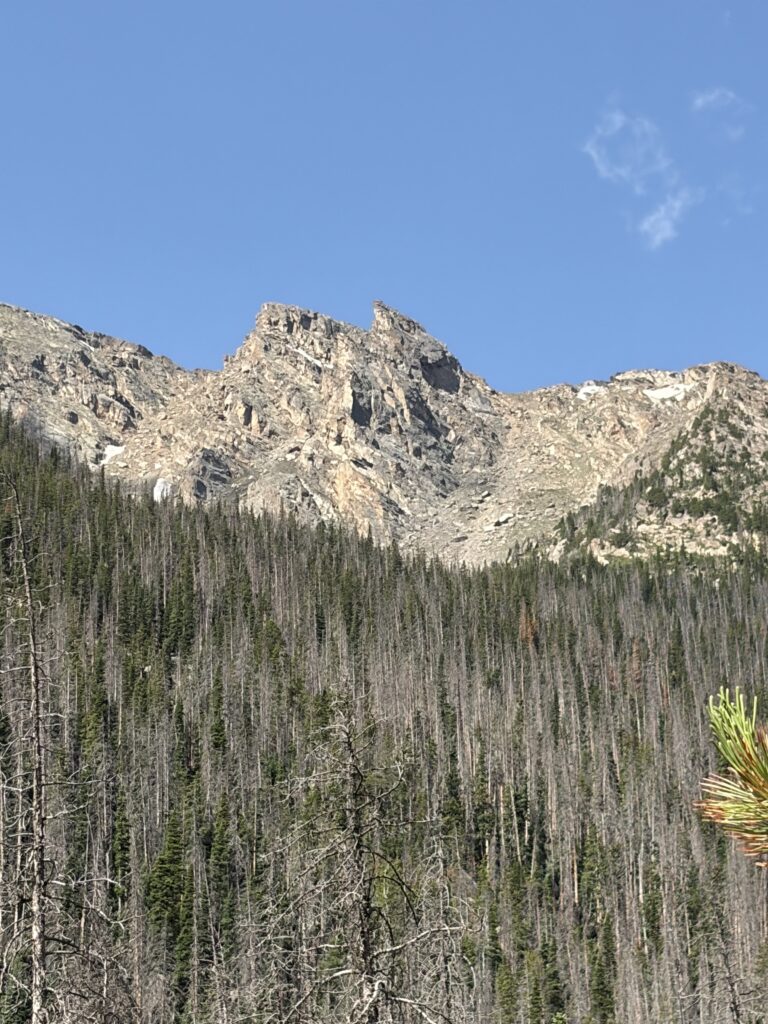
We stopped at the Tundra Visitors Center, where I learned that the volcanic caldera (I was SURE it was a caldera) was instead a glacial cirque (aka birthplace of glaciers), and that the wafer-thin wedge of snow at the top was indeed a glacier. Glacier or snowfield? One is permanent—guess which. We had a snack and some cold drinks while Moe made friends and got to sniff a real elk antler.
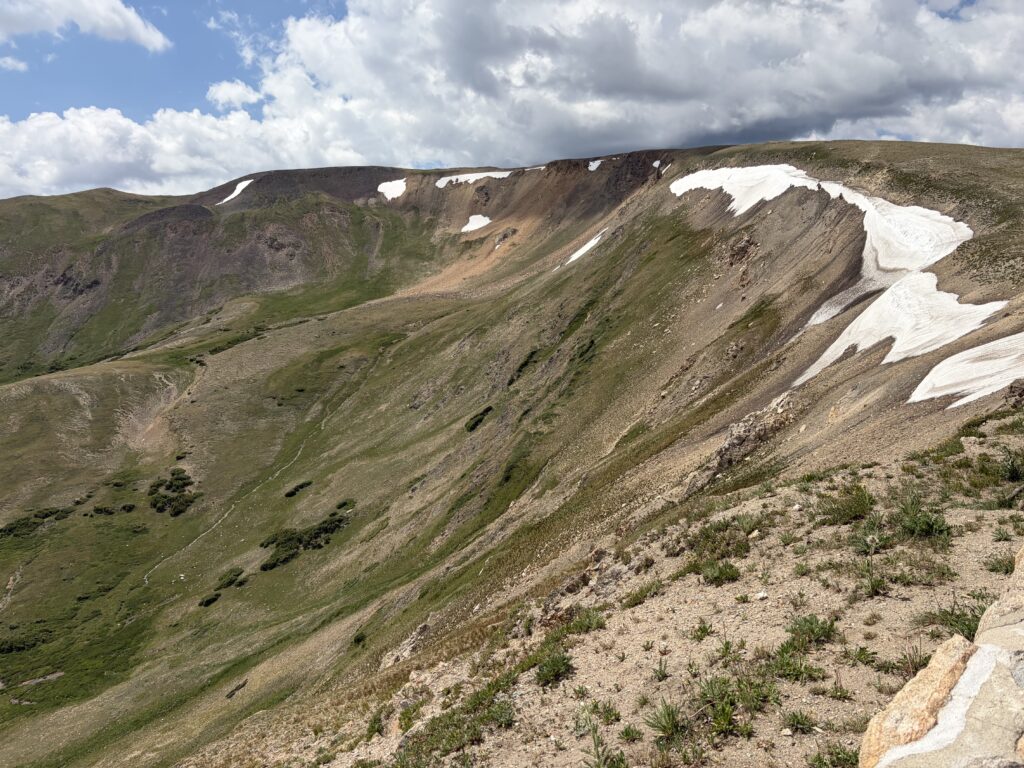
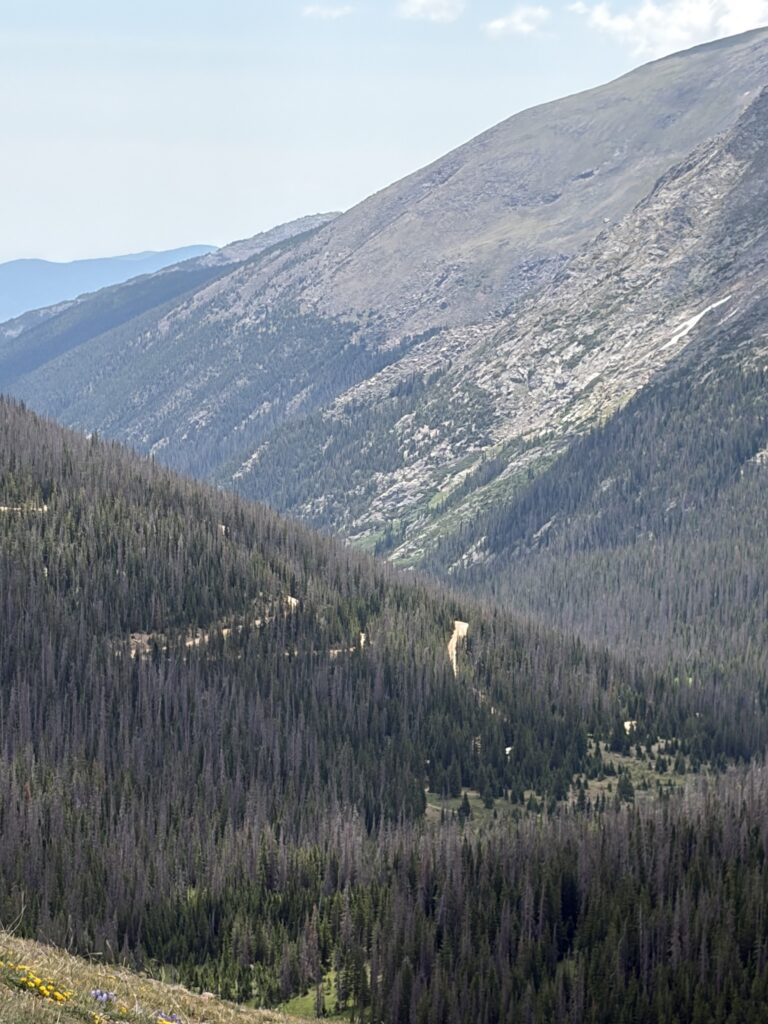
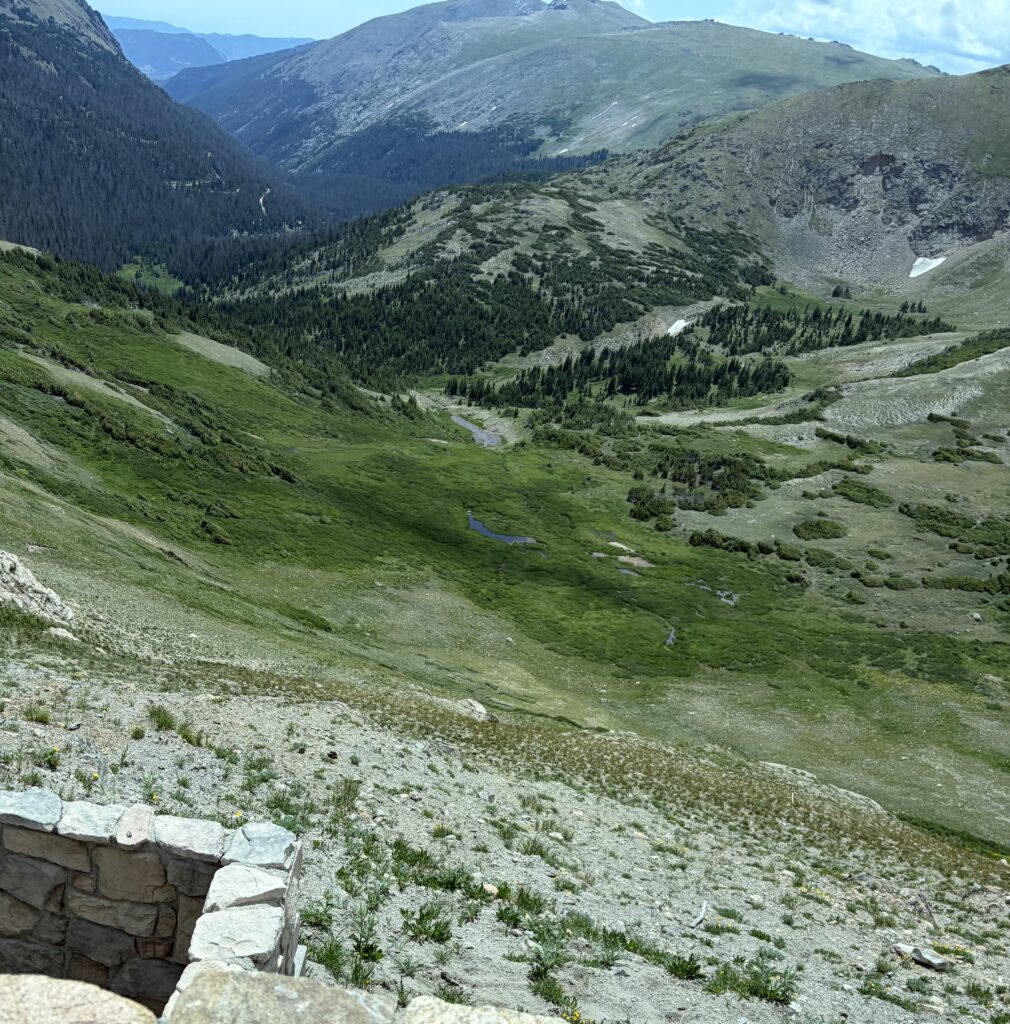
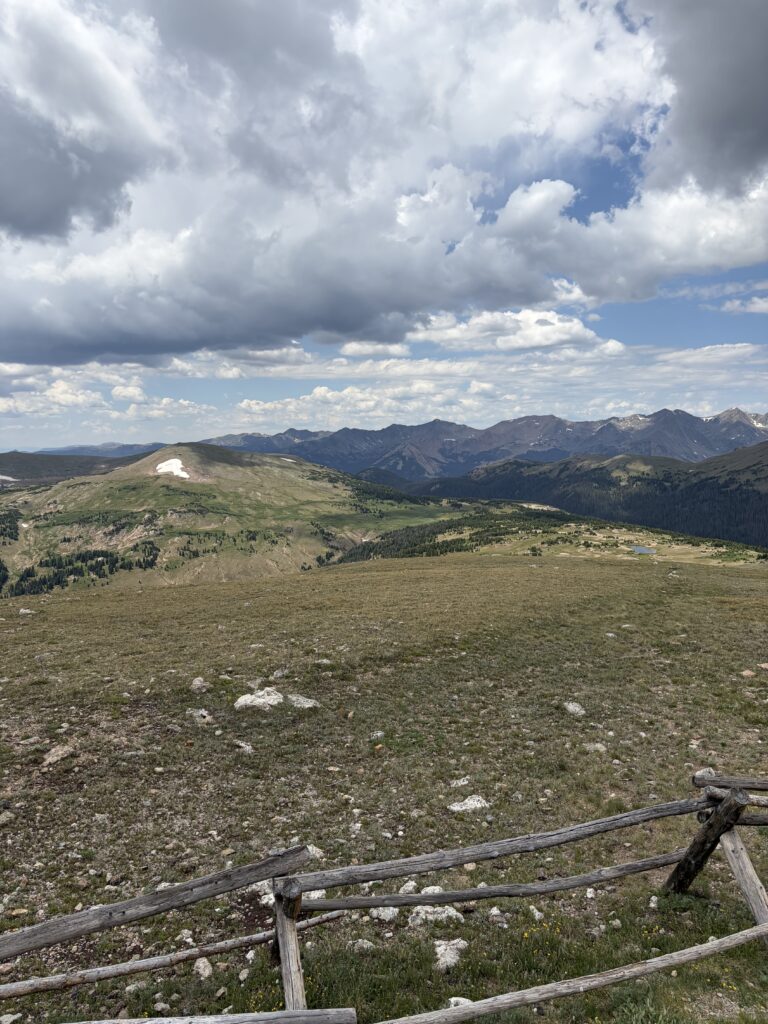
The road descends a bit from the visitor’s center, than climbs again to the top of a mountain covered with rock scree and tundra—where I was assured of seeing ptarmigan and pika (pie-ka). Climbing the trail to the top, I was entranced by the alpine flowers:
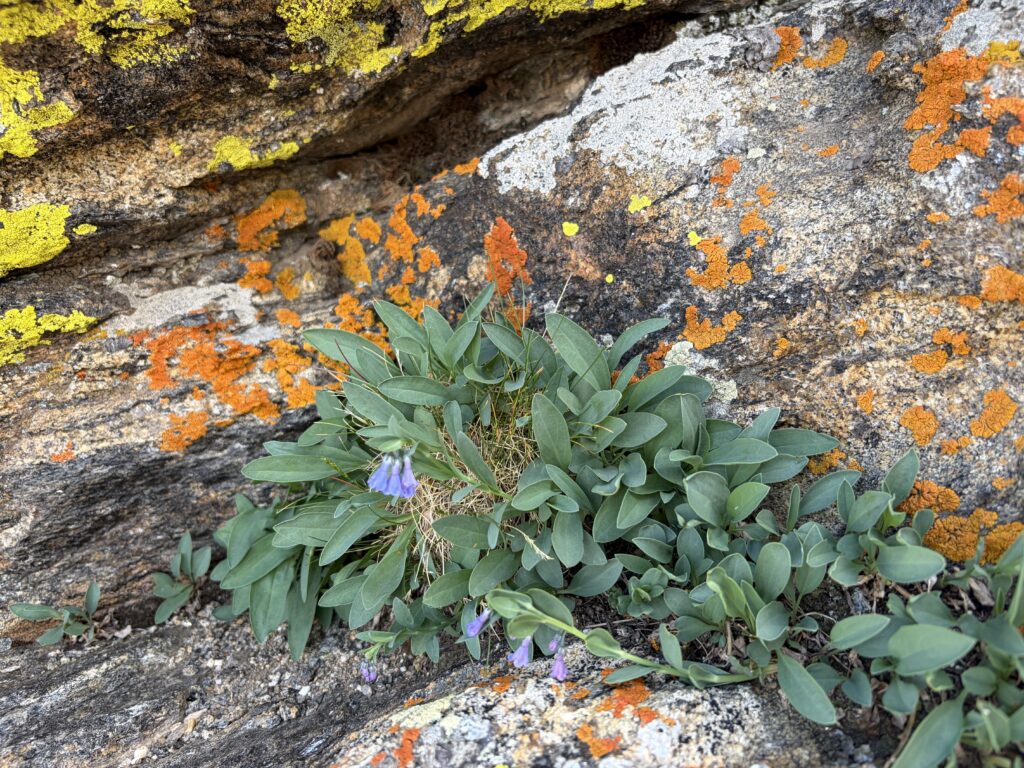
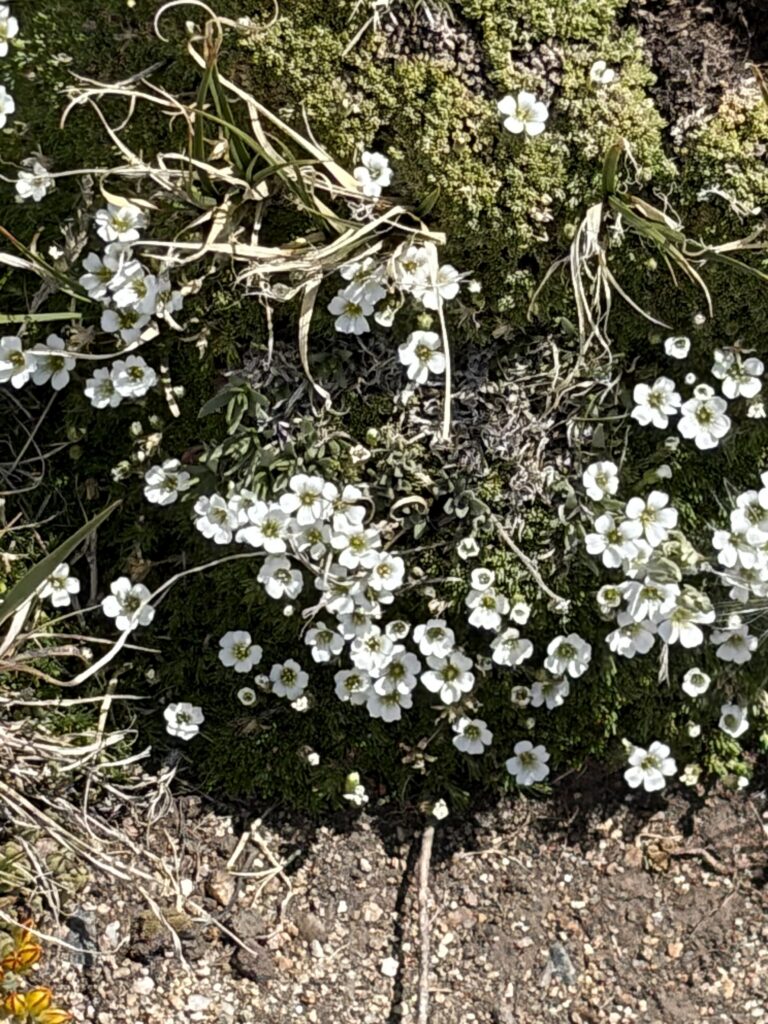
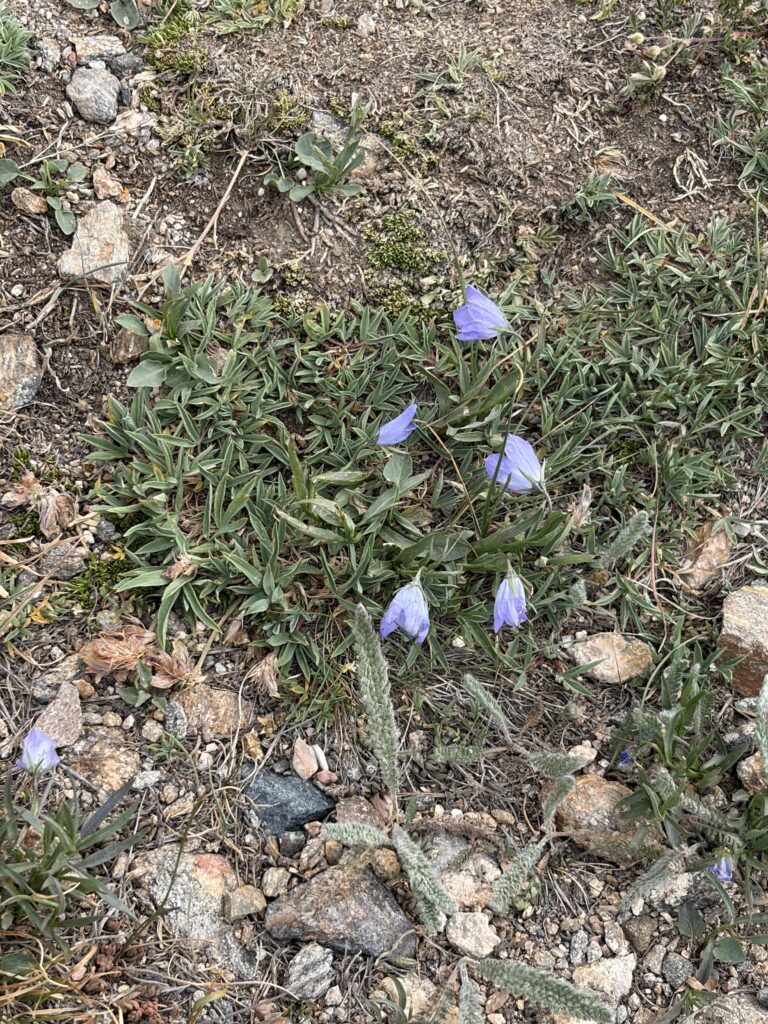
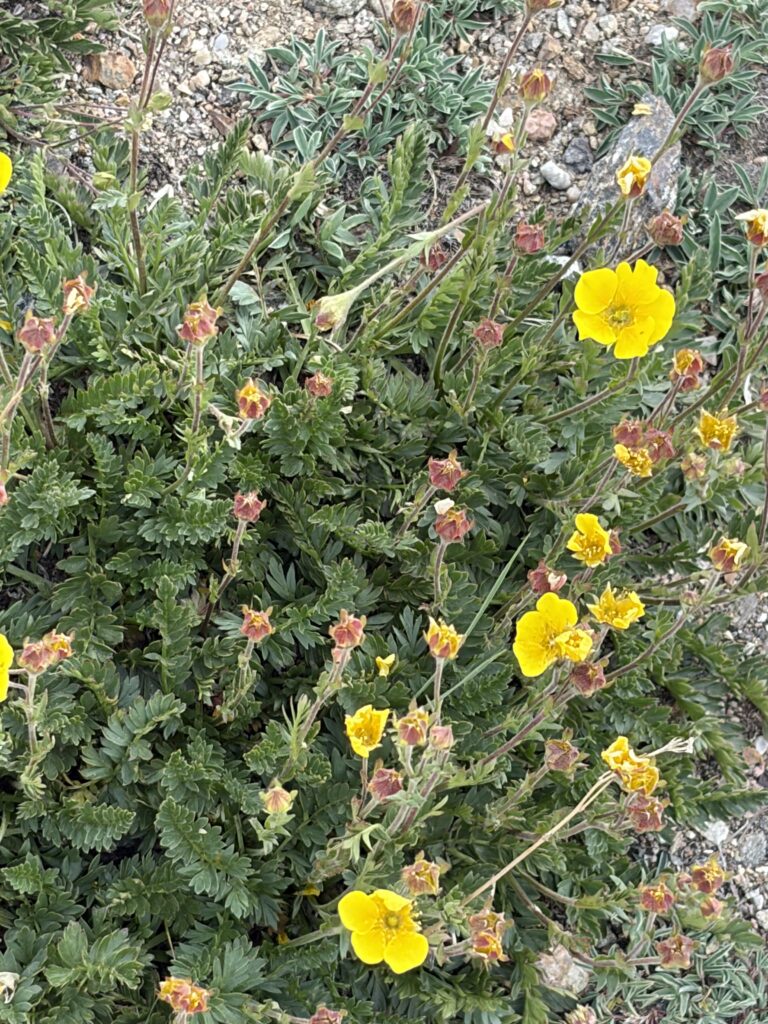
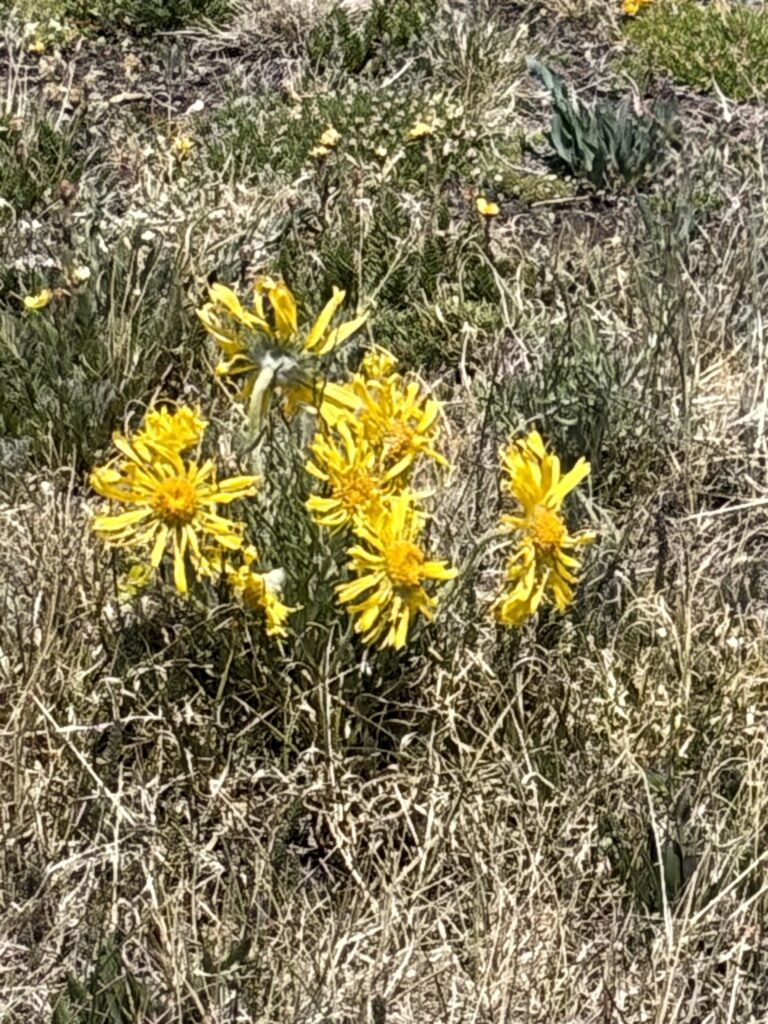
I was informed that alpine sunflowers (below) can grow for 70 years or more before they amass enough energy to flower and put out seeds—after which the plant dies.
No ptarmigan showed up, so I was busy admiring some very colorful lichens, when this friendly yellow bellied marmot waddled up to within four feet of us:
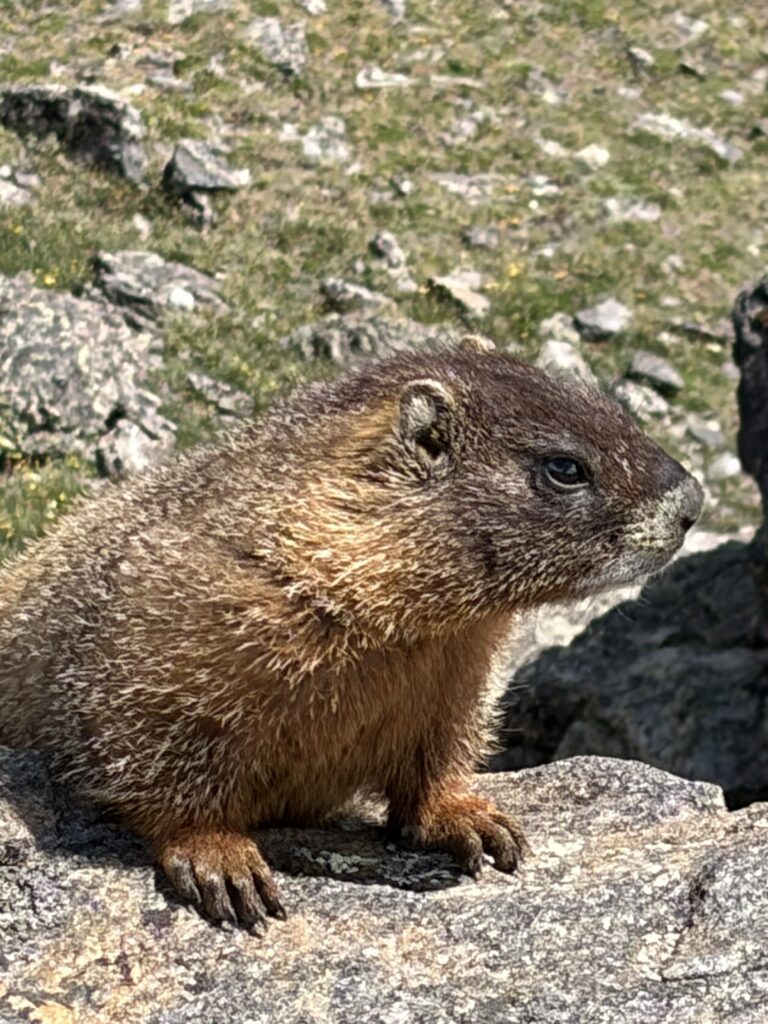
Ain’t he (or she) cute?
The lichen were striking. I’ve only seen colors like this at high altitudes.
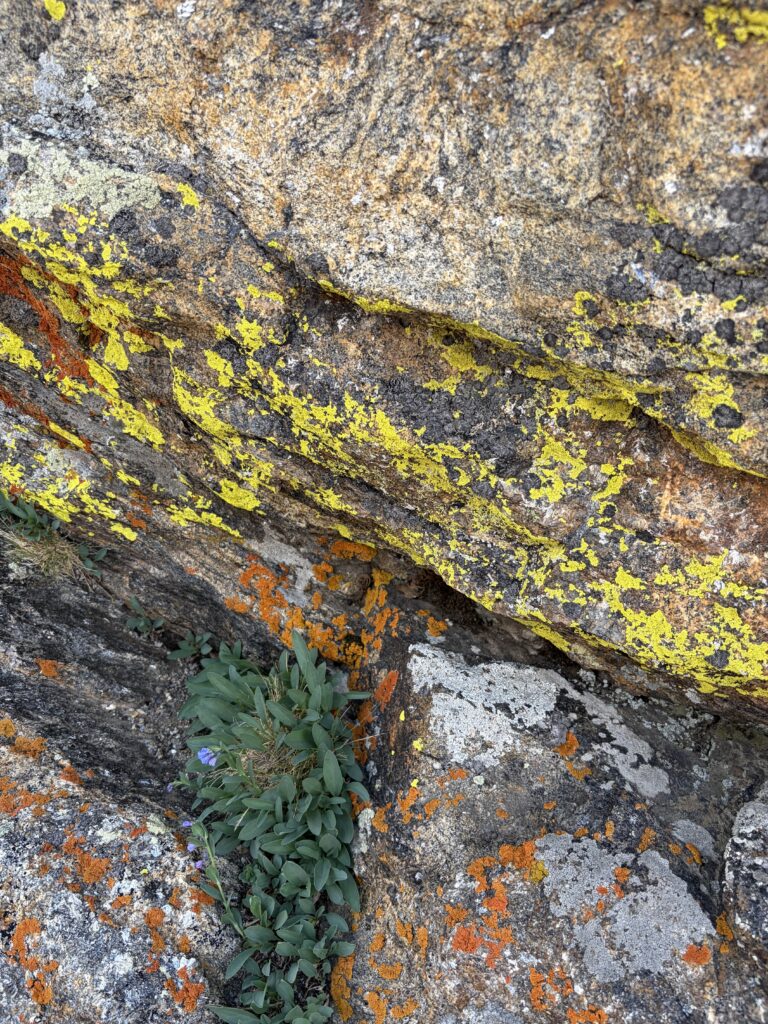
We did finally get to see pika, those chinchilla-sized rabbit cousins who make their homes in rock piles up in some of the most inhospitable environments imaginable. They spend the short (6-8 week) growing season eating and gathering alpine plant material for their underground burrows, where they will spend the long winters insulated by deep snow. Unfortunately, I could not get a shot of the fast-moving critters as they scurried about in the rocks just below the parking lot. One lone chipmunk managed to run right under Moe’s nose: I barely prevented him from launching himself off the retaining wall and right down the rocky slope. At 14, catching a chipmunk is still on his bucket list.
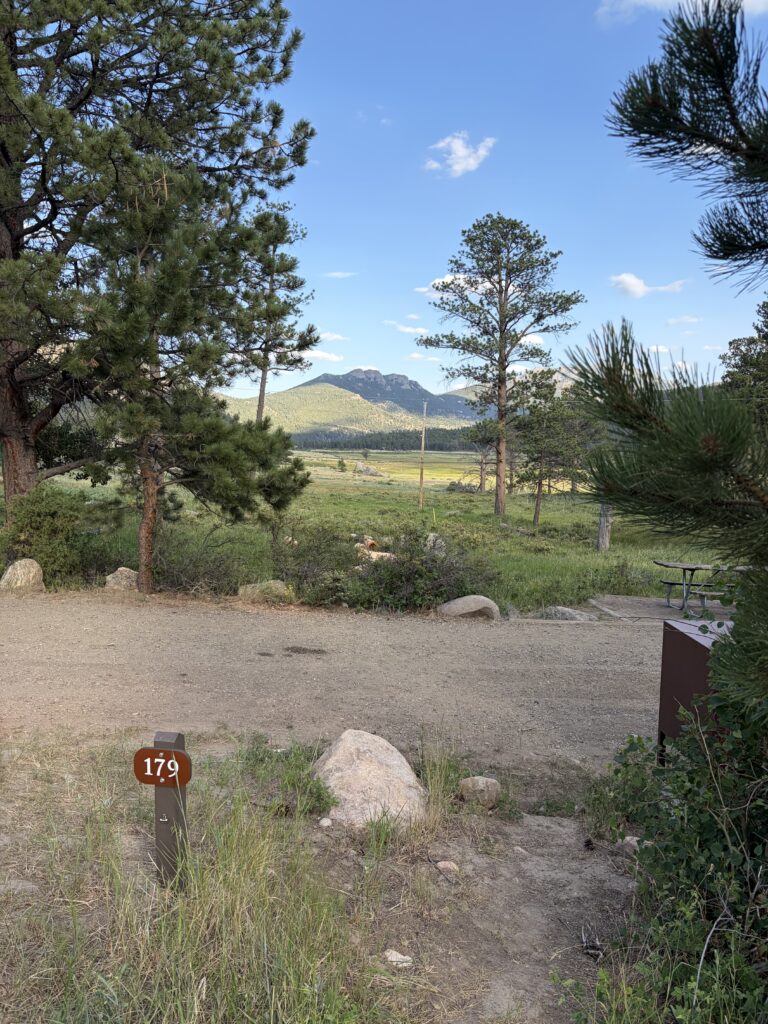
Even without the ptarmigan, it was an amazing day. And how can you beat that view from our campsite?
Keeping up With the Blogs
Sigh. Sometimes between navigating, driving, shopping, setting up (or breaking down) camp, seeing awesome sights/animals/landscapes, etc., I just don’t have the mental energy to compose my blog. Russ makes a point of doing it every night, and for that, he has my admiration.
So if you want the up-to-the-minute pics and accounting of our trip, go to russloomis.com and enjoy his excellent photography. (I’m usually driving, so most traveling pictures are his. I’m too busy reassuring him—repeatedly— we’re on the right road and trying to keep the car from straying within a foot of the white line so he doesn’t panic and think we’re about to plunge off a cliff to actually look around.)
Where was I? I think my last post might have been all the way back in New Mexico. (Actually, I checked and I did post from our first campground in Colorado.) Meanwhile, we’re at Badlands National Park in South Dakota, where I’m currently sitting in the shade of a maintenance shed, watching several adolescent meadowlarks, two cliff swallows, the occasional mountain bluebird, and one very cheeky magpie forage about our campground (even the birds stay out of the sun by staying in the shade of the picnic shelters).
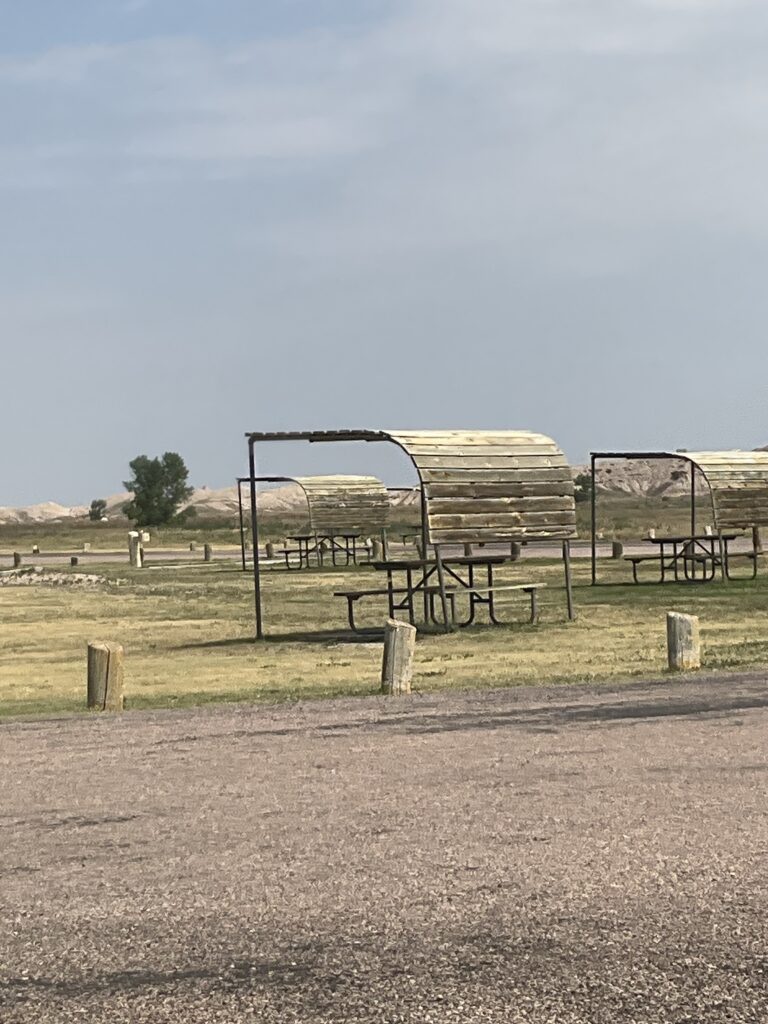
Ubiquitous western park picnic shelters.
After Aspen Glade, where we decided to skip a national park just to enjoy two more nights of cooler temperatures, we made the trek to Eleven Mile State Park in Colorado. Although we were back in hot, treeless territory again, it did cool down at night. Hot daytime temps meant that we needed the pop-up tent for shade. High winds meant that we needed multiple extra tie-downs (same with Russ’s tent). It’s a wonder I didn’t break a leg negotiating all the pegs and ropes. Moe, who can’t see, kept walking into them.
To my mind, this campsite redeemed itself with its two walking trail loops which took you up through stands of aspen and juniper and around some impressive rock formations.
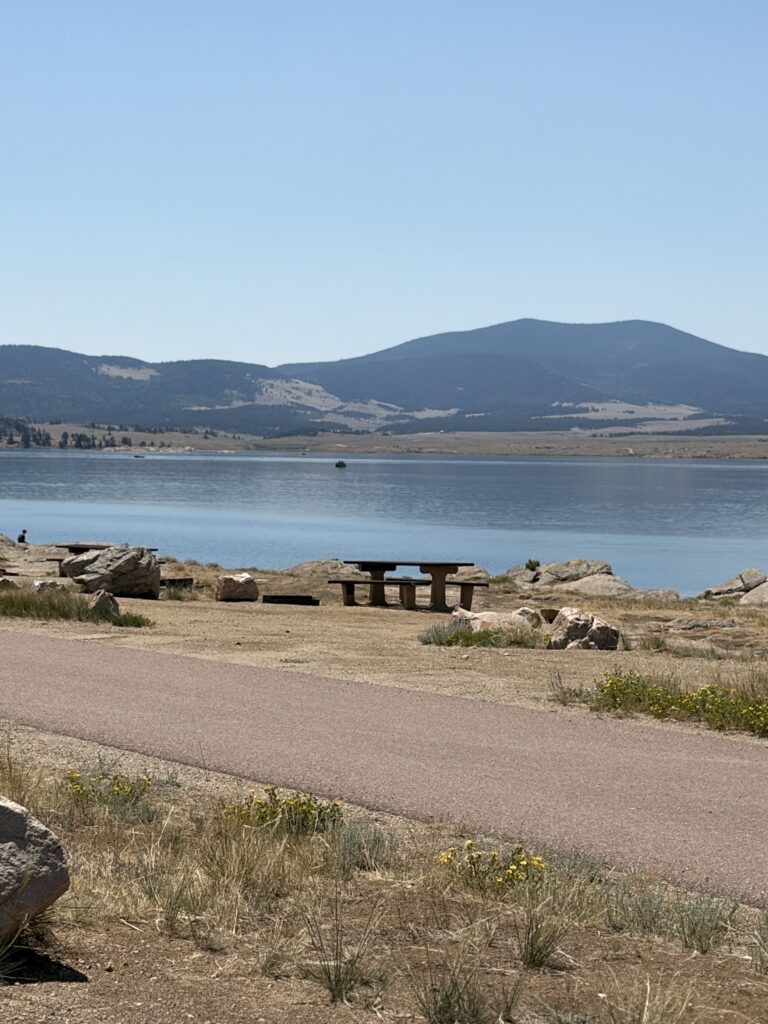
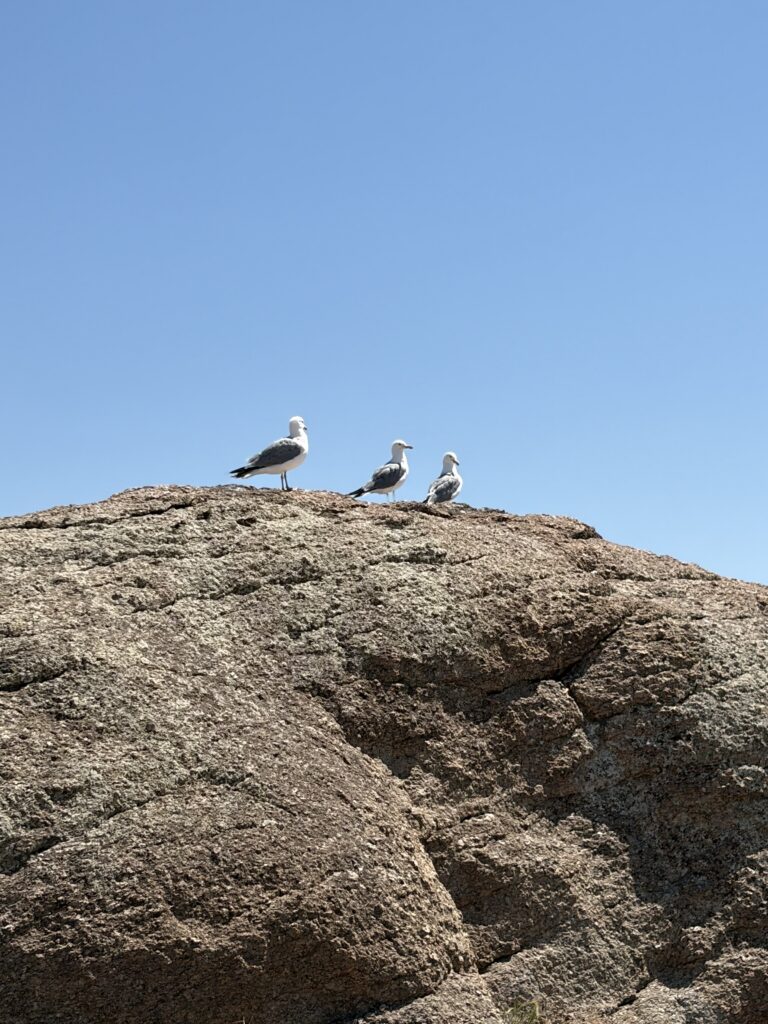
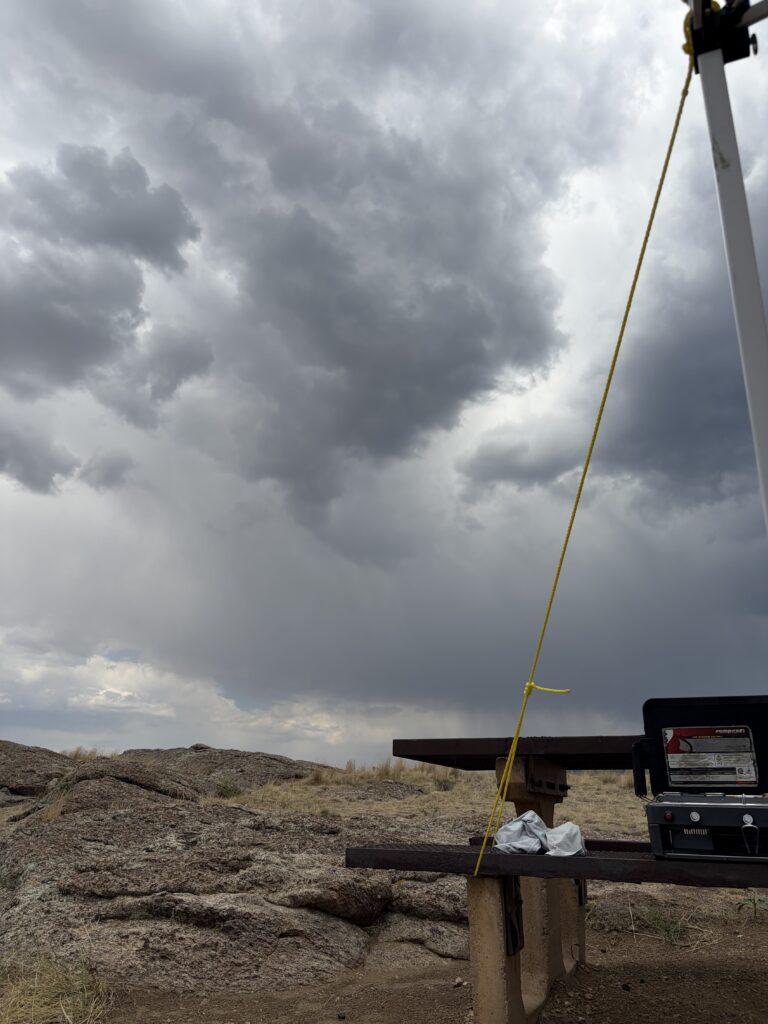
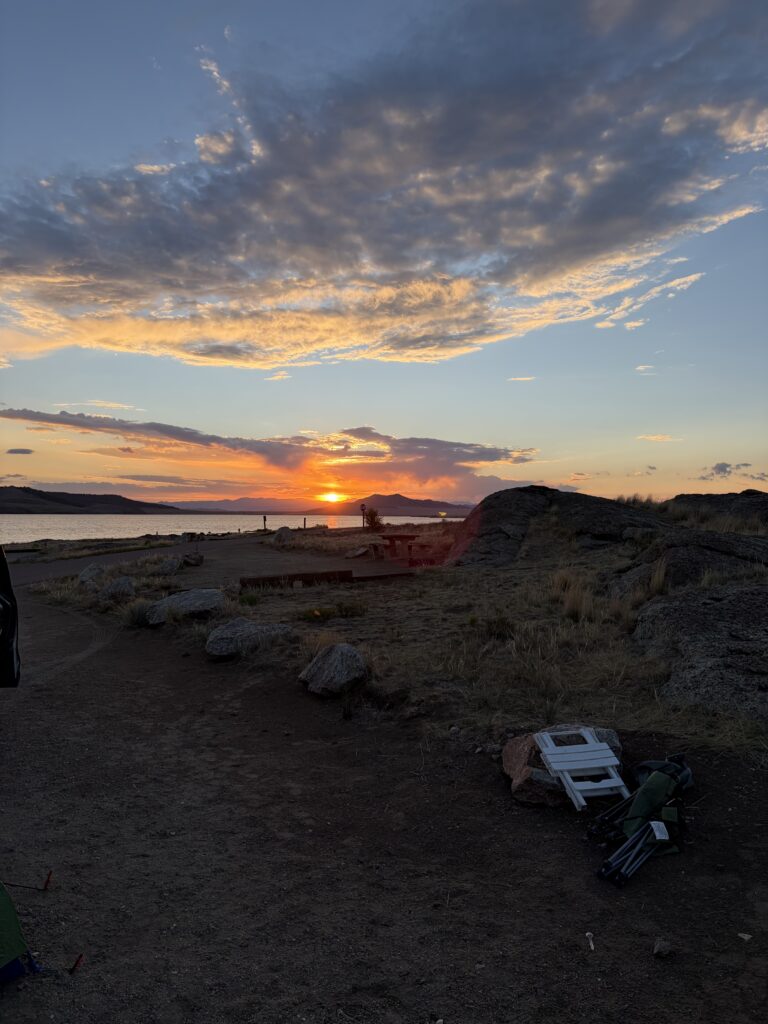
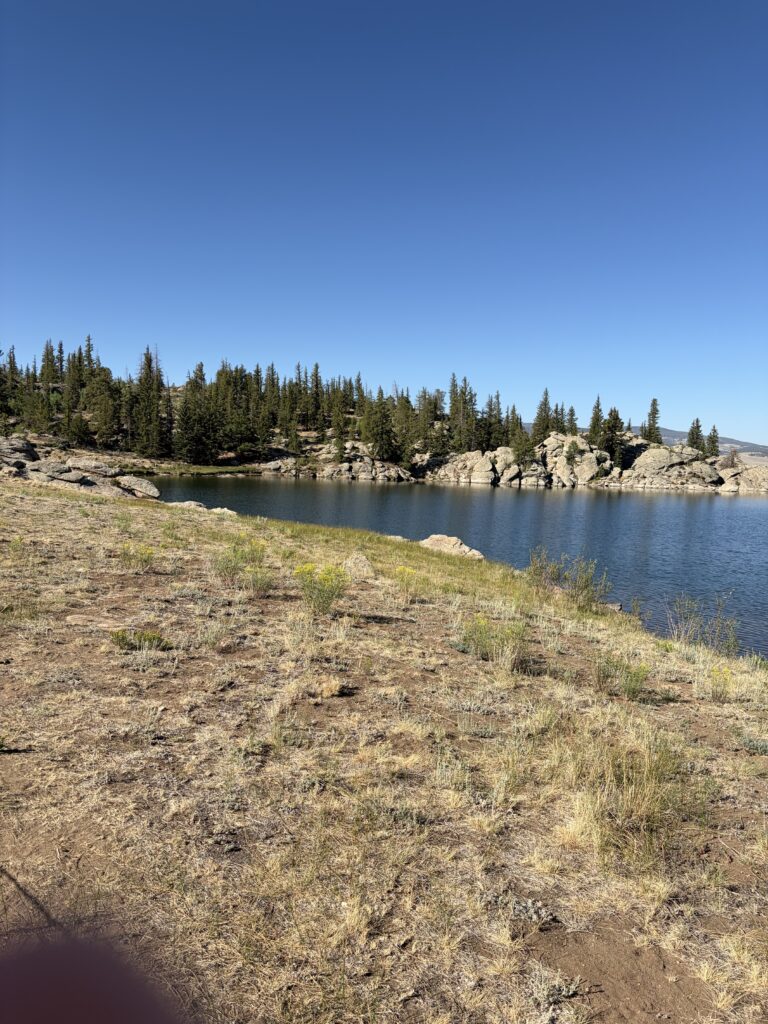
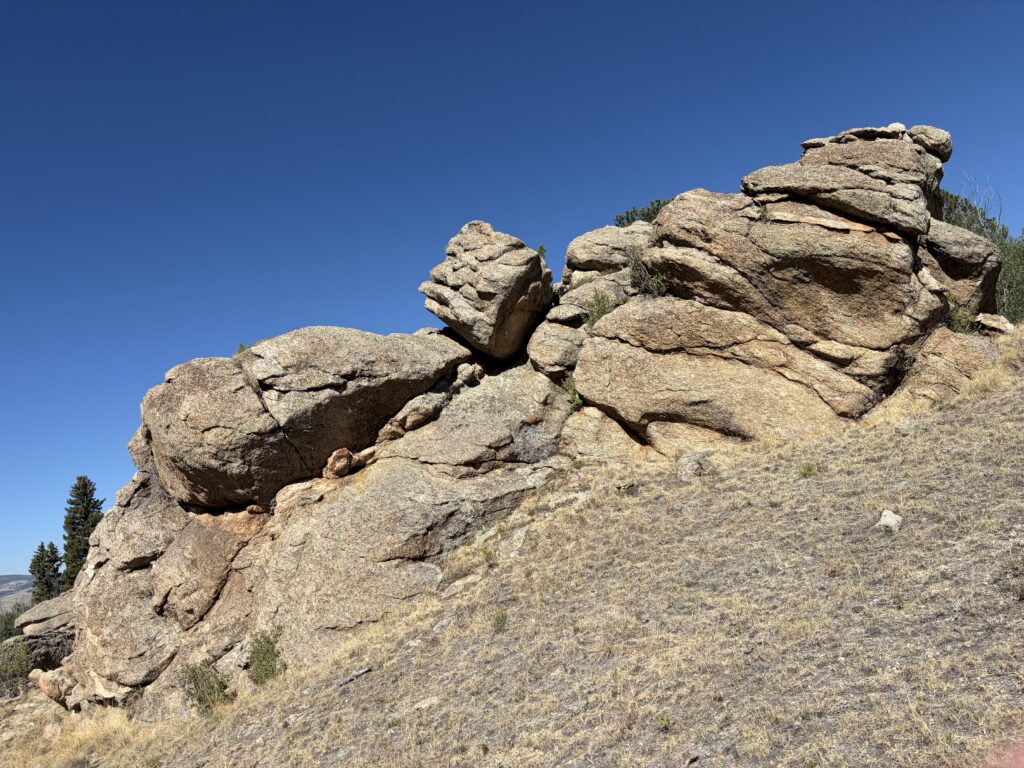
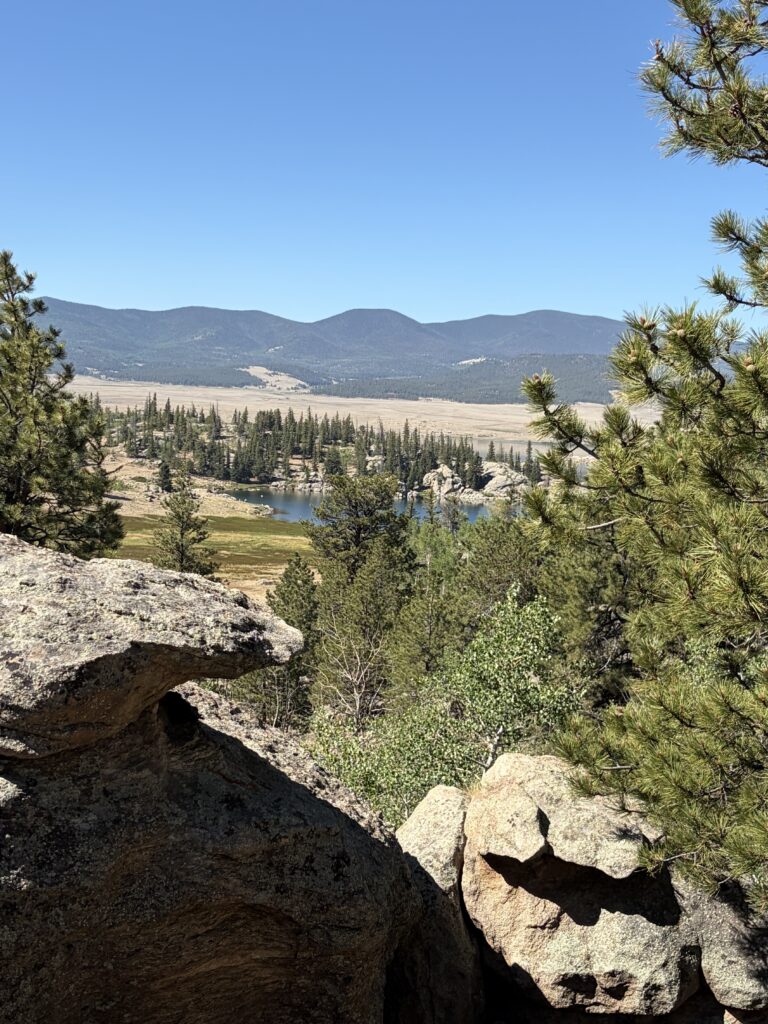
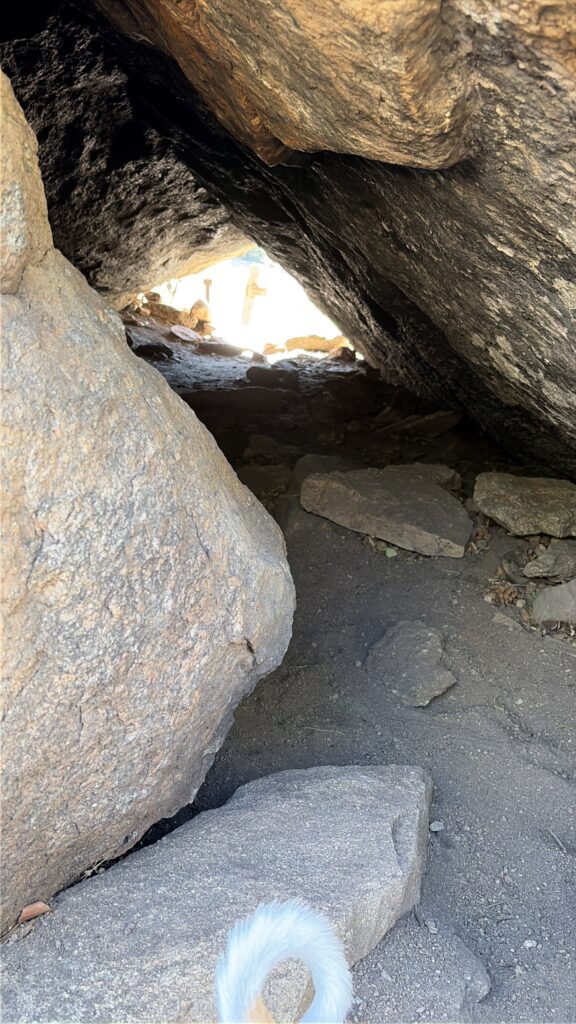
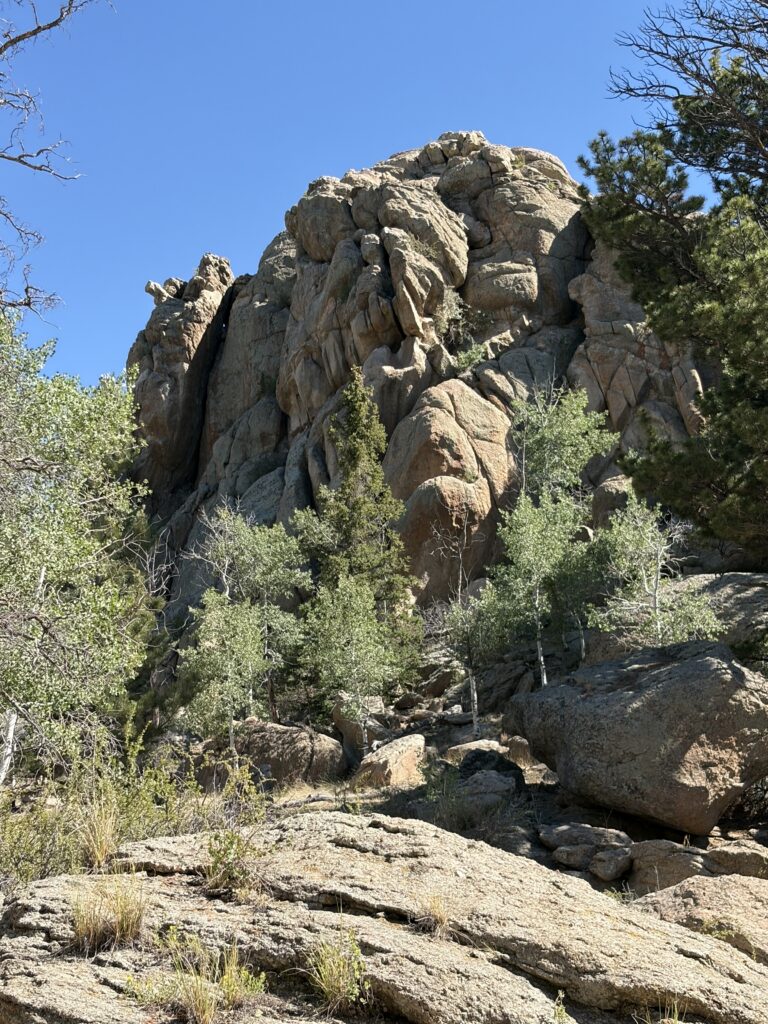
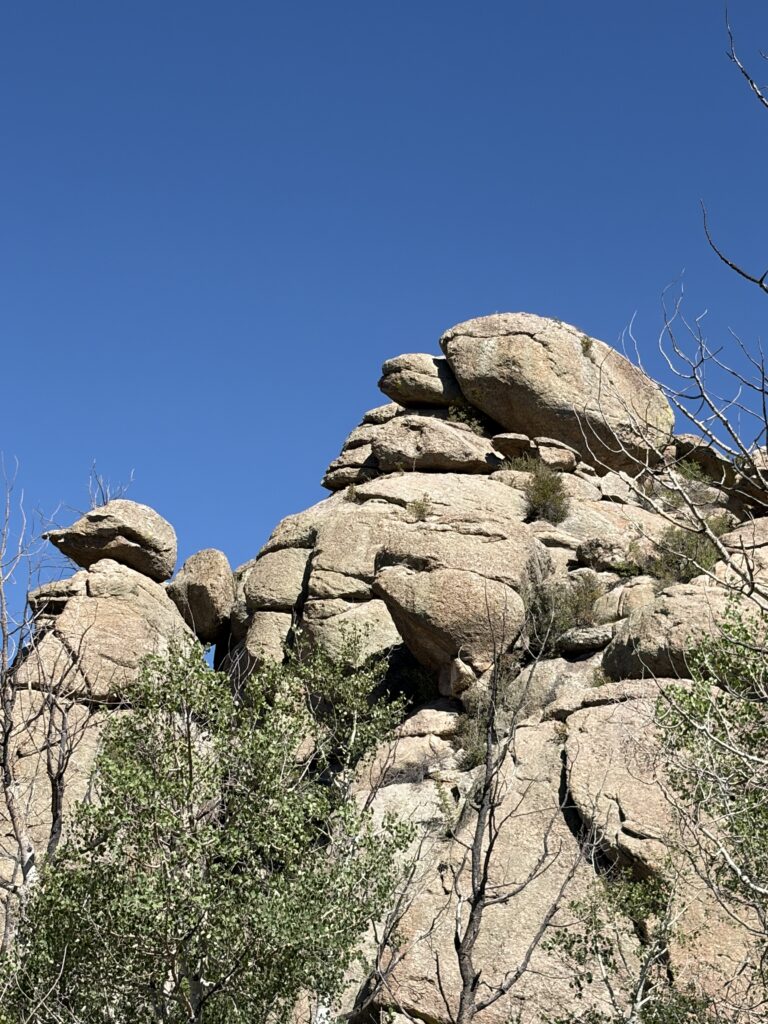
Also a positive, I saw my first Western Grebes on the lake!
Then it was off to Rocky Mountain National Park.