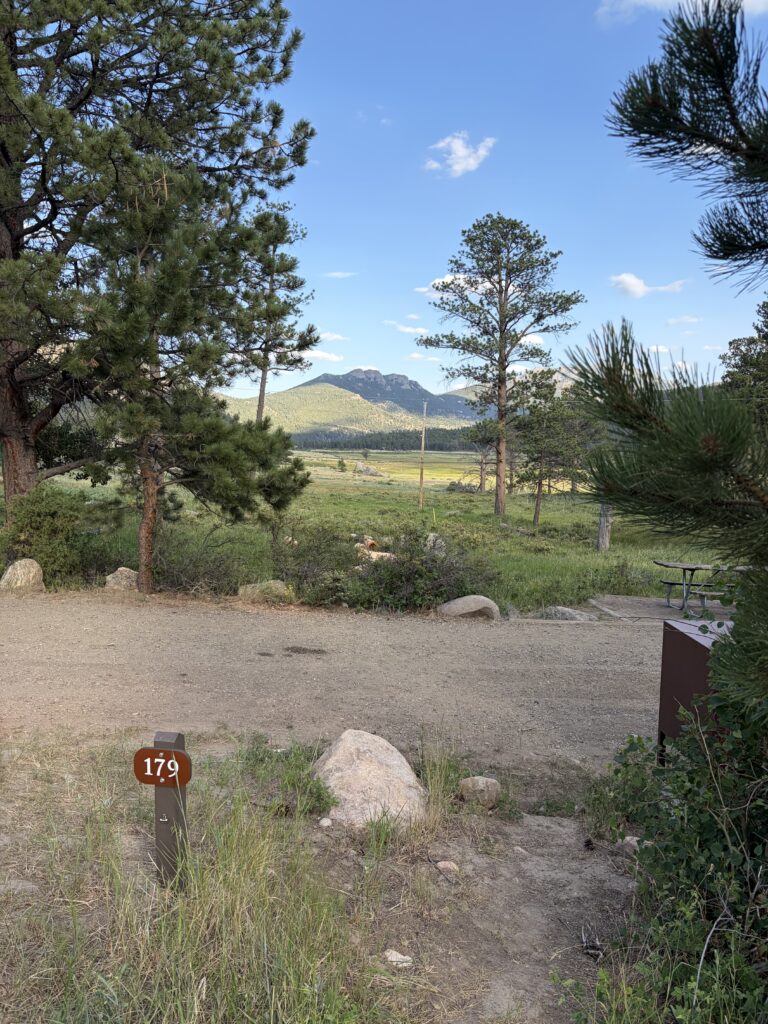
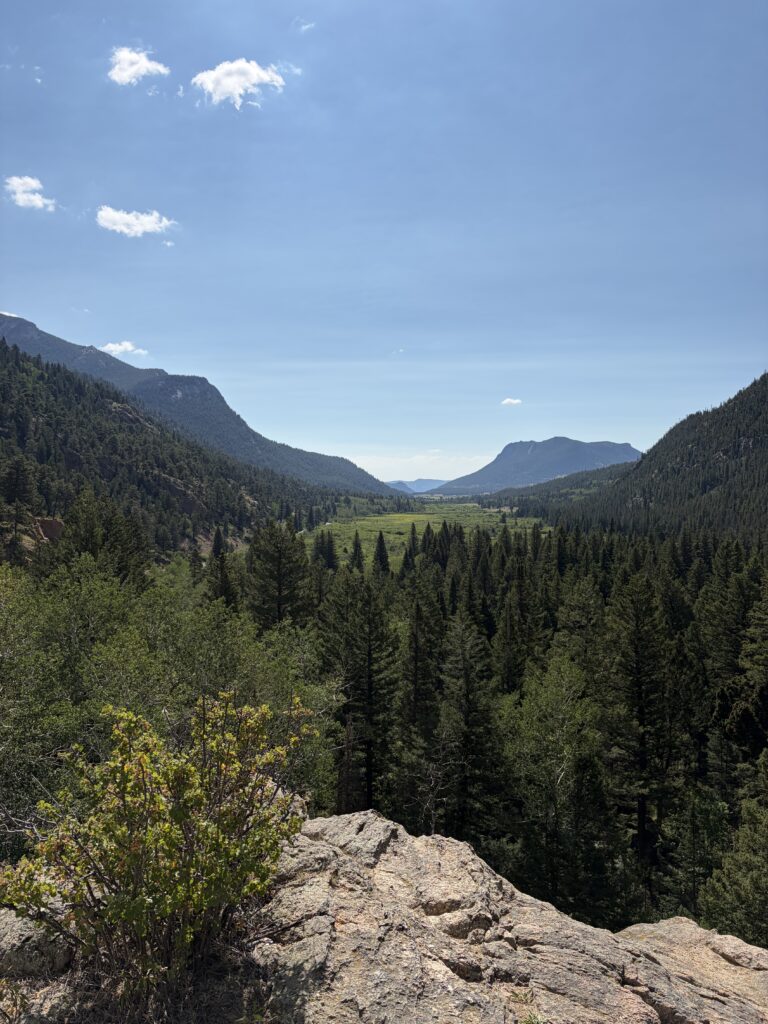
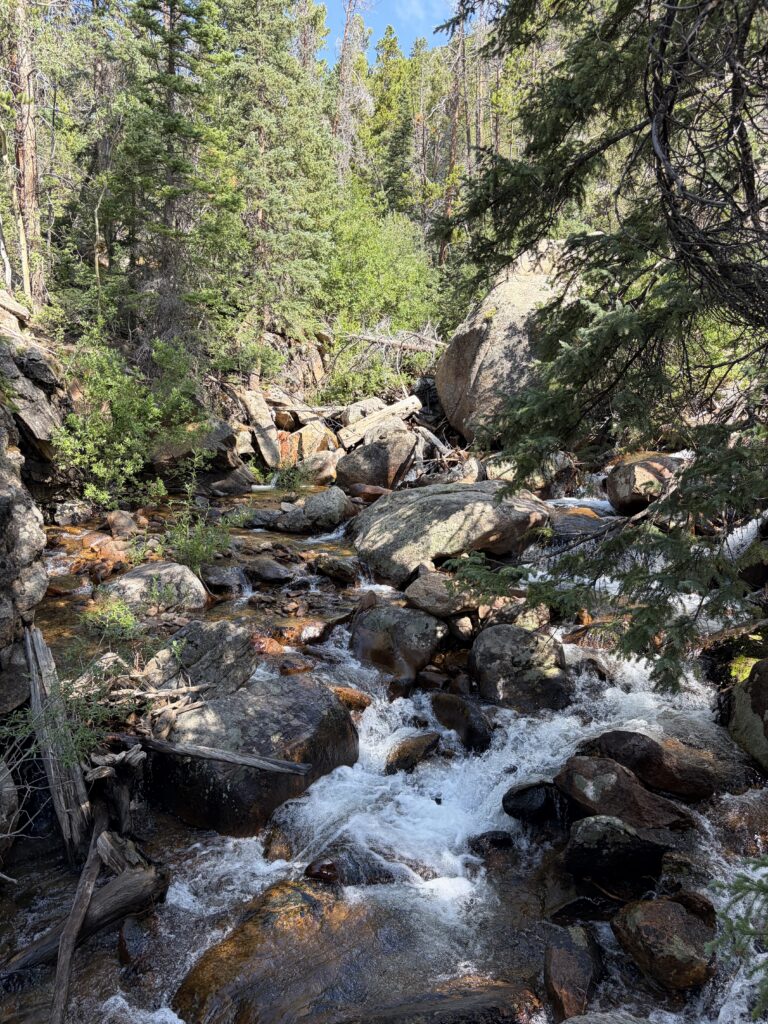
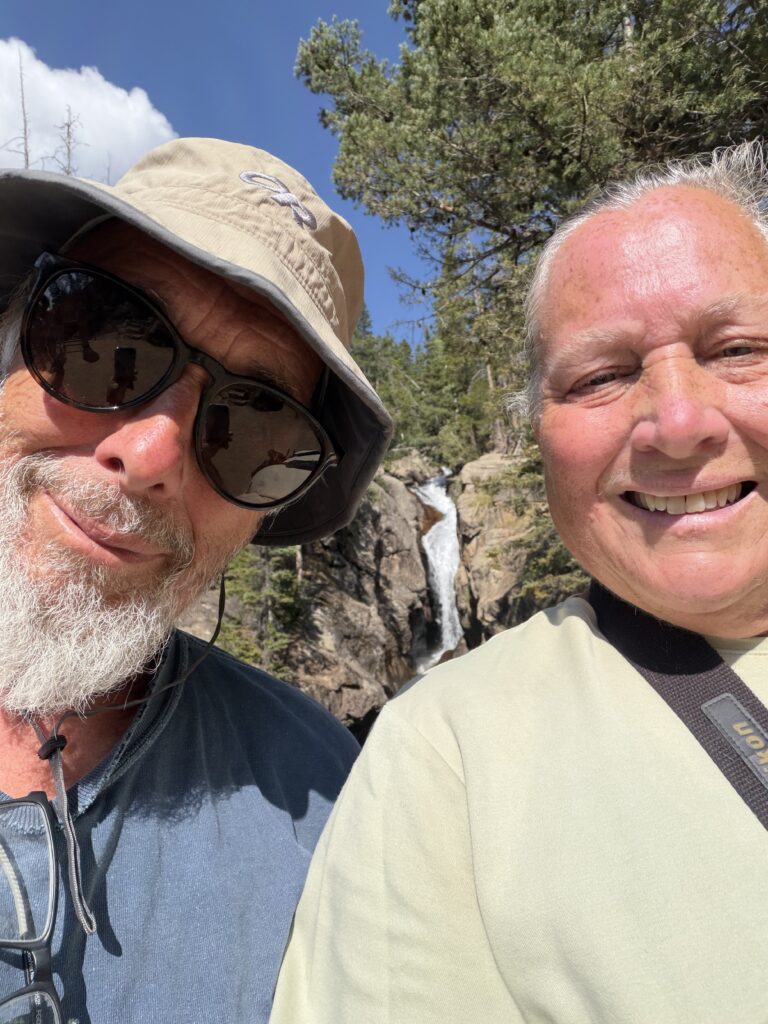
Like Glacier, Makoshika, and a few other places we’ve been, words can’t describe Rocky Mountain National Park, and even the best pictures can’t do it justice. One thing I did notice was that overcrowding has become the norm since we first went traveling in ‘22.
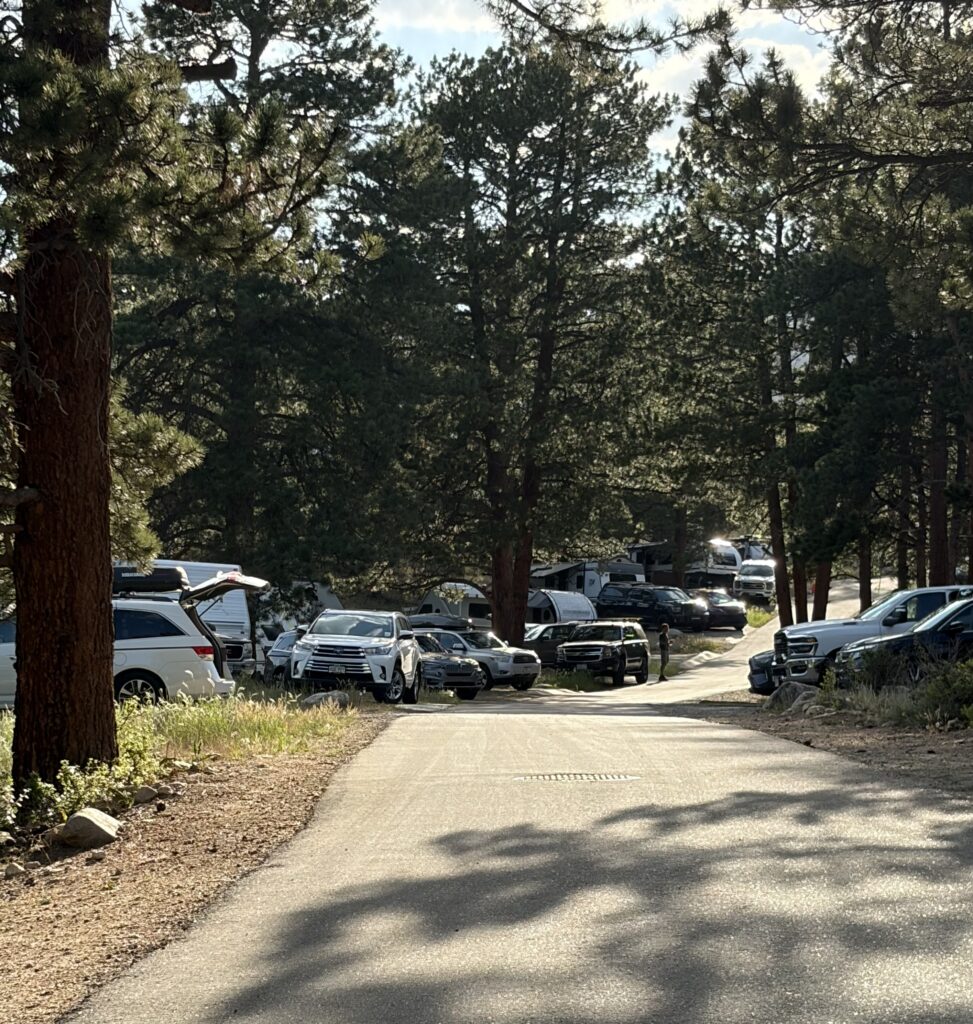
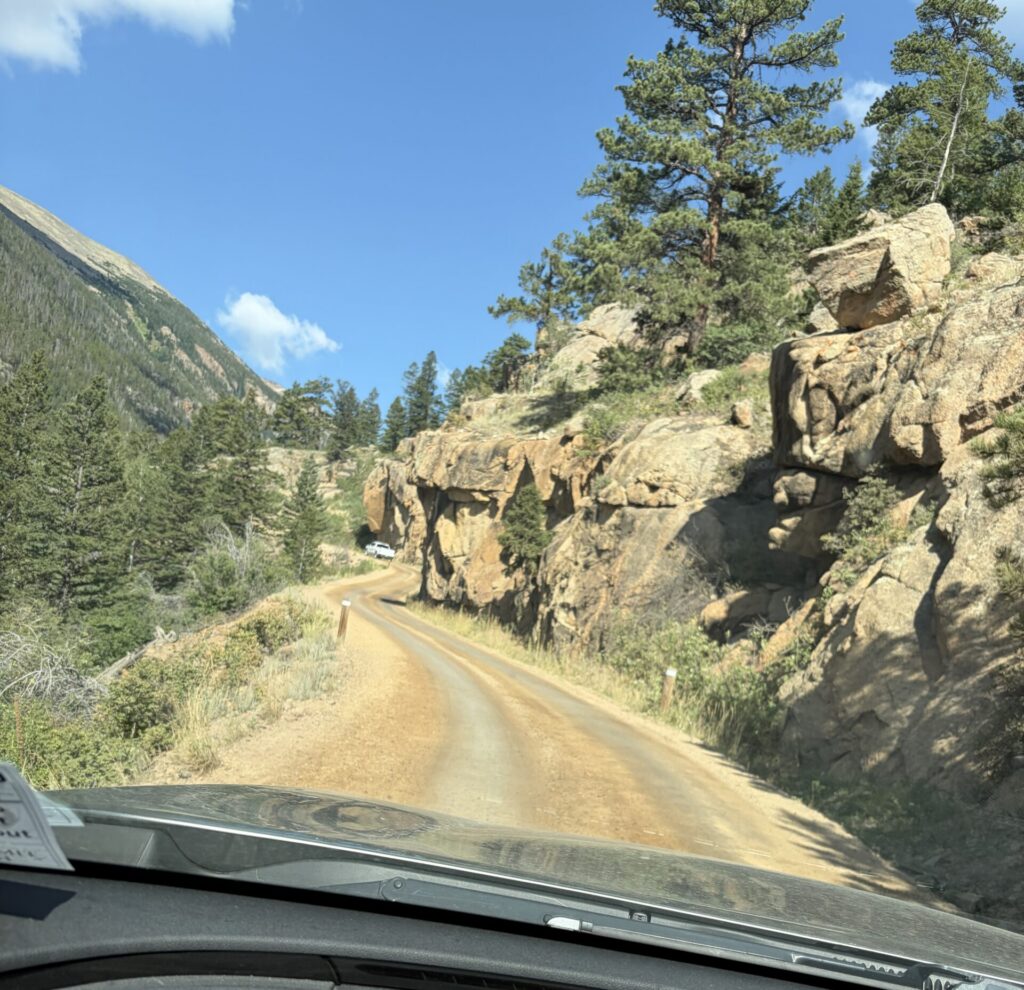
It also means that reservations are hard to come by, unless you book 6 months or a year in advance. I was only able to get two nights, which only left one full day to explore. We decided to drive up the one way, dirt, Old Fall River road to the Tundra Visitors’ Center and then down the paved Trail Ridge Road. An excellent choice, as it turned out, even if the twisty, narrow road and multiple hairpin turns had Russ in a near-constant state of panic.
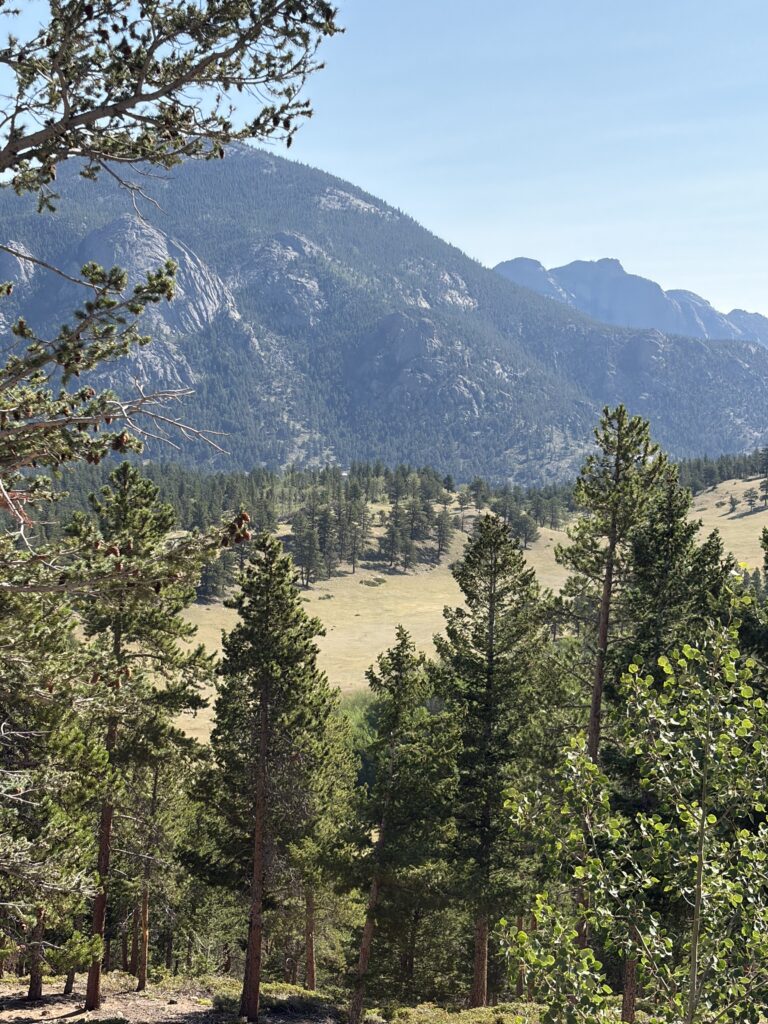
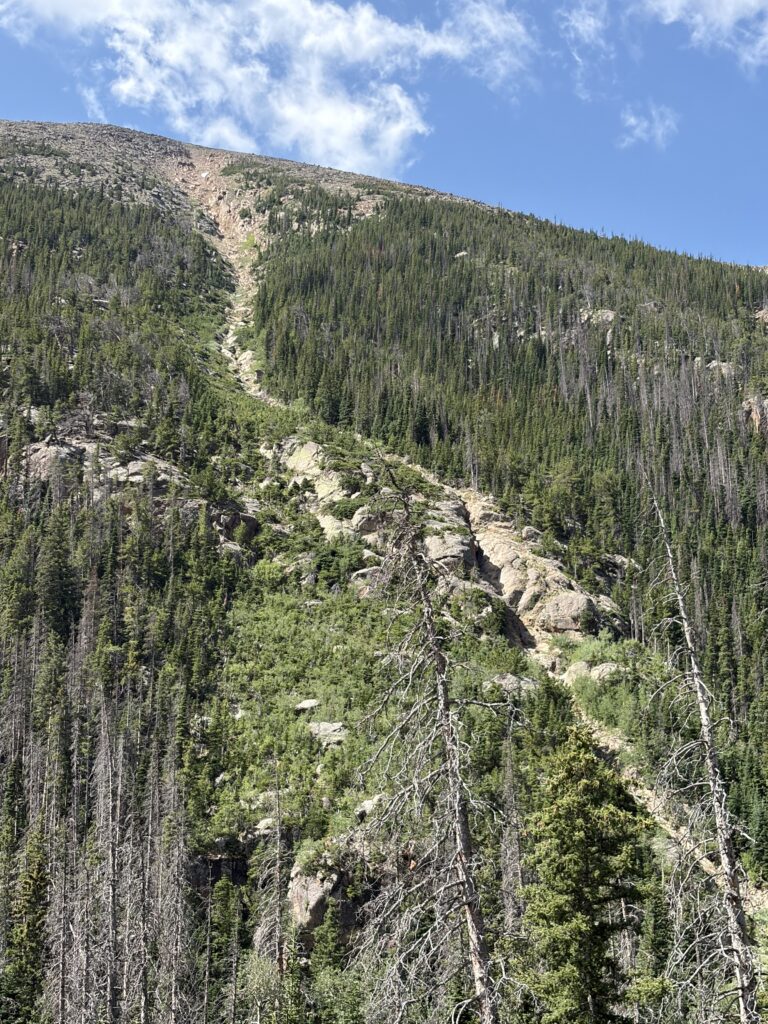
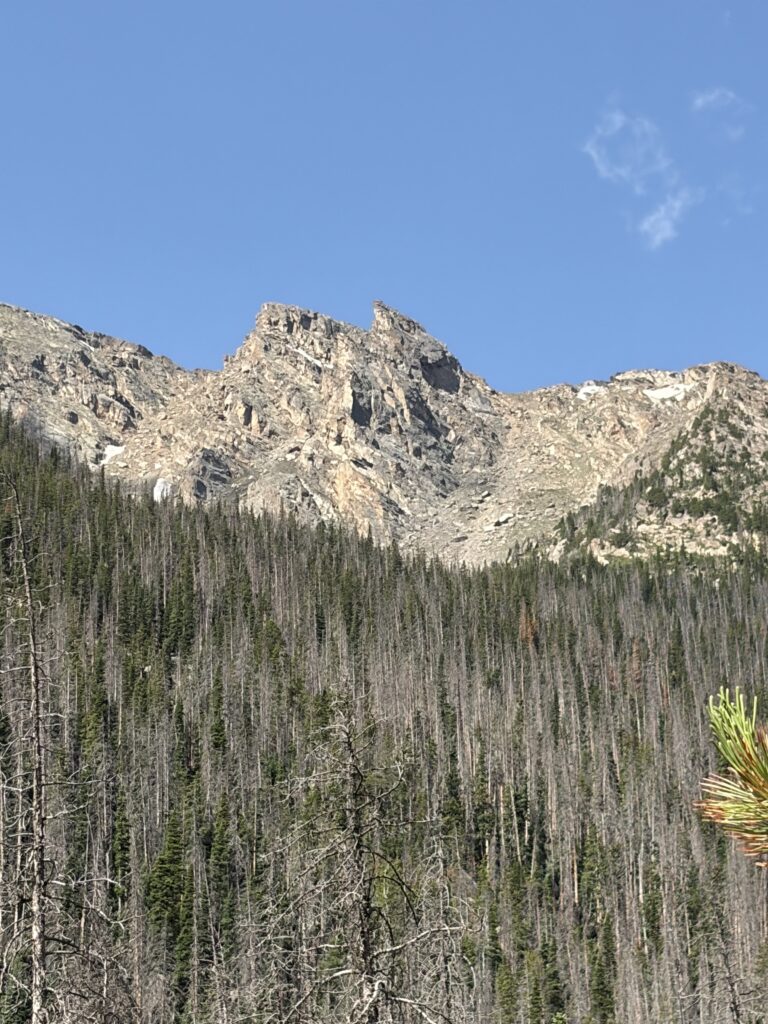
We stopped at the Tundra Visitors Center, where I learned that the volcanic caldera (I was SURE it was a caldera) was instead a glacial cirque (aka birthplace of glaciers), and that the wafer-thin wedge of snow at the top was indeed a glacier. Glacier or snowfield? One is permanent—guess which. We had a snack and some cold drinks while Moe made friends and got to sniff a real elk antler.
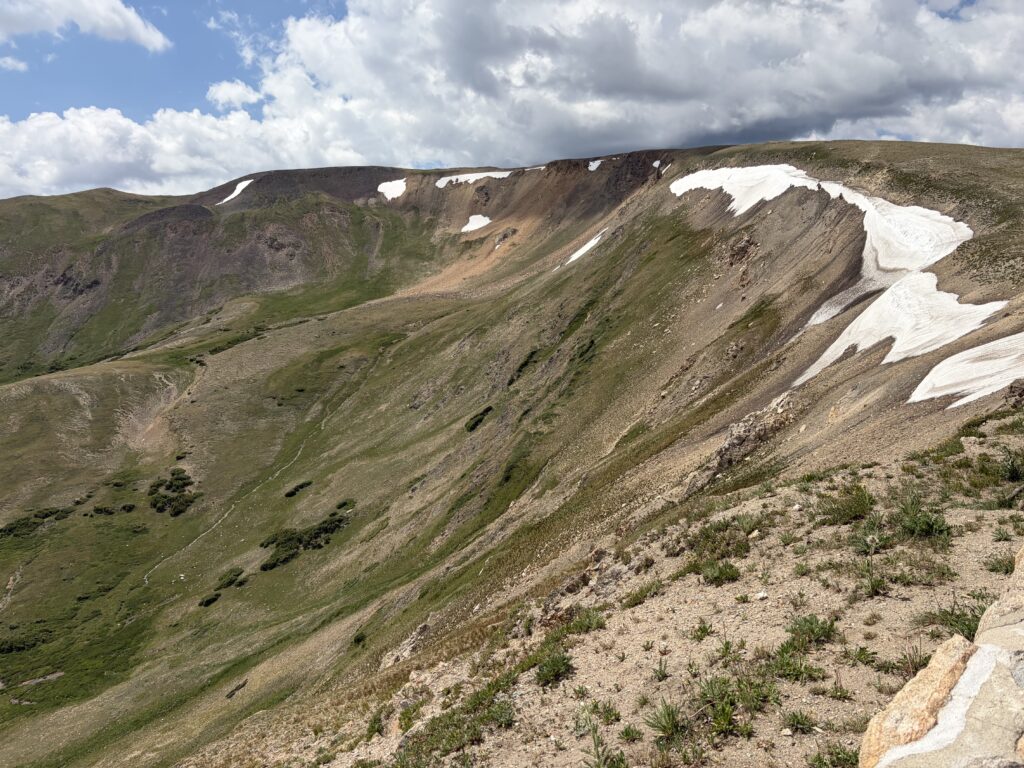
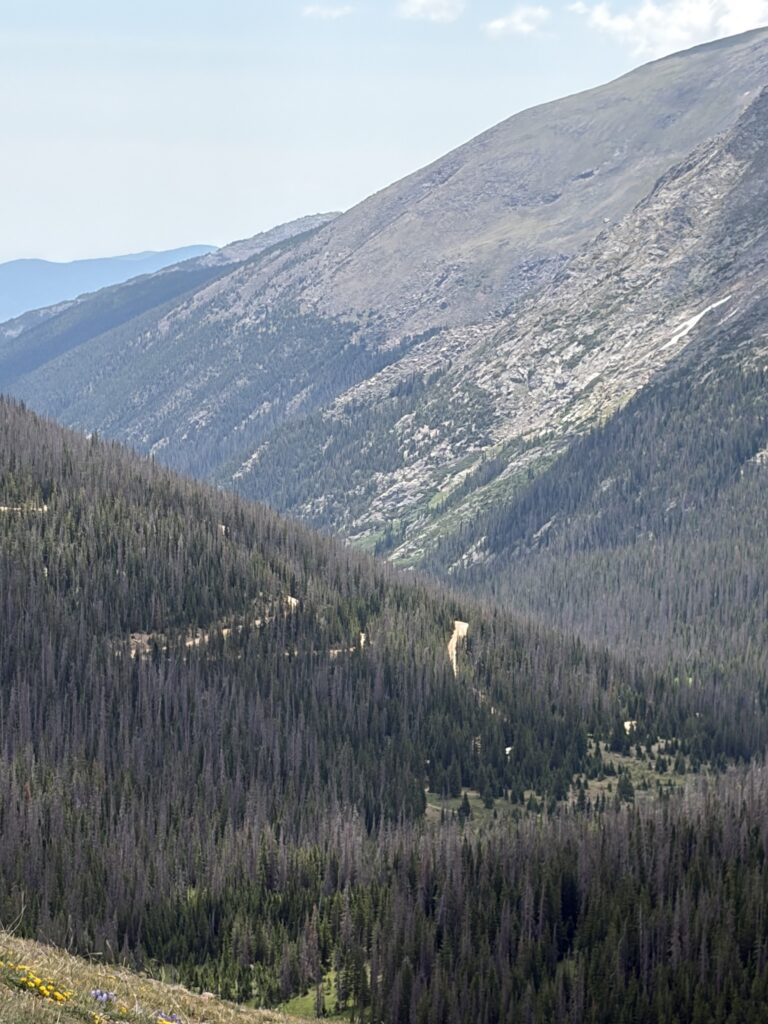
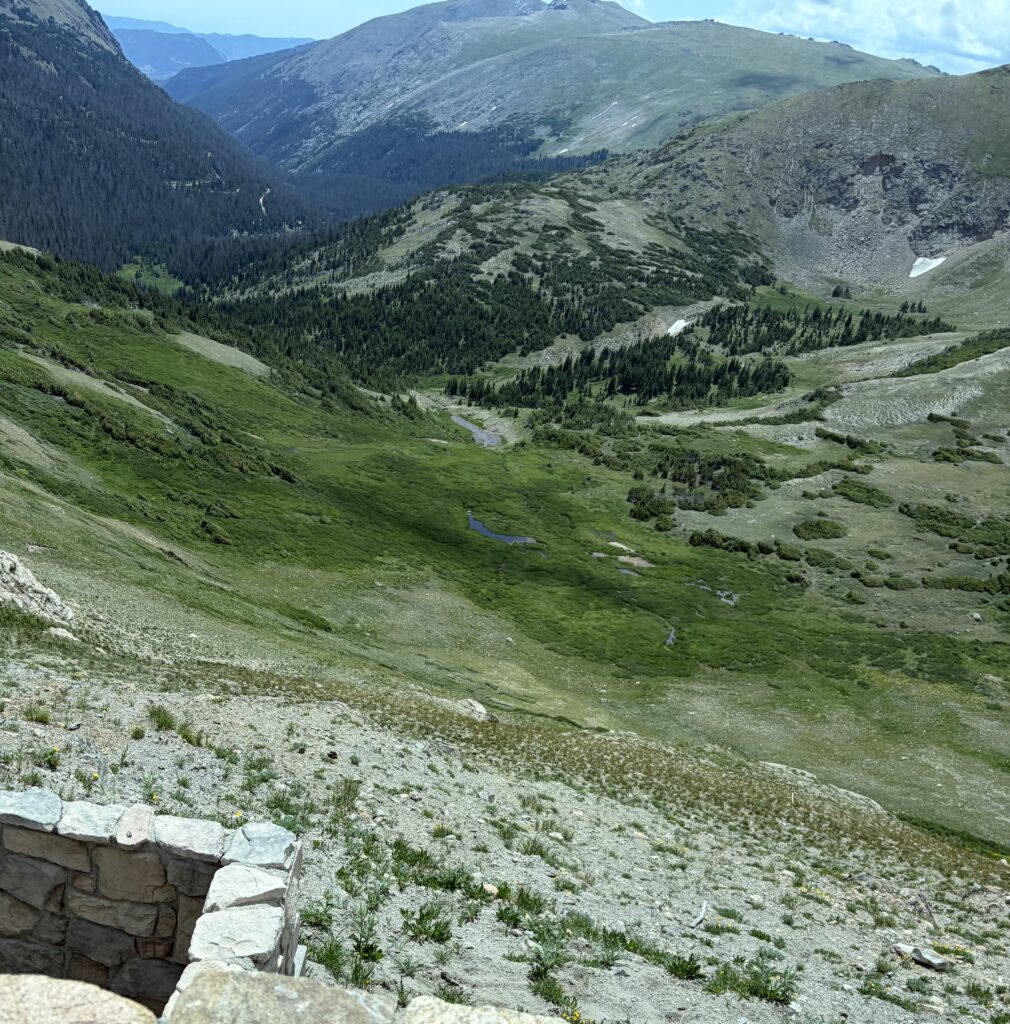
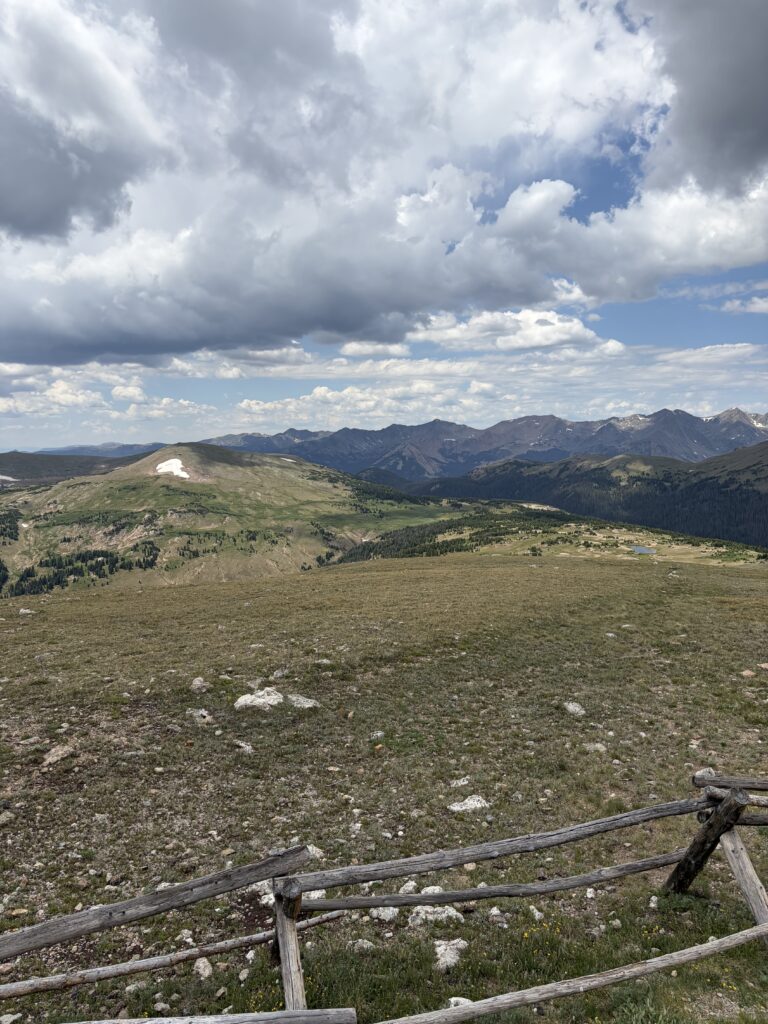
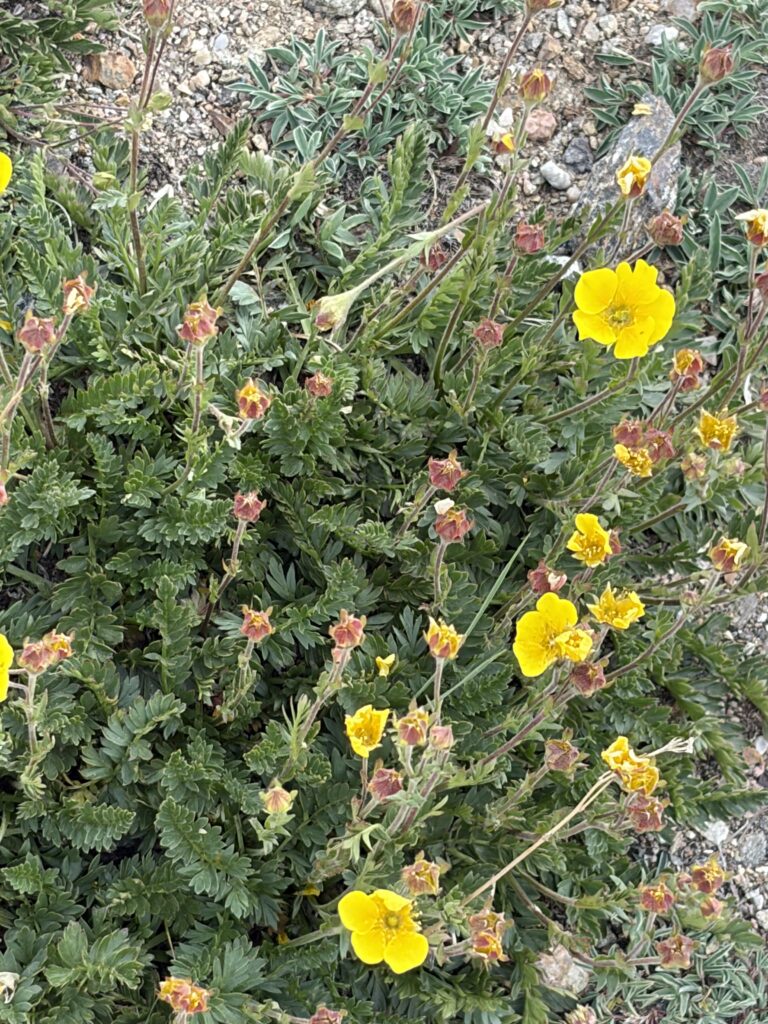
The road descends a bit from the visitor’s center, than climbs again to the top of a mountain covered with rock scree and tundra—where I was assured of seeing ptarmigan and pika (pie-ka). Climbing the trail to the top, I was entranced by the alpine flowers:
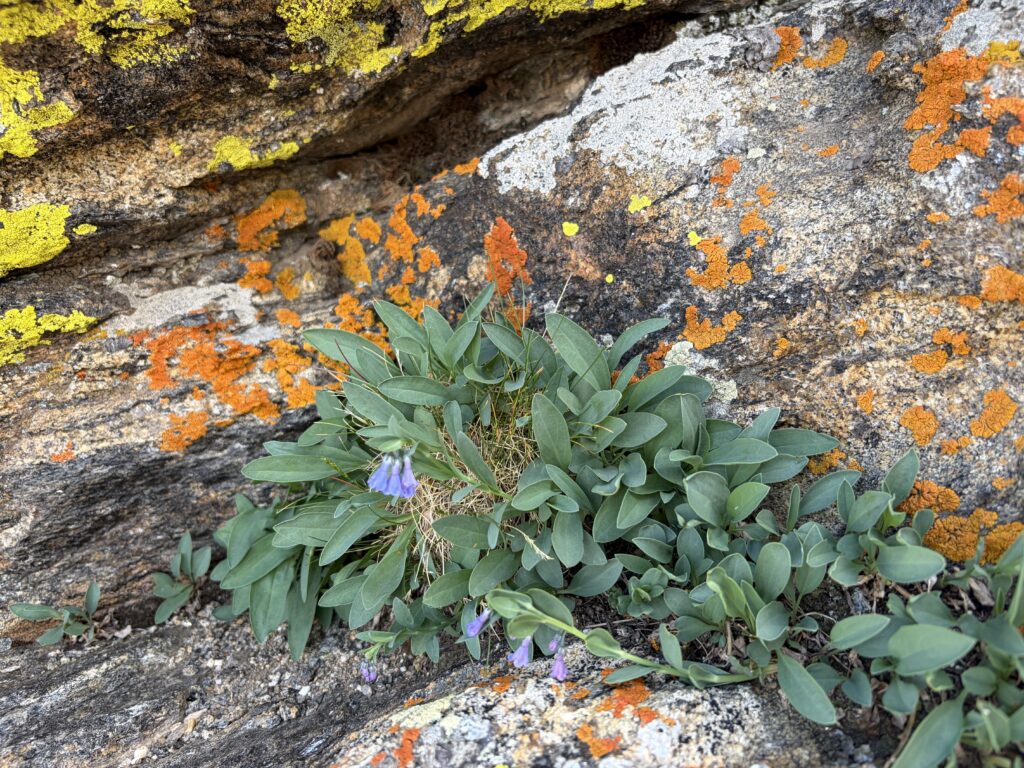
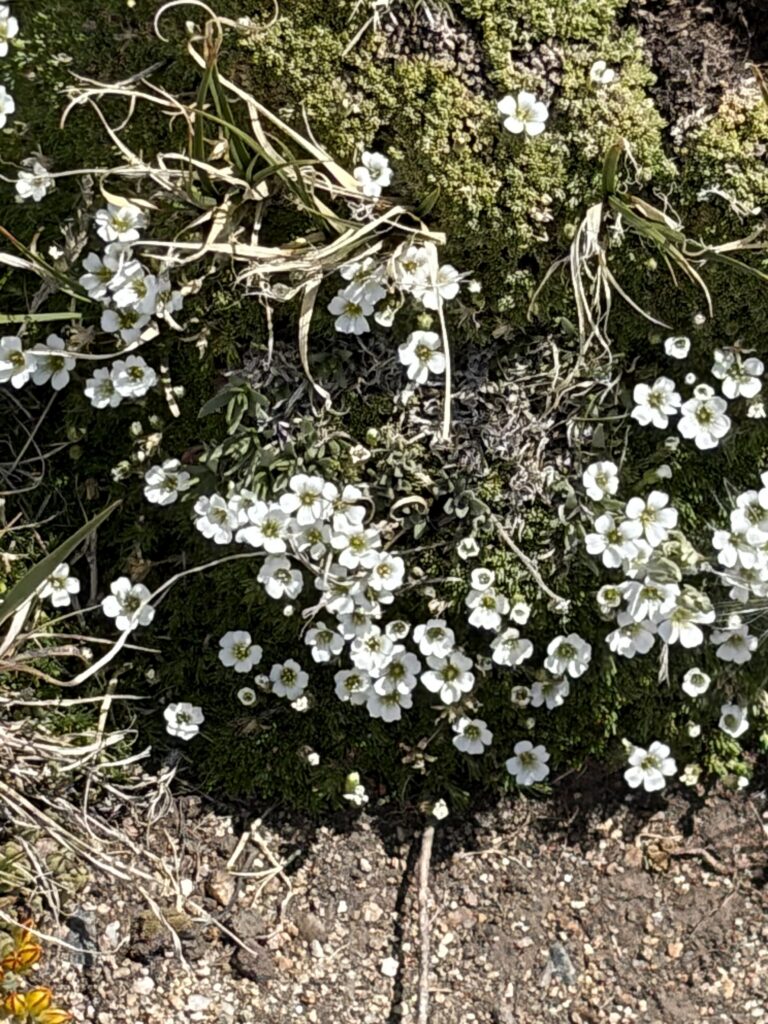
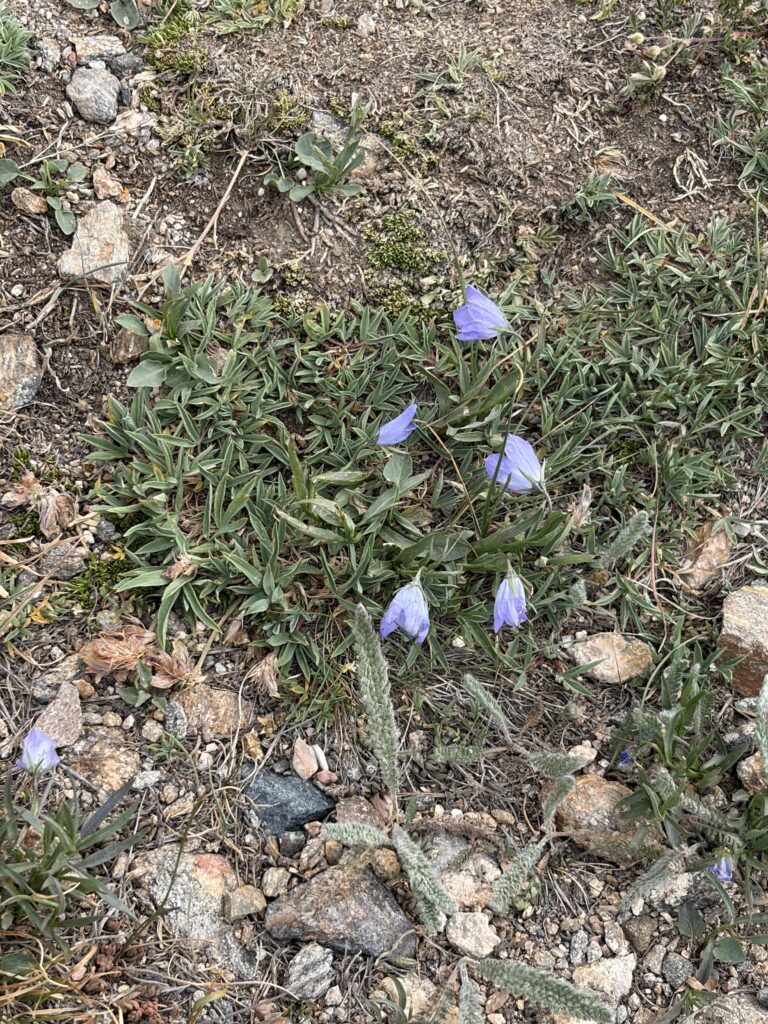
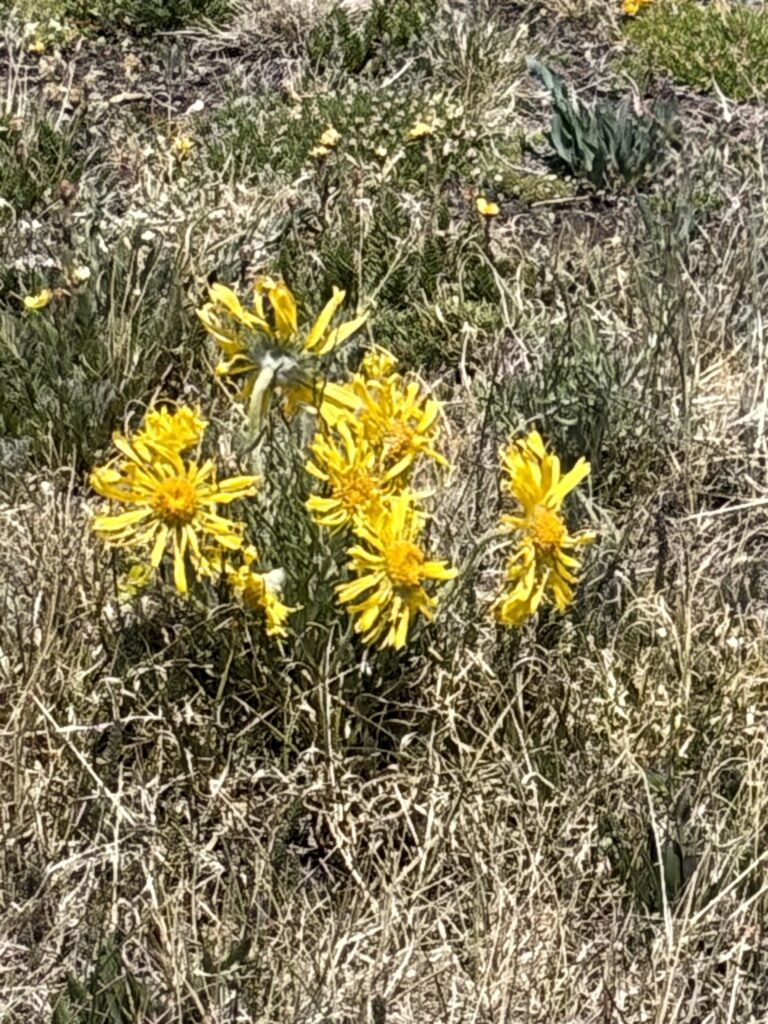
I was informed that alpine sunflowers (below) can grow for 70 years or more before they amass enough energy to flower and put out seeds—after which the plant dies.
No ptarmigan showed up, so I was busy admiring some very colorful lichens, when this friendly yellow bellied marmot waddled up to within four feet of us:
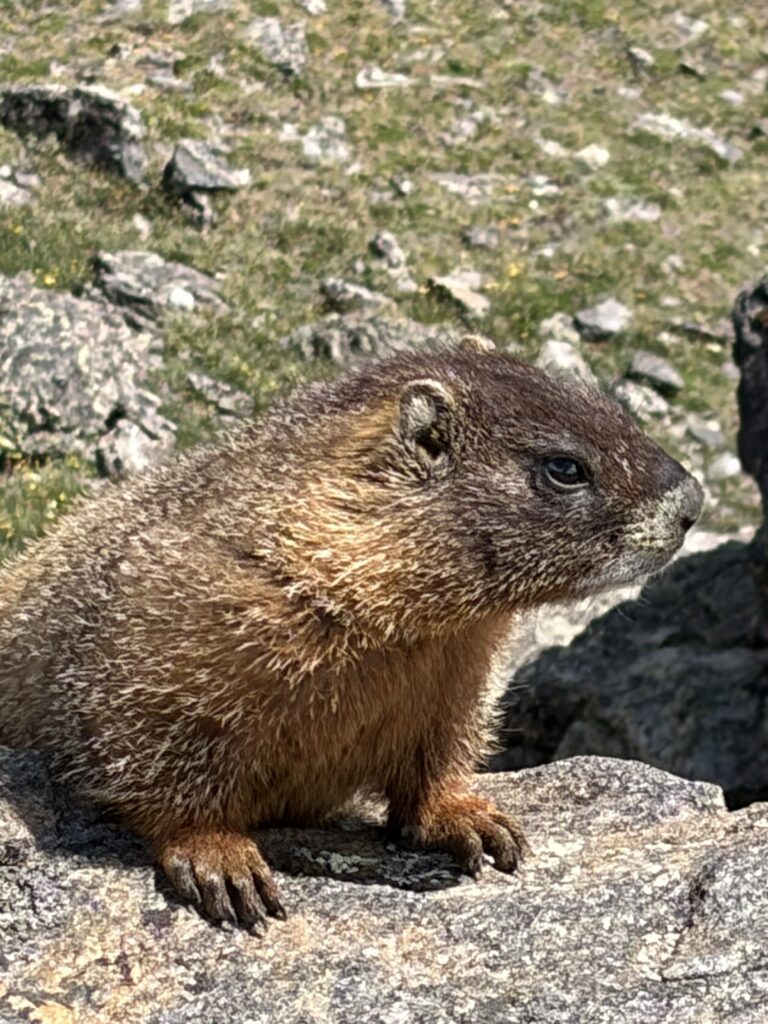
Ain’t he (or she) cute?
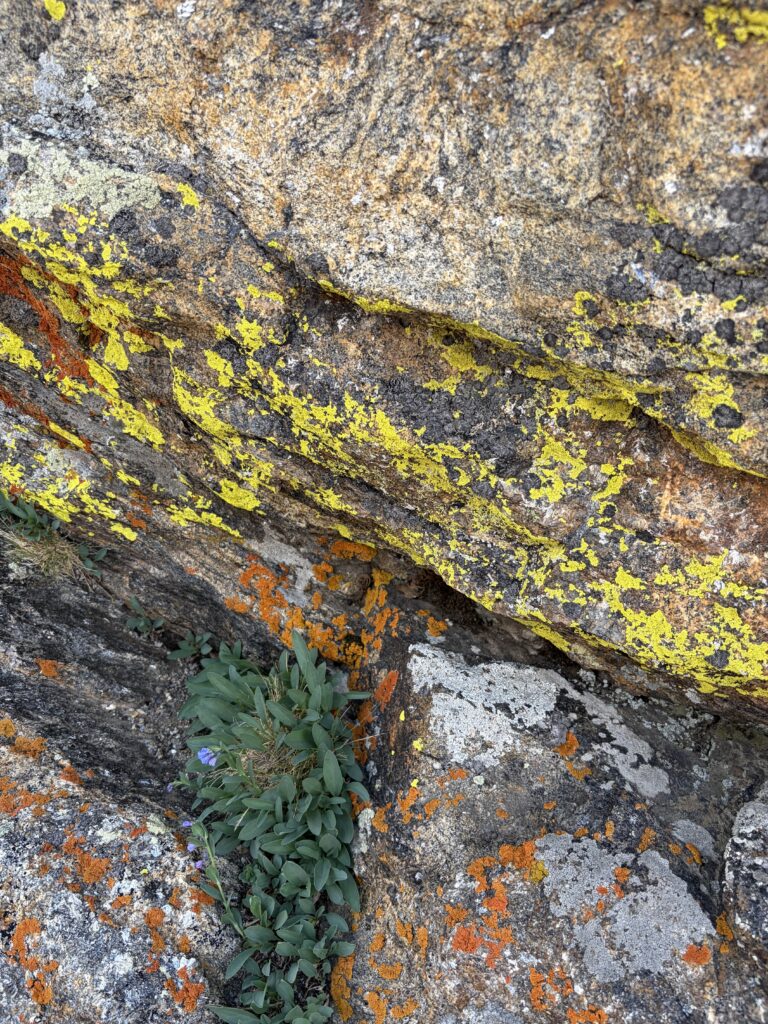
The lichen were striking. I’ve only seen colors like this at high altitudes.
We did finally get to see pika, those chinchilla-sized rabbit cousins who make their homes in rock piles up in some of the most inhospitable environments imaginable. They spend the short (6-8 week) growing season eating and gathering alpine plant material for their underground burrows, where they will spend the long winters insulated by deep snow. Unfortunately, I could not get a shot of the fast-moving critters as they scurried about in the rocks just below the parking lot. One lone chipmunk managed to run right under Moe’s nose: I barely prevented him from launching himself off the retaining wall and right down the rocky slope. At 14, catching a chipmunk is still on his bucket list.
Even without the ptarmigan, it was an amazing day. And how can you beat that view from our campsite?